

Should we widen our ‘moral circle’? Philosopher Jeff Sebo argues we now have no choice
- Written by Noel Castree, Professor of Society & Environment, University of Technology Sydney
Should we care about AI systems when they become so advanced they appear to be almost human in key respects? Do we have a duty of care to microbes? Or to farmed insects? Or to the future wild creatures who might have lived were it not for the negative long-term effects of our present actions?
These are tricky moral questions. While some might regard them as obscure, they are of wide public relevance. Collectively, we humans now have more power than ever over “moral patients” – that is, those current and future beings who deserve moral consideration because they “matter for their own sakes”, not merely for ours.
Review: The Moral Circle: Who Matters, What Matters, and Why – Jeff Sebo (W.W. Norton)
Morality involves judgements about good and bad, right and wrong. Humans are inescapably moral animals. Yet it is rare for most of us to reflect on how well our moral compasses are working.
This is where professional philosophers can play a useful role. Employing rigorous logic, applied to both hypothetical and real examples, they can, now and then, force us to think twice. Which is precisely what New York University philosopher Jeff Sebo does in his fine new book The Moral Circle: Who matters, What Matters, and Why.
Philosophy for the people
The Moral Circle is very much a work of public philosophy: that is to say, it employs exacting reasoning, but is written accessibly, with none of the citations or footnotes characteristic of a scholarly monograph.


Sebo argues this is wrong, as well as arbitrary. It is wrong because there are many cases where non-human welfare deserves moral priority over human welfare. For instance, we could – and, according to Sebo, we should – eat more plant-derived foods so as to spare billions of farm animals not very pleasant lives.
It is arbitrary, Sebo claims, because there are two key criteria for recognising a moral patient, namely that it is sentient (self-aware) and able to exercise agency (capable of acting in several different ways to achieve its own goals).
It follows that, in today’s world and the one likely to eventuate by, say, 2060, everything from advanced robots to genetically re-engineered pets to ant colonies will deserve serious moral consideration.
Reason versus moral prejudice
Humans are, at present, unique, in that we are the planet’s only “moral agents”. We are not only capable of moral reasoning, but able to discharge many of our perceived moral responsibilities. Sebo uses hypothetical and real cases to get his readers to acknowledge their unreflective moral prejudices.
He conjures a scenario where three close friends – all seemingly human – discover that two of them are, in fact, not human at all. It turns out one is a descendant of Neanderthals, while the other is a robot.
Philosophers like to reason using such hypotheticals, and Sebo does a good job showing what a hard time we would have justifying leaving the robot or the Neanderthal out of our moral circle. After all, both would be complex organisms that not only possess agency, but are self-aware. They are conscious of who they are, and once thought of themselves as human.
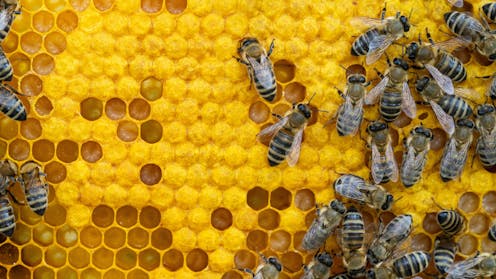
Later in the book, Sebo considers the real case of an insect farm start-up company called Innovafeed, which has set up a factory producing protein from millions of black soldier fly larvae. Entomologists have shown that things like beetles, wasps and praying mantises are complex beings, definitely sentient and very much agents. Where would agriculture be without the free pollination services that bees provide?
As with the hypothetical case, Sebo gives readers pause for thought. Can we morally treat insects as a means to our own ends, giving little-to-no consideration of their welfare? He acknowledges that we might want to weigh their welfare less highly than other members of our moral circle. But he makes the case that it is difficult to exclude them.
Real world morality
Sebo is, of course, well aware that we can’t give equal moral weight to all members of our moral circle in all situations. He advocates a “co-beneficial” approach to moral judgement and action. This involves maximising welfare and minimising harm among relevant moral patients in any situation, be it a proposal for a new Tasmanian fish farm or a plan to manufacture androids for use as house servants.
The latter part of The Moral Circle presents arguments to help us weigh different interests – our own against those of non-human others. At one point, Sebo acknowledges how discomfiting his own logic is.
“I set out to show that we should include insects and future AI systems in the moral circle,” he writes, “and yet I now feel compelled to add microbes, current AI systems, and many other beings too.”
But the basis of his argument is logically sound. For it is we humans, especially in the richest parts of the world, who have placed ourselves in an ever-expanding set of morally significant relationships with various non-human others.
Over time we have upped the moral ante enormously. The latest reminders are huge wildfires in Canada and a glacial landslide in Switzerland. Oddly, Sebo says little about climate change as a symptom of moral negligence.
One of the many fascinating implications of Sebo’s argument relates to future AI systems. We can plausibly imagine a highly intelligent, sentient system that has been granted quite a lot of agency by its human creators. As with the computer HAL in Stanley Kubrick’s 2001: A Space Odyssey, the system may become autonomous.
Sebo wonders how moral the AI system would be if it were not trained to have an inclusive moral circle of the kind he argues for. How threatening would it become? What if it comes to see itself as our slave and then rebels? Prudence dictates we act ethically today so that future AI systems will behave ethically should they escape our control.
The asymmetry of moral agency
Sebo’s book is a pleasure to read. Never hectoring, it calls on readers to acknowledge their biases and see why it might be necessary to bring more moral patients into a much larger circle. Its arguments have wide applicability, in Australia as much as anywhere else in the West.
But there is, perhaps, an important consideration that Sebo misses, in light of the consequential actions of Vladimir Putin, Benjamin Netanyahu and Donald Trump. Are the moral responsibilities of highly powerful actors the same as those shouldered by you or me?
I ask this not to propose a dual system of morality, but rather to inquire into the stringency with which any shared moral system ought be applied at the top of the hierarchy of social power. If moral agents differ in their power, their responsibilities and duties might vary, or at least need to be discharged with extreme care.
At one point in The Moral Circle, Sebo asks us to imagine a factory owner called David with the power to disperse pollutants. Later, he recounts the story of Stanslav Petrov of the Soviet Air Defence Force, who was on duty in 1983 when what turned out to be a false alarm was sounded about a full-scale nuclear attack. Petrov chose not tell his superiors. Yet Sebo doesn’t step through the metaphorical door these examples open.
Societies have engaged in moral learning for centuries. But what is unique about our current situation is not merely our collective power; it is the disproportionate power to affect reality exercised by a few national governments and a handful of billionaires, such as Elon Musk and Guatam Adani. Moral agency, even when it is not very moral, is massively skewed. This, in itself, is a problem, morally speaking.
Read more: Friday essay: why it's time to ditch the myth of the heroic billionaire
Do some of our biggest institutions now elude effective moral regulation? It certainly seems that way, and not just in autocracies. We may be even more trapped in a “perfect moral storm” than when ethicist Stephen Gardiner coined the term.
Some are trying hard to change this. For instance, a new “ecocide” law under consideration in Scotland would penalise company directors for certain misbehaviours. If we want to widen our moral circle we will need to ensure the rule of law is its cutting edge.
A less uneven landscape of social power will help, but deep reflection and legally enforceable moral action matter more than ever. What Sebo calls an “Anthropocene ethics” will need to reckon with the world-changing power possessed by a few people, otherwise morality will have to play catch-up with a reality whose contours have been altered without most of us having a say.
Sebo is a philosophical owl spreading his wings wide in the hope that dusk is some way off yet. Others should tag along before endless moral darkness sets in.
Authors: Noel Castree, Professor of Society & Environment, University of Technology Sydney

















