

A new book seeks to understand what old age is for, but is this the right question?
- Written by: Barbara Caine, Professor Emerita of History, University of Sydney
The “memoir boom” of the past few decades has brought an extraordinary expansion in the kinds of work written in the first person. Some offer new approaches, focusing on aspects or phases of the author’s life or feelings.
Alongside these, a kind of hybrid form has developed in which authors, while not seeking to produce a memoir, include extensive discussion of their personal experience and reflections to illustrate different themes and issues.
Bloomer – Carol Lefevre (Affirm Press)
Bloomer is a hybrid work of this latter kind. The author tells us quite a lot about herself and her current life, especially her experience of ageing. She deals at some length with her grief at losing her mother and with her own health issues. She makes clear her resentment of the growing invisibility that is such a common experience for older women, and her irritation at being patronised and discounted because of her age when engaging in journalism.
Nonetheless Bloomer is not and does not present itself as a memoir. It is, as we are told very clearly at the start, a book about women and ageing in a society in which ageism is widespread – and directed particularly at women. It is seeking also to offer pathways that allow the possibility of flourishing in old age, written by a woman who is using herself as an example.
The negative ways that ageing, especially women’s ageing, is seen and dealt with in contemporary Australian society and culture is evident from the start. She finds the prospect of “ageing in a time and place that does not value old people” “daunting”. Having devoted much of her life to activism of various kinds, she has decided to take on ageism.
The book itself is a form of activism, concerned not only to critique and raise awareness about the many different forms of ageism that abound, but:
to question the ageist narrative of decline and decrepitude, of ageing as a road that only runs downhill.
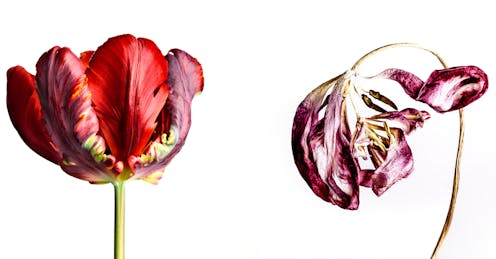
Women today, Lefevre points out, enter old age with laptops and mobile phones and a range of new possibilities. It is within this framework that the concept of blooming is so important.
Tending to one’s garden
For Lefevre, the great consolation and antidote to ageing is gardening. She writes movingly of her immense pleasure in tending a small, walled garden which enables her to watch her flowers, herbs and trees bloom and flourish. Her enthusiasm for gardening is one of the most engaging aspects of the book.
She includes several sections from her own gardening journals interspersed between chapters. Some of these depict the changing seasons, providing the structure for the book. There are also discussions of the ideas and practices of other gardeners and of the writing about gardens of several authors including Vita Sackville-West, Sylvia Townsend-Warner and an author who seems generally to be one of Lefevre’s favourites: Colette.

In the clearest illustration of how this book is intended to offer a pathway that others should follow, Lefevre points out how beneficial gardening is. Research has shown, we are told, getting one’s hands in the soil, “boosts serotonin levels and that serotonin, a natural antidepressant, strengthens the immune system”. No other group of people is so in need of garden therapy she insists “as those of us contemplating the more than half-empty glass”.
As she contemplates the whole question of ageing and seeks to come to terms with her experiences, Lefevre turns not only to gardening, but to literature. Although insistent there are no novels with older women as heroines or central figures, she cites several novelists, memoirists, and writers of short stories who address ageing in their work, sometimes in insightful ways.
Gardening writers are important here too. Lefevre deals with her own pain at her changing sense of time and losing a sense of herself at a younger age, for example, not only by gardening, but by reading Sackville-West, Nathaniel Hawthorne and Virginia Woolf. The slight she receives as an older woman seeking to photograph two young men for a magazine (involving a throw-away line about “old grannies”) leads her to the reflections on ageing and to a discussion of others who have written well about ageing: May Sarton and Doris Lessing.

Alongside her own experiences, Lefevre deals with some of the serious issues and problems confronting older women. While she has a home and a garden, many other women face a crisis in terms of shelter and finding a place to live. Bemoaning the end of multi-generational families in which the elderly lives at home, she discusses the alarming incidence of homelessness among ageing single women. Residential care is sometimes available, but not without problems.
One that concerns her particularly is that of unexpected intimacy, which is sometimes an affront to adult children and to nursing home administrators not accustomed to thinking about love in relation to ageing bodies. Loneliness too is dealt with here and so inevitably, is death and the question of voluntary assisted dying.
The book provides useful information and reflections on many issues that face older women in a very accessible way. But it is not always an easy or engaging read. The hybrid form is clearly an issue here as the linking of personal experience and general discussion is sometimes a little awkward.
Still blooming
While being told about the author’s life, we are always held at arm’s length from her. One yearns sometimes for the kind of intimacy that allows the reader to share the author’s feelings, as we find in some memoirs of ageing, Diana Athill’s Somewhere Towards the End, for example.
There is also something slightly problematic about Lefevre’s central concern. In seeking to understand and overcome ageism, she wants not only to write sympathetically about women and ageing, but “to understand what old age is for”.
I must confess to finding it hard to understand precisely what this statement means. Stages of life, in general, do not seem to be “for” anything. They are a necessary part of life and move one on to the next stage. In the case of old age, it is hard to see this could be anything other than moving one on to very old age – and inevitably death.
 Affirm Press
This concern to find a meaning and purpose for old age is linked to the sense of activism against ageism, something the author claims not only for herself, but enjoins other bloomers to undertake too. Having been shaped in the social and protest movements of the sixties, she wants us all to “do something about changing the ageing narrative” by talking about age and “rescuing the word ‘old’ from its position of insult”.
There is no question about the extent and nature of ageism in Australia – especially in relation to women. Nor is there any doubt many older people, especially women, suffer from homelessness and isolation.
At the same time, there is little recognition of the many facilities and social organisations available to older people or advocating for them, including the University of the Third Age or National Seniors Australia, or of the many ways “seniors” organise themselves – in walking, travel, theatre, film and book groups.
The slightly embattled sense one has of the author and her enjoining of others to become active with her in protesting against the negative narratives of ageing seems to belie the many ways other older women are continuing to bloom.
Authors: Barbara Caine, Professor Emerita of History, University of Sydney
Affirm Press
This concern to find a meaning and purpose for old age is linked to the sense of activism against ageism, something the author claims not only for herself, but enjoins other bloomers to undertake too. Having been shaped in the social and protest movements of the sixties, she wants us all to “do something about changing the ageing narrative” by talking about age and “rescuing the word ‘old’ from its position of insult”.
There is no question about the extent and nature of ageism in Australia – especially in relation to women. Nor is there any doubt many older people, especially women, suffer from homelessness and isolation.
At the same time, there is little recognition of the many facilities and social organisations available to older people or advocating for them, including the University of the Third Age or National Seniors Australia, or of the many ways “seniors” organise themselves – in walking, travel, theatre, film and book groups.
The slightly embattled sense one has of the author and her enjoining of others to become active with her in protesting against the negative narratives of ageing seems to belie the many ways other older women are continuing to bloom.
Authors: Barbara Caine, Professor Emerita of History, University of Sydney 


















