

SA’s marine algal bloom is still killing almost everything in its path
- Written by: Erin Barrera, PhD Candidate, School of Public Health, University of Adelaide
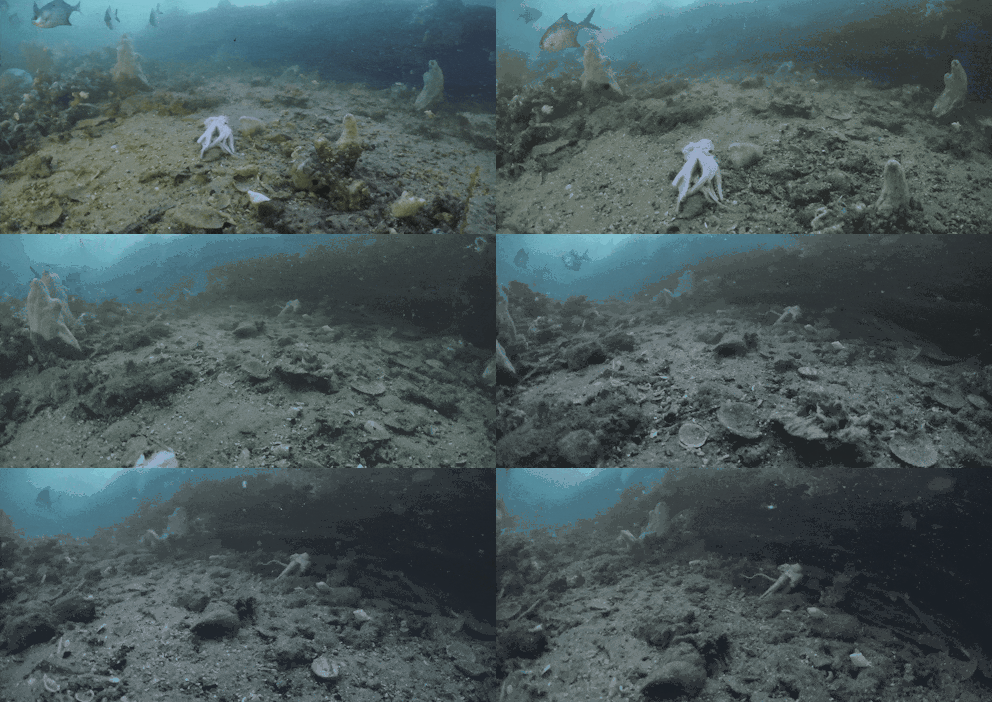
South Australian beaches have been awash with foamy, discoloured water and dead marine life for months. The problem hasn’t gone away; it has spread.
Devastating scenes of death and destruction mobilised locals along the Fleurieu Peninsula, Yorke Peninsula and Kangaroo Island. The state government has hosted emergency meetings, most recently with marine and environment experts from around Australia, and issued weekly updates.
Unfortunately, there are few ways to stop the bloom. Scientists had hoped strong westerly winds would break it up and push it out to sea. But so far, the wild weather has just pushed it through the Murray Mouth into the Coorong. And even if the bloom is washed away this winter, it could return in spring.
This bloom represents a stark warning to coastal communities, as well as tourism, seafood and aquaculture industries. It’s a sign of what’s to come, in Australia and around the world, as the oceans warm.

An unprecedented algal bloom
The first sign of trouble came in March this year, when dozens of surfers and beachgoers fell ill. Many reported sore eyes, coughing or trouble breathing.
Water testing soon revealed the cause: a harmful algal bloom of Karenia mikimotoi.
Most people felt better within hours or days of leaving the beach. But marine life of all kinds was washing up dead or dying.
Fish habitat charity OzFish set up a new citizen science project to capture the data, using iNaturalist.
OzFish SA project manager Brad Martin told a public forum the bloom was like an “underwater bushfire”, adding:
It’s suffocating fish, it’s taking the oxygen out of the water and it’s producing toxins.
Photos of dead fish, seahorses, octopuses and rays were already circulating on social media. So OzFish encouraged people to start using iNaturalist, to identify the species and capture the data.
The data shows more than 200 species of marine creatures died, including 100 types of fish and sharks. This includes popular recreational fishing species such as flathead, squid, crabs and rock lobsters.
Almost half the deaths were ray-finned fish species. A quarter were sharks and ray species. Then came soft-bodied “cephalopods” such as cuttlefish and octopus, and crustaceans such as crabs, lobsters and prawns.
Most of these species live on or near the sea floor with small home ranges. As in a bushfire, they have little chance of escape. Other fish that live in the open ocean, such as whiting, snapper and tuna, can swim away.

The culprit
K. mikimotoi is a type of microalgae. It uses sunlight and carbon dioxide to grow and divide, releasing oxygen.
In calm conditions, with plenty of light and warmth, the algal cells divide rapidly. Ideal conditions for algal growth are becoming more common as the climate changes and seas warm.
Algal toxins are known to cause illness and sometimes death in humans, pets and livestock.
K. mikimotoi is lethal to marine life, not humans. But the toxic effects in marine life are complicated and poorly understood.
The algae irritates fish gills, causing cell death and bleeding. It also causes hypoxia, or lack of oxygen in the blood. And when the algae die off, decomposition consumes huge amounts of oxygen – leaving marine life to suffocate.
Scientists now suspect other Karenia species may be involved too, due to the detection of brevetoxins in shellfish. This is the first detection of brevetoxins in Australia.
Grim scenes greeted divers in murky water at Edithburgh on the Yorke Peninsula. (Paul Macdonald of Edithburgh Diving)What can be done?
A marine heatwave is largely to blame. Sea surface temperatures have been 2.5°C warmer than usual since September. Relatively calm conditions, with little wind and small swells, also enabled the bloom to grow. Now it’s a matter of waiting for strong westerly winds to blow it all away.
The latest update shows sea surface temperatures have stabilised. But deeper gulf and shelf waters remain 1–2°C above average for this time of the year.
Climate change is making future blooms more likely. So tackling climate change is one way to help.
Another is minimising the runoff of nutrients into waterways. Microalgae can be found anywhere with enough water, light and nutrients. So reducing pollution can help reduce the risk of algal blooms.
This includes better management of fertiliser on farms and in home gardens. Lower levels of nutrients such as nitrogen and phosphorous will reduce the risk of future blooms in marine and inland waterways.
When it comes to blue-green algae, flushing with freshwater and stirring it up can disperse the colonies and prevent a bloom.
Monitoring is also important. OzFish encourages South Australians to continue providing photo reports via iNaturalist. Any new fish kills should also be reported to the state government.
The harmful algal bloom has transformed the reef at Edithburgh Jetty on the Yorke Peninsula. (Great Southern Reef)Microalgae are not all bad
It’s worth remembering life on Earth wouldn’t exist without microalgae. These tiny organisms produced 60% of the oxygen in the atmosphere today, and play an important role in balanced ecosystems.
The algae spirulina is a common dietary supplement. Microalgae are also potentially useful for water recycling, as a renewable biofuel and for capturing and storing greenhouse gases.
Heeding the lessons
Once a harmful algal bloom begins, it will persist for as long as conditions remain suitable.
This bloom already has lasted three months, and there’s no guarantee the end is near.
Recovery will be slow, as shown in the historical record and other parts of the world. And the risk of a repeat event is high.
Further research is needed to keep these ancient organisms in check.
With thanks to OzFish SA project manager Brad Martin, who contributed to this article.
Authors: Erin Barrera, PhD Candidate, School of Public Health, University of Adelaide


















