

Seabed mining is becoming an environmental flashpoint – NZ will have to pick a side soon
- Written by: Myra Williamson, Senior Lecturer in Law, Auckland University of Technology
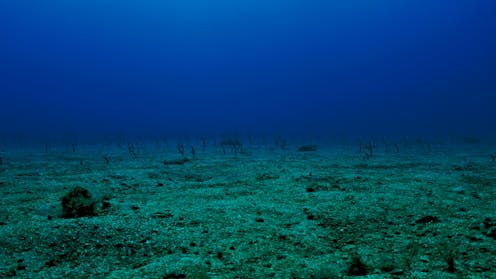
Seabed mining could become one of the defining environmental battles of 2025. Around the world, governments are weighing up whether to allow mining of the ocean floor for metal ores and minerals. New Zealand is among them.
The stakes are high. Deep-sea mining is highly controversial, with evidence showing mining activity can cause lasting damage to fragile marine ecosystems. One area off the east coast of the United States, mined as an experiment 50 years ago, still bears scars and shows little sign of recovery.
With the world facing competing pressures – climate action and conservation versus demand for resources – New Zealand must now decide whether to fast-track mining, regulate it tightly, or pause it entirely.
Who controls international seabed mining?
A major flashpoint is governance in international waters. Under international law, seabed mining beyond national jurisdiction is managed by the International Seabed Authority (ISA), created by the United Nations Convention on the Law of the Sea (UNCLOS).
But the US has never ratified UNCLOS. In April this year, President Donald Trump issued an executive order to bypass the ISA and allow companies to begin mining in international waters.
The ISA has pushed back, warning unilateral action breaches international law. However, the declaration from the recently concluded UN Ocean Conference in France does not urge countries to adopt a precautionary approach, nor does it ban deep seabed mining.
The declaration does “reiterate the need to increase scientific knowledge on deep sea ecosystems” and recognises the role of the ISA in setting “robust rules, regulations and procedures for exploitation of resources” in international waters.
So, while the international community supports multilateralism and international law, deep-sea mining in the near future remains a real possibility.
Fast-track approvals
In the Pacific, some countries have already made up their minds about which way they will go. Nauru recently updated its agreement with Canadian-based The Metals Company to begin mining in the nearby Clarion Clipperton Zone. The deal favours the US’s go-it-alone approach over the ISA model.
By contrast, in 2022, New Zealand’s Labour government backed the ISA’s moratorium and committed to a holistic ocean management strategy. Whether that position still holds is unclear, given the current government’s policies.
The list of applications under the Fast-track Approvals Act 2024 – described by Regional Development Minister Shane Jones as “arguably the most permissive regime” in Australasia – includes two controversial seabed mining proposals in Bream Bay and off the Taranaki coast:
Trans-Tasman Resources’ proposal to extract up to 50 million tonnes of Taranaki seabed material annually to recover heavy mineral sands that contain iron ore as well as rare metal elements titanium and vanadium.
McCallum Brothers Ltd’s Bream Bay proposal to dredge up to 150,000 cubic metres of sand yearly for three years, and up to 250,000 cubic metres after that.
Legal landscape changing
Māori and environmental groups have opposed the fast-track policy, and the Treaty of Waitangi has so far been a powerful safeguard in seabed mining cases.
Provisions referencing Treaty principles appear in key laws, including the Crown Minerals Act and the Exclusive Economic Zone and Continental Shelf (Environmental Effects) Act.
In 2021, the Supreme Court cited these obligations when it rejected a 2016 marine discharge application by Trans-Tasman Resources to mine the seabed in the Taranaki Bight. The court ruled Treaty clauses must be interpreted in a “broad and generous” way, recognising tikanga Māori and customary marine rights.
But that legal landscape could soon change. The Regulatory Standards Bill, now before parliament, would give priority to property rights over environmental or Indigenous protections in the formulation of new laws and regulations.
The bill also allows for the review of existing legislation. In theory, if the Regulatory Standards Bill becomes law, it could result in the removal of Treaty principles clauses from legislation.
This in turn could deny courts the tools they’ve previously used to uphold environmental and Treaty-based protections to block seabed mining applications. That would make it easier to approve fast-tracked projects such as the Bream Bay and Taranaki projects.
Setting a precedent
Meanwhile, Hawai’i has gone in a different direction. In 2024, the US state passed a law banning seabed mining in state waters – joining California (2022), Washington (2021) and Oregon (1991).
Under the Hawai’i Seabed Mining Prevention Act, mining is banned except in rare cases such as beach restoration. The law cites the public’s right to a clean and healthy environment.
As global conflict brews over seabed governance, New Zealand’s eventual position could set a precedent.
Choosing to prohibit seabed mining in New Zealand waters, as Hawai'i has done, would send a strong message that environmental stewardship and Indigenous rights matter more than short-term resource extraction interests.
If New Zealand does decide to go ahead with seabed mining, however, it could trigger a cascade of mining efforts across New Zealand and the Pacific. A crucial decision is fast approaching.
Authors: Myra Williamson, Senior Lecturer in Law, Auckland University of Technology


















