

Gilles Deleuze’s 1990 Postcript on the Societies of Control was eerily prescient
- Written by: Cameron Shackell, Sessional Academic, School of Information Systems, Queensland University of Technology
Our cultural touchstones series looks at influential works.
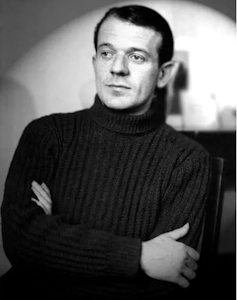
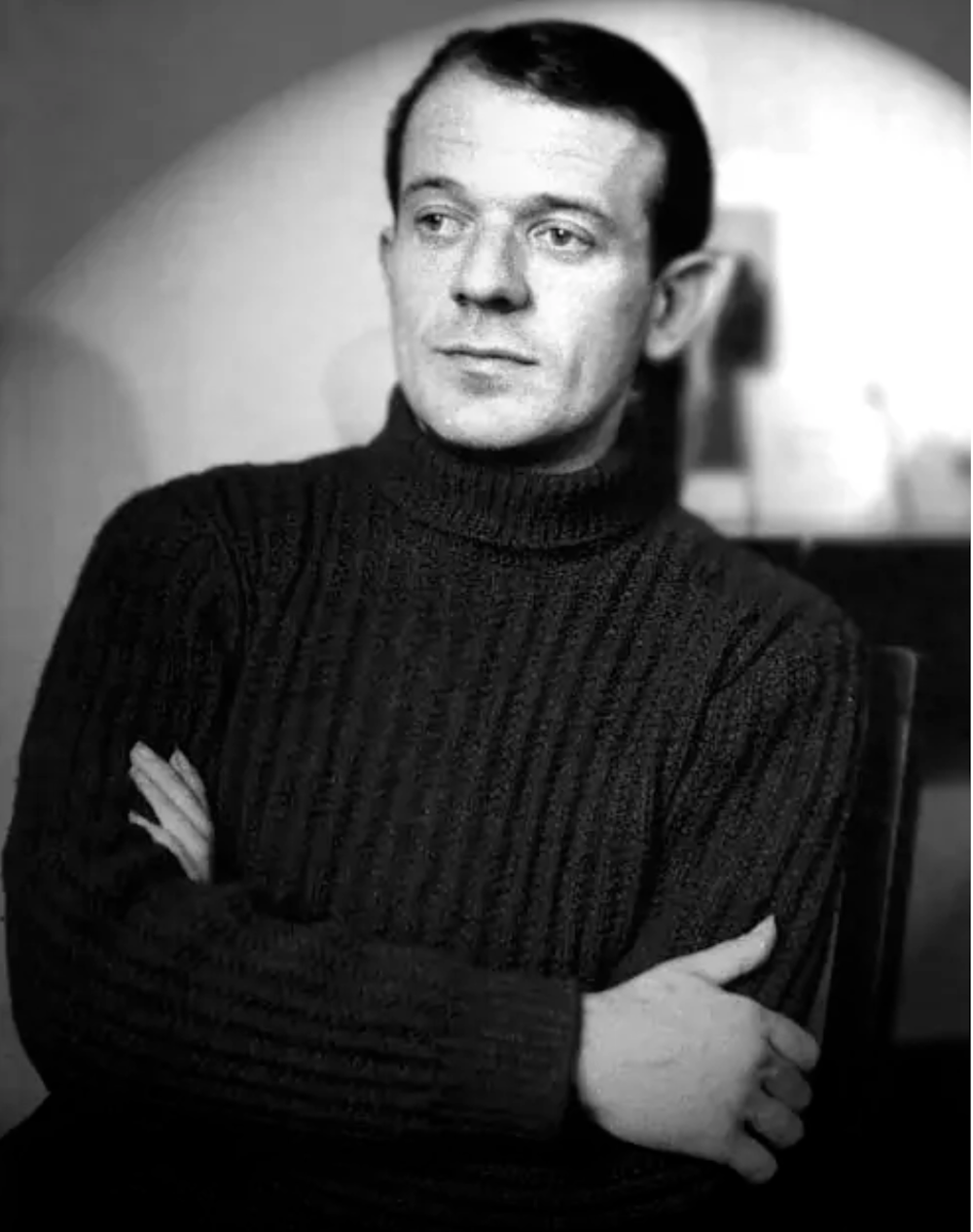
Gilles Deleuze was one of the most original and imaginative thinkers of postwar France. A lifelong teacher, he spent most of his career at the University of Paris VIII, influencing generations of students but largely shunning the mantle of public intellectual.
His complex, creative books mix philosophy, literature, film and politics – not to give clear answers, but to spark new ways of thinking.
Postscript on the Societies of Control, published 35 years ago in the countercultural L’Autre Journal is Deleuze at his most accessible and prophetic.
Written at a time when the Cold War was ending, computers were becoming more common, and the internet was beginning to connect institutions, the essay describes the emergence of a new kind of society – one not ruled by a single stern voice but by the soft hum of networks.
How societies work
Postscript was written as an update to the work of Deleuze’s contemporary Michel Foucault, who had died in 1984. Deleuze called it a “postscript” not just because of its brevity (it’s only around 2,300 words in English translation) but to highlight he wasn’t refuting Foucault, just building on his work.
From the 18th to early 20th centuries, Foucault had argued, Western societies were “disciplinary societies”. Schools, factories, prisons and hospitals – institutions with walls, schedules, routines and clear expectations – moulded behaviour. People were trained, observed, tested and corrected as they passed from one institution to the next.
Read more: 'A dark masterpiece': Foucault's Discipline and Punish at 50
But in the late 20th century, Deleuze saw something shifting. He thought the stodgy old disciplinary institutions were “in a generalized crisis” due to technological advances and a new form of capitalism that demanded more flexibility in workers and consumers.
New systems of management and technology were starting to reshape people without sending them through traditional institutions. Deleuze wrote presciently, for example, that “perpetual training tends to replace the school, and continuous control to replace the examination”.
In business, he saw a growing idea of “salary according to merit”, transforming work into “challenges, contests, and highly comic group sessions” – something much at odds with the old model of the standard wage and the assembly line. Traditional government institutions like hospitals and the classic factory were embracing the model of the corporation, driven always by a profit motive and the need for better human tools.
To Deleuze, all this meant people were becoming more “free-floating” – they could be still playing socially useful roles but were being gently steered into them. This greater freedom, however, required a new system to keep everyone in line. He called this “modulation” to underline its dynamic, enveloping nature.
Like nudging, but everywhere
Deleuze described modulation as “a self-deforming cast that will continuously change from one moment to the other”. He meant that people were beginning to live in an environment where everything shape-shifts to encourage or discourage us in the right direction without explicitly putting up walls.
A prime example of how modulation has since become commonplace is nudging – the use of psychological techniques, often subtle and data-driven, to shape people’s behaviour.
Nudging didn’t really exist in 1990, but governments and tech companies use nudges all the time now. We’re nudged to eat healthier, buy, save, recycle, donate. Web sites use “dark patterns” – tricky designs that steer (or nudge) us toward certain choices. Social media feeds use algorithms to exclude us if we say the wrong thing. In fact, entire teams of behavioural scientists operate behind the scenes to manipulate many aspects of our lives.
Nudges can be good and can save us from poor choices, but their newfound moral acceptability (sometimes called libertarian paternalism) is very much a clue that Deleuze’s control society has arrived.
Control in your pocket
Deleuze, who died in 1995, wrote Postscript before the advent of the smartphone, but he foresaw that an “electronic collar” would assume a central role in society. He envisaged a “computer that tracks each person’s position – licit or illicit – and effects a universal modulation.”
Smartphones more than fit the bill. In the old disciplinary ways, they track where we go, what we search for, what we buy, how many steps we take, even how well we sleep. But if we apply Deleuze’s ideas to these phones, detailed surveillance is no longer their most important function. Our phones present and curate options.
In effect, they shape how we see the world. When you scroll through news or social media, for instance, you’re reading about a version of the world built just for you, designed to keep you looking, clicking and reacting – and keep you very finely attuned to what is acceptable or dangerous behaviour.
In Deleuze’s terms, this is pure modulation: not a forceful “No” but a softly spoken, “How about this?” Your phone doesn’t lock you in – it draws you in. It shapes what you see, rewards your cooperation, ignores your silence, and always keeps score. And it does this 24/7. You might unlock it hundreds of times a day. And each time it’s updated to guide your next move more precisely.
At the same time our phones quietly turn us into a set of credentials useful for regulating physical access to workplaces, bank accounts, information: In the societies of control, writes Deleuze, “what is important is no longer either a signature or a number, but a code: the code is a password.”
Data points not people?
Deleuze warned that, in a control society: “Individuals have become ‘dividuals,’ and masses have become samples, data, markets, or ‘banks.’” A dividual to Deleuze is a person transformed into a set of data points and metrics.
You are your credit rating, your search history, your likes and clicks – a different dataset to every institution. Such fragments are used to make decisions about you until they effectively replace you. In fact, for Deleuze a dividual has internalised this treatment and thinks of themselves as a net worth, a mortgage size, a car value – psychological anchors for control.

He illustrates this point with healthcare, predicting a
new medicine ‘without doctor or patient’ that singles out potential sick people and subjects at risk, which in no way attests to individuation.
How many health decisions are now made for us collectively before we ever see a doctor? We should be grateful for advances in public health and epidemiology, but this has certainly impacted our individuality and how we are treated.
Hard to detect
An unsettling part of Deleuze’s perspective is that control doesn’t usually feel like control. It’s often dressed up as convenience, efficiency or progress. You set up internet-linked video cameras because then you can work from home. You agree to long terms and conditions because your banking app won’t work otherwise.
One problem is there are no longer clear barriers we can rail against. As Deleuze said:
In disciplinary societies one was always starting again (from school to the barracks, from the barracks to the factory), while in control societies one is never finished with anything.
Control doesn’t always crush – it can enable. Digital networks bring real freedom, economic possibility, even joy. We move more easily – both mentally and geographically – than ever before. But while we move, it always inside a kind of invisible map shaped by capitalism.
It’s no conspiracy because nobody has the whole map. So it’s difficult to work out exactly what action, if any, to take. As Deleuze concludes: “The coils of a serpent are even more complex than the burrows of a molehill.”
So what can we do?
Postscript doesn’t offer a political program beyond the sardonic comment that:
Many young people strangely boast of being ‘motivated’ […] It’s up to them to discover what they’re being made to serve.
There are ways to resist control. Some people demand more privacy or digital rights. Others opt out selectively – logging off, turning off, refusing to be nudged. Some look to art as a way of resisting its smooth grip. These acts – however small – may offer what Deleuze and his collaborator, the French psychiatrist and philosopher Félix Guattari, called lines of flight: creative ways to move not just against control, but beyond it.
The real message of Postscript, however, is its invitation to consider a timeless perspective. Any society must have a way to make people useful. So, what kind of society do we want? What kinds of restrictions are we willing to live under? And, crucial to this current age, how explicit should control be?
Authors: Cameron Shackell, Sessional Academic, School of Information Systems, Queensland University of Technology



















