

‘Guerrilla rewilding’ aims for DIY conservation – but it may do more harm than good
- Written by: Patrick Finnerty, Postdoctoral Research Fellow in conservation and wildlife management, University of Sydney
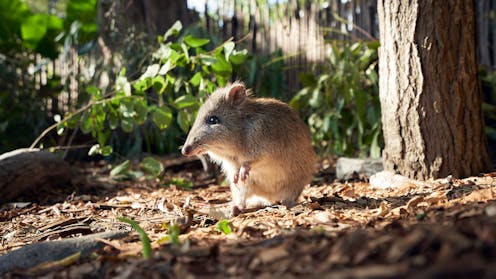
Ever since modern environmentalism took off in the 1960s, people have tried to undo the damage humans have caused to nature. Efforts have ranged from reducing threats, to restoring habitats, to reintroducing vanished species – and the results have been mixed.
However, these efforts have helped shape modern conservation science. This branch of knowledge uses ecological, genetic and behavioural insights to guide smarter, more ethical conservation actions.
Governments often use this science to decide whether restoration projects should be approved. However, approval processes may be slow, under-resourced and complex, leaving passionate people feeling shut out.
In response, some have turned to “guerilla rewilding” without approval, and often without due consideration of the potential for unintended impacts. As a recent ABC investigation showed, these passionate souls may release species into the wild or build self-managed sanctuaries, often dismissing scientists as “purists”.
What is rewilding?
Rewilding aims to restore wildlife and natural processes to ecosystems where they’ve been lost, often due to land clearing, agriculture or other human activities.
It may involve reintroducing a species that has disappeared from a landscape, or using a similar surrogate species to revive lost ecological functions. The goal is to rebuild functioning, self-sustaining systems. It’s not just about individual species, but the roles they play in sustaining nature.
In Australia, rewilding typically takes place in fenced reserves or on islands where invasive predators such as foxes and cats have been removed. These barriers offer protection, but require intensive planning, long-term management and ongoing funding.

The term “rewilding” itself has been criticised for harking back to a pre-colonial “wilderness”, overlooking First Nations’ connections to Country. But the goal of these projects is to restore ecological function and self-sustaining wildlife populations in shared, lived-in landscapes – including urban environments.
When done well, rewilding can support species recovery, repair ecosystems, and help reconnect people with nature. But success depends on evidence-based design, clear goals, ongoing monitoring, and (often) additional management over time (such as adding or removing animals).
Guerilla rewilding is risky
Guerrilla rewilding can go wildly wrong. Ecology, evolution, behaviour and welfare are deeply complex — and every species is a unique part of a much larger puzzle.
Scientists and conservationists are still learning how different animals survive and thrive in changing environments. Restoring these delicate systems without unintended consequences is also a challenge.
Without rigorous planning, there is a risk of inbreeding or a mismatch between animals and their environment. Animals raised inside fences may become overabundant, or too naive to survive in the wild. Disease, overgrazing and long-term habitat degradation are other risks.
Learning from science, not bypassing it
Successful rewilding draws on decades of ecological insight — genetics, behaviour, predator-prey dynamics, health, and ecosystem function.
Guerilla rewilders may see these as unnecessary academic add-ons. But when reintroductions fail, it’s often because one of these elements was overlooked. Frequently reported problems include animal behaviour, monitoring difficulties, quality of release habitat, and lack of baseline knowledge.
However, accessing the science – and navigating the approvals that rely on it – isn’t always easy. Conservation processes are often slow, under-resourced and opaque. It’s no surprise some view them as “green tape”.

Indeed, in Australia, it’s harder to get a restoration project approved than it is to get approval for land clearing.
Yet bypassing this system risks repeating old mistakes. So if we want rewilding to work, we need to make it easier to engage with evidence, expertise and ethical safeguards.
Engagement may be as simple as working with the right partners from the outset. This may include Traditional Owners, universities, non-government organisations, and local conservation and environmental community groups.
Collaboration, not conflict
A lot of people and groups have the same goal: to restore thriving wild animal populations as part of more complete, diverse and resilient ecosystems. That outcome is best achieved through collaboration, sharing of expertise, and trust.
Traditional Owners, scientists, carers, zoos, non-government organisations and government agencies all bring crucial knowledge. By turning shared passion into practical, evidence-based action, we can ensure rewilding efforts contribute to real, lasting outcomes for Australian and global biodiversity.
So what does this look like in practice? First of all, it’s about getting connected.
People with land or passion to contribute can contact organisations such as the Australian Wildlife Conservancy, WWF-Australia, Arid Recovery, several universities, or state parks and wildlife services. These groups have likely already done the groundwork, from habitat assessment to long-term planning. Joining existing efforts may get more done than starting solo.
Policymakers can contribute not only funding, but also transparency. More open and understandable approval processes may lower the barriers for community-led rewilding efforts.
As for scientists like us, we need to step beyond peer-reviewed papers. That means clearer communication, real-world partnerships, and embracing outreach – particularly in urban or accessible rewilding projects.
The authors wish to acknowledge the contributions of Peter Banks, Donna Houston, Phil McManus, Catherine Grueber and Mareshell Wauchope to this article.
Authors: Patrick Finnerty, Postdoctoral Research Fellow in conservation and wildlife management, University of Sydney


















