

new study sheds light on the emotional toll for emergency volunteers
- Written by: Natalie Roche, PhD Candidate, Centre for Ergonomics and Human Factors, La Trobe University
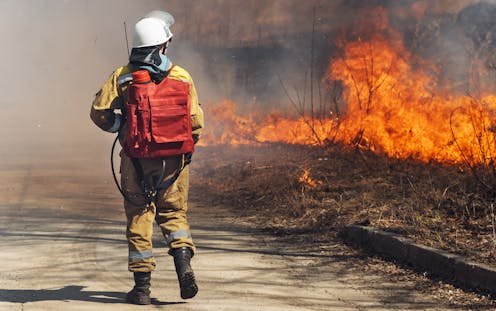
In Australia, there are around 235,000 emergency service volunteers who help communities respond and recover after natural disasters and other traumatic events.
These include volunteers with metropolitan and rural fire services and other rescue organisations.
As natural disasters grow more frequent and severe with climate change we rely on these volunteers now more than ever. Yet volunteer numbers are shrinking.
Our new research reveals an important but often hidden toll from natural disasters – the mental health of emergency service volunteers, who risk physical and emotional burnout.
In our study, we interviewed 32 Victorian State Emergency Service (SES) and Country Fire Authority (CFA) volunteers. They told us they’re often not getting adequate support.
Exposure to death
Death is something commonly hidden behind clinical curtains. But for emergency service volunteers, exposure to dying and death is just part of the job. Death on jobs arrives unpredictably – on roads, in burned homes, after storms, floods and suicides.
Given their work often takes place in the local community, victims are frequently known to the volunteer, which can further complicate grief. As one participant told us:
You’re bound to come across someone you know, or someone you love at some point […] in a bad situation.
Another recounted a colleague’s experience:
It wasn’t until the next day that she found out that she actually knew the deceased person, but didn’t recognise them.
Volunteers described often being first on scene to assist but not fully prepared for what they find. They recounted experiences including retrieving children who had drowned, watching people dying on the roadside, and finding burnt and maimed human remains.
These encounters provoke intense emotional responses, from shock and sadness to feeling powerless and vulnerable. For many, feelings of helplessness and grief reverberate into everyday life. As one volunteer told us:
I was in a semi-breaking-down sort of place […] having flashbacks […] struggling to hold emotions and do my day job.
A lack of formal support
We identified over-reliance on informal team support and individual resilience to cope with difficult emotions.
Structured debriefs depended on leadership and team dynamics. Leaders with “tough it out” mindsets unintentionally perpetuated stigma around seeking help. One participant explained:
People generally will just sit there and not talk about how they feel […] They’re feeling ashamed or embarrassed.
The mindset of some teams seems to be that those who can’t manage the demands of the job should leave. One volunteer said:
It’s mostly very hard and tough. But if you’re going to survive in the game, you gotta be hard.
Support programs exist, but often focus on major disasters rather than the more everyday jobs. Referral depends on leaders flagging those seen as at-risk or individual volunteers asking for support. One participant explained:
We do a debrief with peer support, but some people put on a brave face […] There needs to be more follow up.
What’s more, support is sometimes difficult to access. One participant, a team leader, explained what happened when a volunteer in their team wasn’t coping:
I called the mechanisms that [we] were told that we need to access. I’ve got somebody here that’s suicidal, nobody escalated it. I still hadn’t heard back six hours later.
Importantly, our findings also highlighted that a one-size-fits-all approach doesn’t work. For some, peer support is a lifeline for processing experiences and building resilience, but not for others.
Five women killed. And the peer support was all over us. You know, we got to the stage where it was ridiculous. We’ve had enough, we don’t want this. It re-traumatises people who want to move on.
Protecting those who protect us
Talking to emergency service volunteers from only two organisations in one jurisdiction may limit the extent to which we can generalise our findings to other regions, countries or cultures.
However, Victoria does have the second largest number of emergency service volunteers in Australia (behind New South Wales).
Emergency service volunteers are extremely proud and passionate about serving their community and show up with care, calm and strength. But our findings show this comes at a personal cost, especially without the right supports.
Volunteer exposure to death and dying must be recognised as a serious occupational health and safety issue, not just an emotional side effect of the job. We need proactive, not reactive reform if we want to recruit, retain and protect the people we count on in a crisis.
Legislators and organisations should work collaboratively with emergency service volunteers to develop and implement responsive and consistent support services, culture and leadership.
Without targeted, systemic and consistent support, we risk the future of our community-based emergency response. It’s time to protect those who protect us.
If this article has raised issues for you, or if you’re concerned about someone you know, call Lifeline on 13 11 14 or Beyond Blue on 1300 22 4636.
Authors: Natalie Roche, PhD Candidate, Centre for Ergonomics and Human Factors, La Trobe University


















