

Google AI


Modern Australian

We spent a month writing and reading in glass boxes. We read faster, wrote more – and inspired passersby

  • Written by: Fergus Edwards, Lecturer in English, University of Tasmania
We spent a month writing and reading in glass boxes. We read faster, wrote more – and inspired passersby

Lucy Christopher, a new mother, had been trying to return to her work-in-progress for several months, but could find neither time, headspace, nor validation that writing was worth the time away from her child.

Why should she spend time writing when it would likely bring few financial rewards? Anyway, could she still write? Perhaps having a baby had permanently lessened her ability to think creatively for sustained periods?

She had the idea of using public installation as a method to investigate and inspire her creative process. Perhaps writing in a public glass box, something a little like performance art, could be a way to reclaim the role of writer?

Throughout the month of June, we were among 11 writers and 30 readers who spent time sitting in glass boxes in a public square in Hobart for the WritersBLOCK / ReadersBLOCK project. The project was part of the Hobart City Council’s InsideOUT initiative, in which boxes containing visual art are displayed around the city.

People were able to watch local writers working in real time, and readers consuming books by Tasmanian authors. Writers and readers became creative artefacts, allowing observers to witness the humans at the centre of the struggling literary industry.

Over 30 books were read and more than 30,000 words were written. Members of the public stopped to look at the blocks roughly every minute. About a third of them stopped for longer, to take photographs or read the artist’s statement.

The participants were given space to notice what has been blocking their ability to write or read. Everyone involved was invited to consider why we value reading and writing in name but not in action, and to consider what is needed to preserve these increasingly uncommon activities in Australia.

Blocked authors

The average Australian author earns just A$18,200 per year from their writing – more than $7,500 below the poverty line.

“Writers typically spend only around half their working time producing original work,” according to the 2022 National Survey of Australian Book Authors. Even while writing, only “6% of authors reported no competing demands for their writing time”.

It takes time to write a book. If a typical writer produces 300 words an hour, then it’s 267 hours to produce a first draft of an 80,000-word novel. And that’s just the mathematics; the creation of a novel almost inevitably comes with self-doubt, insecurity, and often outright panic.

Liz Evans. Author provided (no reuse)

Writers who participated in the project frequently cited family demands as a major block to writing. Ben Walter, author of What Fear Was, mentioned “family commitments […] alongside other work and commitments, makes it hard to devote oneself to the difficult art of writing, particularly when there’s little prospect of reward”.

Liz Evans, author of Catherine Wheel, agreed: “as a writer I work from home and earn far less money than my partner, so family and household duties tend to fall on my shoulders, and this represents the biggest block to my work.”

Struggling readers

Readers are also struggling. Australians can read, but they are choosing not to.

According to the most recent OECD Survey of Adult Skills, Australia’s literacy rates are better than those in the UK and US, even though “relatively large proportions of the adult population in Australia have poor literacy”. And yet reading rates in Australia are declining.

More than 25% of Australians had not read or listened to a book in the previous year, according to the National Reading Survey conducted by Australia Reads in 2021, which also found that “reading rates in Australia lag behind international standards”.

Only 64% of Australians purchased a book in 2023, fewer than almost all countries surveyed by the European and International Book Federation.

Time, care and labour

The idea behind WritersBLOCK / ReadersBLOCK was to investigate the public’s effect on the creative process. The boxes were a way of representing the simultaneous isolation and exposure of the act of writing. There are echoes of musician PJ Harvey, who recorded an album in a glass box in 2015 to show aesthetic production in action.

As one participant, Cameron Hindrum, author of Blue Cathedral, observed: “The cube was a little set, with props, and I had an audience. I got to play the role of The Writer.”

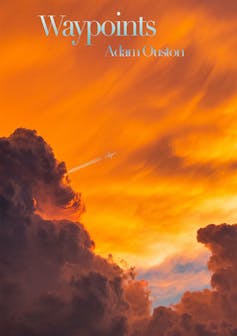
Alongside the writer’s block was a reader’s block. The first reader who stepped into the block was Fergus Edwards. He picked Adam Ouston’s Waypoints from the bookshelf and sat down. Two hours later, he had nearly finished the 172-page novel, reading at least 25% faster than when reading in an open-plan workspace for his job. The glass boxes allowed passers-by to observe both creator and audience: the human beings at the centre of the creative act. They were reminded that art is the result of time, care and labour. One passerby mused: I love the idea of reading and know it’s important [..] But I myself am rarely reading. Seeing this exhibit, so many of the reasons why people do not read resonate. Barb, a university student, went further. ReadersBLOCK, she said, reminded me that reading is great because you can do it anywhere […] there’s nothing stopping me pulling out a book […] this has inspired me to do exactly that. At it’s simplest, ReadersBLOCK spurred one passerby to just “remember how much I love reading”. A person, not a product The writers and readers who took part found WritersBLOCK / ReadersBLOCK valuable. After 25 days of two-hour-long sessions in WritersBLOCK, Christopher produced the first draft of a new picture book, replotted her work-in-progress, and wrote 16,000 words of her novel. She often averaged around 1,000 words each session: significantly more than she has been able to write at home. Another participant, Kate Kruimink, recent winner of the Tasmanian Premier’s Prize for fiction couldn’t believe how productive she was. She enthused that she “went into this weird zone where the two hours flew by and out the other side I’d written 3000 words”. Another writer “enjoyed the inviolability of the time [and the] expectation that I would write […] I’m shockingly good at meeting OTHER people’s expectations!” Woman writing behind glass window
Lucy Christopher in the WritersBLOCK. Rajiv Edward, Author provided (no reuse)

Participating readers also found their time in ReadersBLOCK beneficial. One commented that ReadersBLOCK “created a validation of the activity and the discovery of a book I had longed to read but never found the time.” Another noted that, “after 2 years of not reading or writing, I opened a book in the block and read, [then] I went to the bookshop, bought that book and have almost finished it.”

So why should the glass block prove to be such a productive space? Christopher suspects it is related to the accountability writing in such a public place demands. With people watching her, she can’t sit and do nothing. No doom-scrolling: she must at least pretend to write.

But the public also offers validation. Each time someone stops to take a photo, read the artist’s statement, or just watch the writer at work, they are connecting with the process and considering what it takes to write.

For participating readers, the biggest difference was not the quantity but the intensity of the reading. Without office chatter or email alerts, it was easier to become immersed in a book.

But there was another aspect. Having a writer visible in the next block was a reminder that a book is not just another product to be consumed: it is something a particular person wrote, something that has taken time and effort to produce.

Humanising reading and writing in this way might remind us of the importance of stories and the benefits of making time to slow down and enjoy them.

Authors: Fergus Edwards, Lecturer in English, University of Tasmania

Read more https://theconversation.com/we-spent-a-month-writing-and-reading-in-glass-boxes-we-read-faster-wrote-more-and-inspired-passersby-259797

Breach of Contract in Business: What Are Your Options?

Contracts are essential to business relationships. They establish expectations, allocate responsibilities and provide a framework for delivering goods...

How Pest Control Companies Can Rank for the Problems Customers Search First

Introduction SEO for Pest Control needs to start with the customer’s problem. Most people do not search for pest services in a neat or technical wa...

What Are the Benefits of Renovating an Older Home in Sydney?

Sydney has plenty of character homes, from Federation cottages to mid-century brick homes. Renovating rather than rebuilding can preserve what makes t...

Pool and Deck Design: How to Plan the Perfect Outdoor Living Space for Your Sydney Home

For many Australians, the backyard is where life happens. Summer barbecues, weekend swims and long evenings outdoors are all part of the lifestyle, ...

Is Solar Pool Heating Worth It? What Sydney Homeowners Should Know

There's nothing quite like a backyard pool on a hot Sydney day. But once autumn rolls in, many pools sit unused for months because the water is simp...

Planning a Luxury House Move: A Week-by-Week Timeline for Prestige Sydney Homes

Selling or buying a prestige home is a major milestone. Whether it's a waterfront residence in Birchgrove, a grand Federation home in Haberfield or ...

Downsizing or Upgrading Your Caravan? Here's How to Sell It Without the Hassle

Selling a caravan can feel like a major task, especially when you are unsure about its value, paperwork, or how to find a buyer. Whether you are dow...

The Best Overseas Adventure Holidays for Australians Who Love the Outdoors

Australia offers no shortage of incredible outdoor experiences, but sometimes the best way to satisfy your sense of adventure is to head overseas. A...

Cape Town Wine Shuttle: Winelands Tasting & Tours

Embark on an unforgettable journey through the picturesque Cape Winelands, where world-class wines and breathtaking scenery await. Our Cape Town Win...

Metal Fabrication: Choosing Metal Fabrication Melbourne Services for Custom Projects

What Modern Metal Fabrication Involves From individual components to complete structures, metal fabrication brings together processes such as desig...

Why Giant Rats Tail Grass Keeps Coming Back After Spraying

Giant Rats Tail Grass (GRT) is one of the most frustrating pasture weeds for farmers and lifestyle property owners. You spray an infested area, see th...

When Custom Cardboard Boxes Make Sense for Your Business

Custom cardboard boxes can be useful when a standard carton does not fit a product, packing method or presentation requirement particularly well. A ...

Full-Height vs. Pop-Top Caravan: Which Is Better for Family Travel across WA?

A pop-top caravan is an excellent choice for travellers who want the comfort of a caravan without committing to a larger, bulkier setup. With a lowe...

Bottle Label Printing: Key Factors for a Professional Finish

Why the Printing Method Matters When businesses need packaging or printed containers developed for a particular application, the right supplier can m...

Virtual Livestock Fencing and GPS Tracking: Improving Visibility Across Cattle Properties

What Virtual Livestock Fencing Means for Modern Cattle Management Managing cattle across extensive properties requires more than knowing where anim...

Sydney Pawnbrokers Explained: How Hocking Your Car Actually Works

Sometimes you need cash, and you need it soon. If you own a car, you may already have a way to get it. That's what people mean when they say they've...

Moving Interstate from the Gold Coast to Brisbane (or Back)? What Removalists Wish You Knew First

Have you talked to anyone who’s done the move? They say the same thing: the drive up the M1 is the easy part. It's everything around it that catches...

Why the Spring School Holidays Are a Great Time to Visit Coffs Harbour

The spring school holidays are a good time to spend a few days on the Coffs Coast. The weather is starting to warm up, there is plenty to do outdoor...

















