A top court has urged nations to clamp down on fossil fuel production. When will Australia finally start listening?
- Written by Wesley Morgan, Research Associate, Institute for Climate Risk and Response, UNSW Sydney
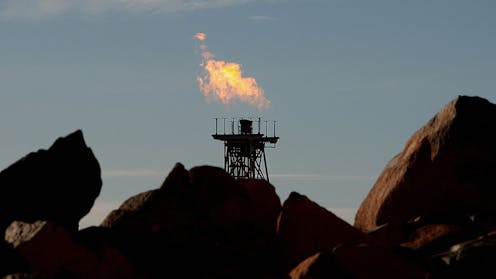
As Climate Change and Energy Minister Chris Bowen tours the Pacific this week to spruik his government’s commitment to climate action, fossil fuel exporters such as Australia are under unprecedented scrutiny.
In a landmark ruling on Friday, Latin America’s highest human rights court found countries in that region are legally obliged to protect people from climate harms. The obligation includes tougher government regulations for fossil fuel extraction.
The finding applies to nations in the Organization of American States. But it adds to a growing number of international rulings clarifying nations’ legal obligations to tackle the climate crisis – especially if they export fossil fuels.
And it echoes long-held concerns from Australia’s Pacific neighbours: that climate change is an existential threat, and coal and gas exporters have a responsibility to act.
A legal tide is building
Australia is a major fossil-fuel exporter. When coal and gas mined in Australia is burned overseas, emissions are three times those of our entire domestic economy.
Since 2000, Australia has approved more than 700 oil, gas and coal projects. This includes federal approval in May for Woodside’s North West Shelf project – a huge expansion of gas production off Western Australia.
Emissions from these projects damage Earth’s climate, increasing the risk of harm to people around the world.
As climate change worsens, the United Nations and others are calling on countries to phase out fossil fuel production. A string of litigation involving human rights and the environment is adding to the pressure.
In a ruling handed down late last week, the Inter-American Court of Human Rights said people have the right to a stable climate and that states should regulate fossil fuel extraction and exploration.
The ruling was delivered in Spanish. According to an English translation, it said nation-states should require fossil-fuel companies to:
take effective measures to combat climate change and related human rights impacts, to conduct appropriate due diligence, to adopt transition plans, and to provide accurate information regarding the impacts of their operations on climate change and human rights.
The ruling was an “advisory opinion”, and not legally binding. But it establishes the law on human rights obligations for the nations involved, and interpretations of international law for other nations.
It comes as the International Court of Justice weighs up a request from the United Nations General Assembly, to clarify countries’ obligations under international law to protect Earth’s climate and environment from greenhouse gas emissions.
The campaign for the case was launched in 2019 by a group of law students at the University of the South Pacific.
This ruling will apply directly to Australia. Judges in the case are likely to take into account the findings of the Inter-American Court of Human Rights – and Australian policymakers will be watching closely.
International law is catching up with the science
Key instruments of international law, such as the UN Human Rights Conventions, were developed in the decades before a scientific consensus on global warming.
But the science has moved on. And it’s now clear that nations have legal obligations to prevent human rights harms arising from climate change.
In 2022, the UN Human Rights Committee found Australia was failing to meet its obligations to protect Indigenous Torres Strait Islanders from the adverse impacts of climate change.
In May this year, UN Special Rapporteur on Climate Change and Human Rights, Elisa Morgera, called on nations to end new fossil fuel projects and begin phasing out of fossil fuel production this decade, to protect human rights.
Australia has argued only the Paris Agreement – which requires countries to set targets to cut domestic emissions – should apply when it comes to mitigating climate change. It has also argued protecting human rights does not extend to obligations to tackle climate change by cutting emissions.
Such arguments have now been rejected by international courts and tribunals. Continuing to approve new fossil fuel projects, with no plan to phase out fossil fuel production, puts Australia in violation of international legal obligations.
Australia’s obligations are also being considered in domestic cases. For instance, the Federal Court is next week due to hand down a decision on the government’s obligations to cut emissions to protect Torres Strait Islanders from climate impacts. If successful, the case may force the federal government to rapidly reduce emissions.
The law is not on Australia’s side
On his trip to the Pacific this week, Chris Bowen will emphasise Australia’s commitment to tackling climate change, and progress discussions on the joint Australia–Pacific bid to host the global COP31 climate talks next year. He told the media:
Australia and the Pacific’s joint bid for COP31 is about ensuring that the region’s voice shapes global climate action for the benefit of the Australian and Pacific people.
I look forward to deepening our cooperation with Pacific neighbours; not only to build a fairer, cleaner energy future, but to bring COP31 home for our region in 2026.
People in the Pacific now know international law is on their side. Ultimately, a managed shift away from fossil fuels is inevitable - and the time for Australian policymakers to ignore the industry’s climate harms is ending.
Authors: Wesley Morgan, Research Associate, Institute for Climate Risk and Response, UNSW Sydney