Melting ice will strengthen the monsoon in northern Australia – but cause drier conditions north of the Equator
- Written by Corey J. A. Bradshaw, Matthew Flinders Professor of Global Ecology and Node Leader in the ARC Centre of Excellence for Indigenous and Environmental Histories and Futures, Flinders University
Almost two-thirds of the world’s population is affected by the monsoon – the annual arrival of intense rains in areas north and south of the Equator. These drenching rains tend to arrive during each hemisphere’s summer.
The East Asian monsoon north of the equator is the best known and best studied, because it affects the largest land area and the most people. But the southern Indo-Australian monsoon is vitally important to northern Australia, Indonesia and Papua New Guinea. To date, it has been studied much less.
To help fill this gap in knowledge, we analysed deep sediment from an unusual lagoon near Darwin in northern Australia. We looked at ancient pollen and chemical isotopes (different versions of the same chemical element) to look about 150,000 years back in time and glimpse changes to the monsoon. When types of pollen change, it tells us the monsoon has changed. Drier conditions favour the emergence of grasslands, while wetter climates favour forests.
Our new research suggests as the world gets hotter, the Indo-Australian monsoon will intensify and northern Australia will get wetter. This finding is consistent with research suggesting the East Asian monsoon could weaken, threatening agriculture and nature in heavily populated countries.

The past held in a single lagoon
To examine how monsoons change over time, researchers drill sediment cores to track changes in pollen and chemical isotopes. For example, changes in hydrogen isotopes indicate changes in the intensity of the monsoon rain.
The problem is, these cores have to come from long-undisturbed lake sediments, because such places provide a continuous record of change.
To reconstruct past changes in monsoon patterns, undisturbed sediments have to be sampled carefully by extracting a thin “core” from the bottom sediments. Once researchers have this precious core, they can examine the changing proportions of pollen, chemical isotopes and other properties. The deeper you drill the core, the farther back in time you can look.
These exacting requirements are one reason the Indo-Australian monsoon is not as well understood as its northern cousin.
Fortunately, we have found one place which has kept a detailed environmental record over a long period: Girraween Lagoon on the outskirts of Darwin in the Northern Territory.
This lagoon was created after a sinkhole formed more than 200,000 years ago. It has contained permanent water ever since, and is slowly filling with sediment and pollen blown in from the surrounding landscape.
The 18-metre core from Girraween’s sediments gave us a 150,000-year record of environmental change in Australia’s northern savannahs.
It took hard work to extract the core from Girraween Lagoon.Dipping into the past
If you walk around Girraween Lagoon today, you’ll see a tall and dense tree canopy with a thick grass understory in the wet season. But it hasn’t always been that way.
During the last ice age 20,000–30,000 years ago, the sea level was much lower and the polar ice caps much larger. As a result, the lagoon was more than 300 kilometres from the coast. At that time, the lagoon was surrounded by an open, grassy savannah with fewer, shorter trees.
About 115,000 years ago (and again 90,000 years ago), Australia was dotted with gigantic inland “megalakes”. At those times, the lagoon expanded into a large, shallow lake surrounded by lush monsoon forest, with almost no grass.
At times, tree cover changed radically. In fact, over one 3,000-year period, the percentage of tree pollen soared from 15% to 95%. That suggests a sweeping change from grassland to dense forest – meaning a switch from drier to wetter climate at a rate too fast to be explained by changes in Earth’s orbit.
Some of these changes are linked to the shifting distance between coastline and lagoon as well as predictable variation in how much solar energy reaches Earth.
A connection to the North Atlantic
Huge ice sheets covered large areas of the Northern Hemisphere during previous ice ages.
Remarkably, the evidence of their melting at the end of previous ice age was there in the sediment core from Girraween Lagoon.
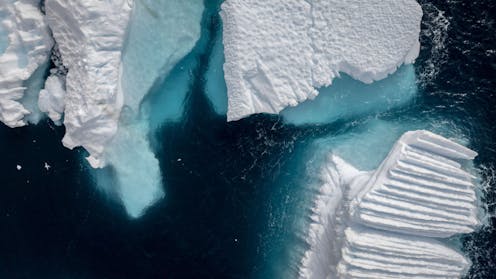
When glacial ice melts rapidly, huge volumes of fresh water flood into the North Atlantic. These rapid pulses are known as Heinrich events. These pulses can shut down the warm Gulf Stream current up the east coast of North America. As a result, the Northern Hemisphere cools and the Southern Hemisphere warms.
Over the last 150,000 years, there have been 14 of these events. We could see evidence of them in the sediment cores. Every gush of fresh water in the Atlantic triggered higher rainfall over northern Australia because of the buildup of heat in the Southern Hemisphere as the Gulf Stream slowed.
What does this mean for the monsoon?
All this suggests the Indo-Australian monsoon will get more intense as the world gets hotter and more ice melts.
That would mean a wetter northern Australia. It could also bring more rainfall to other Australian regions, and neighbouring countries. At this stage, it’s too uncertain to predict what an intensifying monsoon would do to the southern parts of Australia.
We might already be seeing this shift. Weather records since the 1960s show northern Australia getting steadily wetter, and less rain in Australia’s southeast and southwest.
What would this mean for people? Australia’s tropical north is not densely populated, which would reduce the human impact of an intensifying monsoon.
But while our research suggests the Indo-Australian monsoon strengthens during Heinrich events, earlier research has shown the East Asian and other Northern Hemisphere monsoons will weaken. Without reliable monsoonal rains, food and water supplies for billions of people could be at risk.
Authors: Corey J. A. Bradshaw, Matthew Flinders Professor of Global Ecology and Node Leader in the ARC Centre of Excellence for Indigenous and Environmental Histories and Futures, Flinders University