Trump has flagged 200% tariffs on Australian pharmaceuticals. What do we produce here, and what’s at risk?
- Written by Joe Carrello, Research Fellow, The University of Melbourne
US President Donald Trump’s proposed tariffs on Australia’s pharmaceutical exports to the United States has raised alarm among industry and government leaders.
There are fears that, if implemented, the tariffs could cost the Australian economy up to A$2.8 billion. That’s both in direct exports and as inputs to third countries that produce drugs also hit by tariffs.
The proposed tariffs come amid growing pressure from pharmaceutical lobby groups in the US for Trump to use trade negotiations as a tool to make changes to the Pharmaceutical Benefits Scheme (PBS) and raise Australian drug prices.
In response, Treasurer Jim Chalmers stated the government would not compromise the integrity of the PBS to do a deal with the Trump administration. Nationals Senator Bridget McKenzie also confirmed bipartisan support for the PBS.
Our largest export market for pharmaceuticals
The US is Australia’s biggest pharmaceutical export market, accounting for 38% of total Australian pharmaceutical exports and valued at $2.2 billion last year.
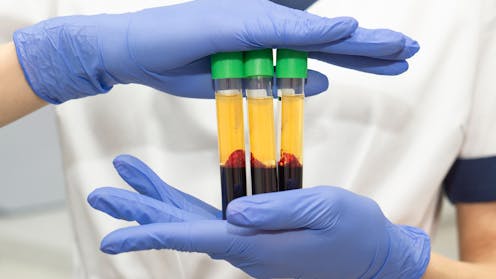
About 87% of exports to the US consist of blood plasma products, mainly from manufacturing giant CSL. These are used for transfusions in a range of medical and surgical situations.
In a submission to the US Commerce Department, which is reviewing the sector, CSL called for tariffs to be phased in over five years, and for an exemption for certain biotech equipment.
Trump floated proposed tariffs potentially as high as 200%. But he also said these would not be imposed for “about a year, a year and a half” to allow negotiations to take place.
If tariffs are eventually implemented, there are fears domestic manufacturing may suffer, with negative flow-on effects for Australian research and innovation in the sector.
How does the PBS work?
The PBS is an Australian government program aimed at providing affordable prescription medicines to Australians.
It helps reduce the cost of essential medications, ensuring access to treatments for a wide range of medical conditions. Medicines included on the PBS are subsidised by the government, with the patient making a capped co-payment. More than 900 medicines were listed on the scheme in 2023–24, costing the government $17.7 billion.
Decisions to list medications on the PBS are made by the health minister based on recommendations from the Pharmaceutical Benefits Advisory Committee. The committee evaluates the clinical effectiveness, safety, cost-effectiveness (“value for money”) and estimated financial impact of new medications.
If approved, the PBS uses this information to negotiate directly with pharmaceutical companies, helping to keep prices affordable.
How does the US system compare?
This contrasts with the US system, which operates more under free-market principles. In the US, pharmaceuticals are subsidised through private health insurance or government programs such as Medicaid. Neither directly negotiates with pharmaceutical companies.
The fragmented nature of the US system enables pharmaceutical companies to maintain higher prices, as there is no central authority to enforce cost controls. Studies have shown that prices for pharmaceuticals in the US are, on average, 2.78 times those in 33 other countries.
In addition, in the US pharmaceutical companies are granted extensive patent protections. These provide exclusive rights to sell their drugs for a certain period.
This exclusivity often leads to monopolistic pricing practices, as generic competitors are barred from entering the market until the patent expires.
In Australia, patents also exist. But the PBS mitigates their impact by negotiating prices and promoting the use of cost-effective alternatives, such as generics, once they become available.
Industry lobbying
US pharmaceutical industry bodies have long criticised the PBS. They claim the scheme “undervalues new innovative medicines by setting prices based on older inferior medicines and generics, and through use of low and outdated monetary thresholds per year of life gained from clinically proven treatments”.
The slow process to list drugs on the PBS has also attracted criticism. The advisory committee meets only three times a year, with resources currently being stretched beyond capacity.
In response to these criticisms, the Australian government commissioned a review, which was completed in 2024. It provided 50 recommendations to ensure Australians can continue to access effective, safe and affordable medicines in an equitable and timely way.
The government has established an advisory group to work on implementing these recommendations. However, it is unclear whether proposed changes will appease the powerful US pharmaceutical industry.
Authors: Joe Carrello, Research Fellow, The University of Melbourne