

How much salt is OK in drinking water? Without limits, Australia’s health gap widens in remote and regional areas
- Written by: Juliette Crowther, Researcher in Food Policy, George Institute for Global Health
Most Australians consume far too much sodium, mostly in the form of salt (sodium chloride) in the food they eat.
The National Health and Medical Research Council recommends no more than 2,000 milligrams of sodium a day, roughly one teaspoon of salt.
Yet the average Australian consumes nearly twice that.
In some regional and remote communities, salty drinking water is quietly adding to this problem – yet sodium levels in tap water are often overlooked.
Our new research reviewed 197 countries and shows when drinking water standards for sodium exist, they’re usually based on taste, not health.
Most follow guidance from the World Health Organization (WHO) which, in its global campaign to lower sodium intake, has focused on diet but largely ignored drinking water.
Salty water is an overlooked health risk
Excess sodium is a major risk factor for high blood pressure and cardiovascular diseases, such as heart attacks and stroke. These are leading causes of death and disability across the world.
In 2013, these health risks led the WHO to set a global target to reduce sodium intake by 30% by 2025. The WHO has since extended this to 2030, due to slow progress.
Public health efforts to reduce sodium (salt) have focused mainly on food, not drinking water. This is because most tap water contains low sodium levels (usually below 20mg per litre).
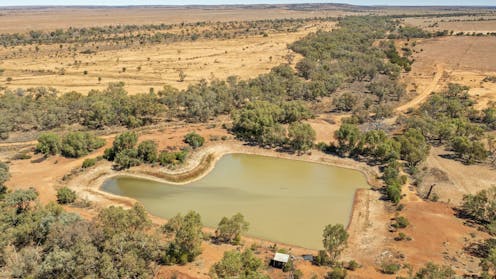
But some natural water sources contain excessively high sodium. In Australia, this mainly affects remote and rural communities.
Evidence suggests it’s a growing issue, compounded by climate change, rising sea levels, more frequent storms, prolonged droughts, and human activities, including over extraction of groundwater and agricultural runoff.
What does the WHO say about water?
The WHO’s recommended threshold for sodium in water – no more than 200mg/L – is based on how water tastes (palatability), not what is safe for health.
Worryingly, the WHO recommendations about drinking water are based on an outdated 2003 report that found evidence linking sodium with high blood pressure was lacking.
Convincing evidence has since confirmed that higher sodium intake is directly related to increased blood pressure.
The WHO updated its dietary guidelines for sodium in 2012 to reflect these health risks. But water guidelines have not changed.
What our new research shows
Our new research, published in recent weeks, reviewed guidelines for sodium in drinking water in 197 countries.
It found 20% of countries – home to 30% of the world’s population – have no sodium limit in drinking water.
Among the 132 countries that do, most (92%) follow WHO guidelines.
Our research found only 12 countries cited health reasons for setting sodium limits, and just two of these set stricter limits than WHO guidelines.
This means across the world, most drinking standards for sodium continue to be guided by taste, not health.
Palatability is highly subjective. Just as some people enjoy salty chips and others find them overpowering, sensitivity to sodium in water varies.
In contrast, the health risks of too much salt are clear.
What do Australia’s guidelines say?
Australia’s drinking water guidelines include a non-mandatory sodium limit of 180mg/L, also based on taste.
But this is still too high to protect health.
Drinking two litres of water at this concentration in one day would mean having 360mg of sodium – almost one-fifth of the recommended maximum. This is equivalent to eating a large bag of sea-salt popcorn.
While the guidelines do recommend that people with high blood pressure drink water with less than 20mg/L sodium, there is no clear plan for how this can be achieved equitably, especially when the alternative is expensive bottled water.
Water inequity in Walgett
The consequences of this policy gap are stark in places such as Walgett, a remote town in north-western New South Wales with a high Aboriginal population (almost 50%).
In 2018, when the local river ran dry, the town switched to bore water. Residents immediately noticed the water was slimy and undrinkable.
Local Aboriginal community controlled organisations asked researchers from the University of New South Wales to test the water. This revealed sodium levels over 300mg/L.
In 2020, the New South Wales government eventually installed a desalination plant, but due to issues managing waste, it was decommissioned a few months later.
Today, Walgett still lacks a long-term solution to provide drinking water with low levels of sodium.
Water inequality is health inequality
Walgett isn’t an isolated case. Many inland and remote towns, often with high Aboriginal populations, rely on rivers and bore water increasingly affected by drought and agricultural overuse.
This inequity in access to safe drinking water worsens the health gap.
Indigenous Australians already face higher rates of high blood pressure, cardiovascular disease, and chronic kidney disease – all worsened by excess sodium.
In places such as Walgett, where some people report spending as much as A$50 a week on bottled water, families are forced to choose between safe hydration and essentials such as food or medicine.
Without mandatory health-based limits, these communities have no way to compel authorities to make their water safe.
Safe drinking water is a human right
In 2023, the European Union mandated legally binding drinking water standards in all member states.
Although still based on the outdated 200mg/L taste threshold, this legal framework gives communities a basis to advocate for safer water – something Australia currently lacks.
A sodium limit closer to the United States Environmental Protection Agency guideline of 30–60mg/L would better align with health advice.
Without enforceable, health-based limits, Australia risks falling behind on its commitments to the sodium reduction targets and sustainable development goals set by the United Nations.
No one should have to fight for safe drinking water. If we want to protect our most vulnerable communities, water policy must catch up with science and public health priorities.
We would like to thank all of the authors of the paper, and the Yuwaya Ngarra-li, a community-led partnership between the Dharriwaa Elders Groups in Walgett and the University of New South Wales.
Authors: Juliette Crowther, Researcher in Food Policy, George Institute for Global Health


















