

Rules for calculating climate risk in financial reporting by NZ businesses need revisiting – new research
- Written by: Martien Lubberink, Associate Professor of Accounting and Capital, Te Herenga Waka — Victoria University of Wellington
The recent International Court of Justice (ICJ) decision on climate action marked a significant step forward in formalising an idea many already accept: climate inaction is not merely a policy failure, but potentially a breach of legal duty by governments.
The court’s opinion is not legally binding but establishes global expectations. Crucially, the court confirmed environmental protection includes a duty to regulate private businesses and organisations.
In New Zealand, large organisations already have to list climate-related risks in their annual reports and regulatory filings under the External Reporting Board’s Climate Standards.
But our latest research suggests the benefits of mandatory climate reporting regulation in New Zealand may not be as straightforward as they appear.
Extreme weather, limited financial impact
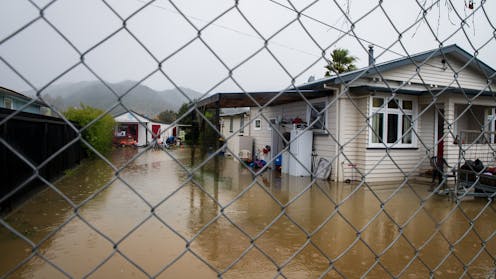
We analysed how New Zealand’s stock market responds to extreme weather events (heavy rain, windstorms, snow, temperature spikes and thunderstorms) using data curated by Earth Sciences New Zealand.
Climate risk is widely assumed to have an impact on markets. So, we expected investors would respond to damaging weather with selloffs or price adjustments.
Instead, we found most extreme weather events had little to no impact on the share prices of New Zealand’s 50 largest listed companies, those on the NZX50.
Even firms directly exposed to these events – airlines, utilities, logistics companies – showed only muted reactions, if any.
It may be that markets already price in these risks. Or that firms have managed them effectively through infrastructure investment and planning.
What is more, the location and severity of extreme weather in New Zealand have remained relatively stable over the past three decades.
Using a statistical analysis, we found no evidence of accelerating trends typically attributed to global warming. This technique assessed whether a particular extreme weather event can be linked to human-induced climate change.
New Zealand’s extreme weather events tend to involve cold, rain and wind – unlike the heatwaves, wildfires and droughts that dominate international headlines.
What this means for disclosure mandates
If markets are already efficiently pricing in these risks – or if the risks are genuinely immaterial for the company – the benefits of mandatory disclosure may be overstated.
Our study suggests the case for universal, mandatory disclosure of extreme weather events under the climate board’s standards may not be strong. If financial impacts are already reflected in stock prices, the current voluntary framework may suffice for many firms.
This is not an argument against disclosure broadly. While our study did not assess other climate-related risks – such as supply chain disruption or chronic sea level rises – these may well be material for some organisations, especially unlisted or regionally exposed firms.
But for the NZX50, where climate regulation is currently focused, the value of standardised extreme weather events disclosures seems limited.
Global principles, local realities
None of this contradicts the ICJ’s opinion.
The court emphasised that states must act, not only to reduce emissions but to protect against climate-related harm. That includes harm caused by private actors, who must be subject to effective regulation.
But the ICJ also recognises the importance of national circumstances. While bound by international obligations, each country still needs to tailor its climate policies to the actual risks it faces.
To do otherwise risks shifting government energy and private capital towards compliance that offers little benefit to investors, the public or the climate.
New Zealand at a crossroads
The ICJ decision comes as New Zealand’s climate ambition appears to be softening.
The government recently released an updated emissions pledge that barely improves on its predecessor. At the same time, it is also reviving offshore oil and gas exploration, expanding coal production and backing legislation to shield carbon-intensive firms from environmental, suitability and governance aligned lending decisions by banks.
Such moves may be politically popular in some quarters, but they sit uneasily with both the ICJ’s vision and New Zealand’s obligations under the Paris Agreement and various trade deals.
If New Zealand wants to avoid being seen as lagging – or worse, a bad-faith actor – it must reconcile its domestic policies with international decision-making.
That does not mean copying regulation from other countries. But it does mean being honest about what is material, what is symbolic and what actually helps reduce emissions or build resilience.
Regulation needs to be smart, not just visible
The ICJ opinion should not be used to justify every climate policy proposal. Rather, it should encourage governments to develop regulation that is meaningful, proportionate and based on evidence.
Our study offers one such piece of evidence. In terms of financial market impacts, New Zealand’s extreme weather may not justify the same disclosure obligations as those in countries where the physical risks are more severe or more clearly linked to climate change.
This is not a reason to do less. It is a reason to do better. Policy needs to target disclosure where it matters, to focus adaptation spending where it is needed and to measure the impact of climate policies not only by their intentions, but by their outcomes.
In short, the ICJ has spoken. Now it is up to each country to act wisely.
Authors: Martien Lubberink, Associate Professor of Accounting and Capital, Te Herenga Waka — Victoria University of Wellington


















