Modern Australian
The Times

John Hirst was a rigorous historian, independent thinker and passionate believer in Australia

  • Written by Anna Clark, Professor in Public History, University of Technology Sydney
John Hirst was a rigorous historian, independent thinker and passionate believer in Australia

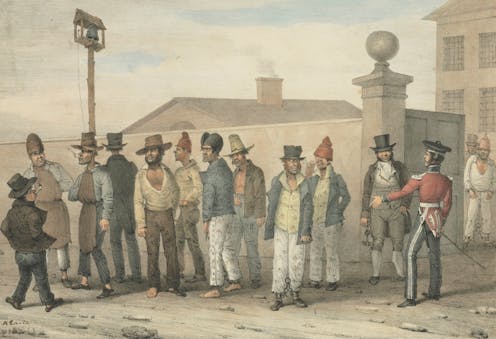
I first read John Hirst (1942-2016) as an undergraduate in the late 1990s as part of a subject on 19th-century Australian history. We discussed convict history and explored contrasting views about its role and function in the early colonies. What was life as a convict like? Was transportation a cruel punishment or a ticket to a better future? Could we compare the convict system to slavery?

Hirst’s Convict Society and Its Enemies was one of our required readings and I studied it with interest.

Review: John Hirst: Selected Writings – edited by Chris Feik (Black Inc.)

I had devoured Robert Hughes’s The Fatal Shore the previous summer and had been powerfully swayed by his descriptions of visceral cruelty in the penal colony. There were convicts who rubbed lime in their own eyes because blindness was preferable to working in the kilns. Others were whipped until flesh hung in strips from their backs and collapsed on treadmills from exhaustion.

Hirst demurred. Yes, there was violence, he agreed, but England was a violent place in the late 18th and early 19th centuries. Rather than judge, historians must understand the broader context of that world. Comparing convicts to slaves overlooked historical evidence that pointed to the relative freedom convicts enjoyed in colonial society. Due to the dire shortage of labour, for example, convicts were able to control aspects of their own lives, working on their daily tasks for the state in the morning and then having their “own time” after the day’s work was done. This not only facilitated considerable freedom for convicts, but also their power in the fledgling society. Following their sentences, convicts were free to own property and, from 1842, even to vote and stand for the New South Wales Legislative Council. Critically, the children of convicts were all born free, not into servitude. Impact and legacy The central arguments of Convict Society and Its Enemies are reproduced in an essay included in this posthumous collection of Hirst’s writings, edited by Chris Feik. The book catalogues some of Hirst’s major contributions to Australian historiography, spanning 50 years of scholarship from the mid 1970s. How Did a Penal Colony Change Peacefully into a Democracy? is classic Hirst. The prose is crisp and succinct, avoiding jargon and calmly outlining the logic of its contention, drawn from a deep reading of the sources. Hirst critiques what he sees as convict research motivated by ideology rather than the evidence of this period in Australia’s past. In doing so, he sets himself apart from historians who viewed the convicts as victims of a brutal, dehumanising system. Selected Writings also includes short personal reflections from a fellow historian, a former student, and a colleague, which help frame the impact and legacy of Hirst’s work. His intellectual independence is noted by each of the three contributors. “Hirst prided himself on his resistance to the current of fashionable opinion,” notes Frank Bongiorno, “and he was above all else a fiercely independent individual.” This wasn’t about being contrary, adds Alex McDermott, but a process of applying the same critical analysis to the field as he did to his primary sources. Hirst “viewed his project as more than mere provocation”. He was both a passionate believer in Australia, as well as a fiercely independent voice, writes Robert Manne. Bongiorno, McDermott and Manne all emphasise Hirst’s personal generosity and commitment to teaching and the profession – he was clearly loved by generations of students. Upon the book’s release, I was struck by comments on social media and at conferences from colleagues and former students who remembered acts of kindness that accompanied Hirst’s rigorous commitment to debate. This collection feels like a faithful reflection of that contribution to Australian history.
John Hirst had an ‘ongoing interest in the emergence of Australian democracy’. The opening of the Parliament of Australia on May 9 1901, Melbourne – Tom Roberts (1903) Public domain, via Wikimedia Commons

A historian’s conscience

Selected Writings covers several major themes Hirst pursued in his research. We see a persuasive defence of democracy and an ongoing interest in the emergence of Australian democracy, in particular. Hirst’s account of national sentiment as a driver towards federation is compelling, as it understands the important imaginative leap required to hold a nation together beyond the establishment of political institutions. And his belief in republicanism is a thread he returned to across his career.

Another substantial theme is Hirst’s belief in, and support for, the history discipline. At the heart of his approach and practice is a contention that evidence and source criticism fundamentally broaden our knowledge of the past. Ideas are tested, and debates between historians are equally intrinsic to evaluating hypotheses and arguments.

Reading this diverse collection, I find Hirst’s writing provocative in a good way. I often had to pause and ask myself, do I agree or disagree here? What is my argument? Where is the evidence for my opinion?

Hirst’s body of work represents an implicit but powerful defence of evidence-based history at a time when the truth is under attack from venal Trumpism and students are submitting dispiriting essays written by GenAI. He was a powerful advocate for the discipline, advancing what history educators would call a form of historical literacy or historical thinking.

In response to the Howard Government’s proposal to develop a national history curriculum in 2006, for example, Hirst agreed with the need for a more rigorous and coordinated approach to the subject. Yet he also insisted that history’s purpose must be to teach the skills of empirical research and criticism, rather than jingoism.

John Hirst in 2015. Matthew Duchesne, via Wikimedia Commons, CC BY

Given the spread of these essays and the genealogy of Hirst’s career, it was a curious decision to organise the collection thematically, rather than chronologically. I am aware this criticism is likely framed by my own interests, and a thematic approach allows for a different organisation of ideas, but I did wonder what context was perhaps missed by not seeing the evolution of Hirst’s writing over time.

For example, the essay Changing My Mind appears first, but reflects back on Hirst’s career in Australian history. I was also surprised that one of his most well-known (and controversial) essays was not included in the collection or cited in the select bibliography. It’s another piece I first read as an undergraduate – a pointed critique of Creating a Nation by Patricia Grimshaw, Marilyn Lake, Ann McGrath and Marian Quartly, published in Quadrant in 1995, in which Hirst questioned whether a gendered history of Australia could and should be written. “A history of gender relations,” he argued, “is something less than the history of the nation.”

Obviously, all edited collections require curatorial decisions based on all sorts of reasons, but the exclusion of this essay was notable, given its prominence.

Other pieces in Selected Writings include Hirst’s critiques of what he termed the “black school” of Australian history writing. He was referring to the movement of historical revision advanced by labour, feminist, migrant and First Nations histories, which have challenged Australia’s understanding of its historical “progress”.

Hirst resisted this movement for being ideologically driven. But that is not to say he wasn’t interested in the “historian’s conscience”. He was, deeply. The essay that opens the collection was published in a volume on that very topic.

Yet his commitment to the history discipline also ran up against a growing acknowledgement within the field that empirical history has been complicit in and essential to exploitative systems of imperialism and colonisation. Hirst wanted historians to understand the past in context. “History writing will always reflect our current preoccupations,” he argued, “but as a disciplined enquiry it is also committed to understanding past people in their own terms.”

It’s a view that has been challenged in recent decades, as historians have sought to understand the ways history itself has legitimised and storied the settler-colonial project by curating its own archives and rules of historical evidence. As well as uncovering the past, history also has its own “blind eyes”, as Catherine Hall famously acknowledged.

Given Hirst’s commitment to debate, and his belief in collegiality and the sharing of ideas, that is a spirited discussion I reckon he would have been up for.

Authors: Anna Clark, Professor in Public History, University of Technology Sydney

Read more https://theconversation.com/provocative-in-a-good-way-john-hirst-was-a-rigorous-historian-independent-thinker-and-passionate-believer-in-australia-258683

Father's Day Gift Ideas for Men Who Are Hard to Buy For

Some dads are easy to buy for. Others do not want anything, already have everything, or give you the classic "don't worry about me" answer every yea...

Top 5 Mistakes That Wear Out Your Brakes Faster

Brakes don't need frequent replacements like oil changes do.   But a lot of the wear happens quietly, over months, because of habits most drivers...

Plantation Shutters vs Curtains: Which Is Better for Your New Home?

Moving into a new home is an exciting opportunity to personalise your space and make it your own. While many homeowners focus on furniture, flooring...

Celebration of Life vs Traditional Funeral: What's the Difference?

When saying goodbye to someone you love, there is no single way to honour their life. Every family has different traditions, beliefs, and preference...

Building Approval for Roofing Projects: What Homeowners Need to Know

Roofing projects are an important part of maintaining and protecting your home. Whether you're repairing storm damage, replacing an ageing roof, or ...

Chatswood Tutoring And Its Role In Academic Achievement

Academic success often requires more than classroom attendance alone. Students face increasing expectations as they progress through school, particu...

Why Laser Hair Removal Treatments Continue Growing In Popularity

Managing unwanted hair can become time-consuming and frustrating for many people, especially when shaving, waxing, and other temporary methods requi...

Choosing the Right Devices for a Flexible Workplace

For IT leaders managing large fleets, the device layer is where workforce productivity and security policy meet. The shift towards flexible and hybrid...

How Business Advisory Services Help Companies Achieve Sustainable Growth

Every business owner aims to build a profitable and sustainable organisation. While dedication, innovation, and hard work are important, achieving l...

Why Body Contouring Has Become A Popular Cosmetic Treatment

Many people maintain healthy lifestyles through regular exercise and balanced eating habits but still struggle with stubborn areas of fat that are d...

How to Choose the Right POS Hardware for Your Business in Australia

A lot of Australian business owners spend weeks researching POS software but buy hardware almost as an afterthought. That's a mistake. The wrong har...

Why Material Handling Hose Is Critical for Industrial Efficiency

A high-performance material handling hose is an essential component in industries that transport abrasive, dry, or bulk materials on a daily basis...

How to Choose the Right Lawyer in Melbourne for Your Situation

Choosing legal support can feel difficult, especially when the stakes are personal or business-related. The right lawyer in Melbourne should underst...

Hoteliers Look to Clever Value Adds to Increase Revenue

The Australian hospitality industry is still in recovery mode after a notoriously rough patch in recent years. While there has been a post-COVID tra...

Moving to Queensland? Here’s How to Prep Your Car for the Big Move North

There’s no sign of the northern migration slowing down, with thousands of southerners fleeing from chaotic lifestyles and cooler climates for a brig...

Diesel Shortage to Impact Trades and Contractors

Strait of Hormuz blockage affecting all major parts of trades and construction Trades and construction across residential, commercial and industria...

Why Holiday Home Owners Turn to Rental Management Agents

The Allure — and the Reality — of Renting Out Your Property Owning a holiday home is a dream for many Australians. Whether it's a beachside sha...

Why Finding Reliable Doctors In Bundoora Is Important For Long-Term Health

Access to quality healthcare plays an important role in maintaining overall wellbeing and managing health concerns early. Trusted Doctors in Bundoor...