

Google AI


Modern Australian

John Hirst was a rigorous historian, independent thinker and passionate believer in Australia

  • Written by: Anna Clark, Professor in Public History, University of Technology Sydney
John Hirst was a rigorous historian, independent thinker and passionate believer in Australia

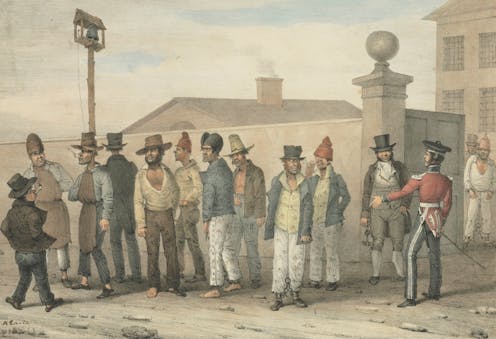
I first read John Hirst (1942-2016) as an undergraduate in the late 1990s as part of a subject on 19th-century Australian history. We discussed convict history and explored contrasting views about its role and function in the early colonies. What was life as a convict like? Was transportation a cruel punishment or a ticket to a better future? Could we compare the convict system to slavery?

Hirst’s Convict Society and Its Enemies was one of our required readings and I studied it with interest.

Review: John Hirst: Selected Writings – edited by Chris Feik (Black Inc.)

I had devoured Robert Hughes’s The Fatal Shore the previous summer and had been powerfully swayed by his descriptions of visceral cruelty in the penal colony. There were convicts who rubbed lime in their own eyes because blindness was preferable to working in the kilns. Others were whipped until flesh hung in strips from their backs and collapsed on treadmills from exhaustion.

Hirst demurred. Yes, there was violence, he agreed, but England was a violent place in the late 18th and early 19th centuries. Rather than judge, historians must understand the broader context of that world. Comparing convicts to slaves overlooked historical evidence that pointed to the relative freedom convicts enjoyed in colonial society. Due to the dire shortage of labour, for example, convicts were able to control aspects of their own lives, working on their daily tasks for the state in the morning and then having their “own time” after the day’s work was done. This not only facilitated considerable freedom for convicts, but also their power in the fledgling society. Following their sentences, convicts were free to own property and, from 1842, even to vote and stand for the New South Wales Legislative Council. Critically, the children of convicts were all born free, not into servitude. Impact and legacy The central arguments of Convict Society and Its Enemies are reproduced in an essay included in this posthumous collection of Hirst’s writings, edited by Chris Feik. The book catalogues some of Hirst’s major contributions to Australian historiography, spanning 50 years of scholarship from the mid 1970s. How Did a Penal Colony Change Peacefully into a Democracy? is classic Hirst. The prose is crisp and succinct, avoiding jargon and calmly outlining the logic of its contention, drawn from a deep reading of the sources. Hirst critiques what he sees as convict research motivated by ideology rather than the evidence of this period in Australia’s past. In doing so, he sets himself apart from historians who viewed the convicts as victims of a brutal, dehumanising system. Selected Writings also includes short personal reflections from a fellow historian, a former student, and a colleague, which help frame the impact and legacy of Hirst’s work. His intellectual independence is noted by each of the three contributors. “Hirst prided himself on his resistance to the current of fashionable opinion,” notes Frank Bongiorno, “and he was above all else a fiercely independent individual.” This wasn’t about being contrary, adds Alex McDermott, but a process of applying the same critical analysis to the field as he did to his primary sources. Hirst “viewed his project as more than mere provocation”. He was both a passionate believer in Australia, as well as a fiercely independent voice, writes Robert Manne. Bongiorno, McDermott and Manne all emphasise Hirst’s personal generosity and commitment to teaching and the profession – he was clearly loved by generations of students. Upon the book’s release, I was struck by comments on social media and at conferences from colleagues and former students who remembered acts of kindness that accompanied Hirst’s rigorous commitment to debate. This collection feels like a faithful reflection of that contribution to Australian history.
John Hirst had an ‘ongoing interest in the emergence of Australian democracy’. The opening of the Parliament of Australia on May 9 1901, Melbourne – Tom Roberts (1903) Public domain, via Wikimedia Commons

A historian’s conscience

Selected Writings covers several major themes Hirst pursued in his research. We see a persuasive defence of democracy and an ongoing interest in the emergence of Australian democracy, in particular. Hirst’s account of national sentiment as a driver towards federation is compelling, as it understands the important imaginative leap required to hold a nation together beyond the establishment of political institutions. And his belief in republicanism is a thread he returned to across his career.

Another substantial theme is Hirst’s belief in, and support for, the history discipline. At the heart of his approach and practice is a contention that evidence and source criticism fundamentally broaden our knowledge of the past. Ideas are tested, and debates between historians are equally intrinsic to evaluating hypotheses and arguments.

Reading this diverse collection, I find Hirst’s writing provocative in a good way. I often had to pause and ask myself, do I agree or disagree here? What is my argument? Where is the evidence for my opinion?

Hirst’s body of work represents an implicit but powerful defence of evidence-based history at a time when the truth is under attack from venal Trumpism and students are submitting dispiriting essays written by GenAI. He was a powerful advocate for the discipline, advancing what history educators would call a form of historical literacy or historical thinking.

In response to the Howard Government’s proposal to develop a national history curriculum in 2006, for example, Hirst agreed with the need for a more rigorous and coordinated approach to the subject. Yet he also insisted that history’s purpose must be to teach the skills of empirical research and criticism, rather than jingoism.

John Hirst in 2015. Matthew Duchesne, via Wikimedia Commons, CC BY

Given the spread of these essays and the genealogy of Hirst’s career, it was a curious decision to organise the collection thematically, rather than chronologically. I am aware this criticism is likely framed by my own interests, and a thematic approach allows for a different organisation of ideas, but I did wonder what context was perhaps missed by not seeing the evolution of Hirst’s writing over time.

For example, the essay Changing My Mind appears first, but reflects back on Hirst’s career in Australian history. I was also surprised that one of his most well-known (and controversial) essays was not included in the collection or cited in the select bibliography. It’s another piece I first read as an undergraduate – a pointed critique of Creating a Nation by Patricia Grimshaw, Marilyn Lake, Ann McGrath and Marian Quartly, published in Quadrant in 1995, in which Hirst questioned whether a gendered history of Australia could and should be written. “A history of gender relations,” he argued, “is something less than the history of the nation.”

Obviously, all edited collections require curatorial decisions based on all sorts of reasons, but the exclusion of this essay was notable, given its prominence.

Other pieces in Selected Writings include Hirst’s critiques of what he termed the “black school” of Australian history writing. He was referring to the movement of historical revision advanced by labour, feminist, migrant and First Nations histories, which have challenged Australia’s understanding of its historical “progress”.

Hirst resisted this movement for being ideologically driven. But that is not to say he wasn’t interested in the “historian’s conscience”. He was, deeply. The essay that opens the collection was published in a volume on that very topic.

Yet his commitment to the history discipline also ran up against a growing acknowledgement within the field that empirical history has been complicit in and essential to exploitative systems of imperialism and colonisation. Hirst wanted historians to understand the past in context. “History writing will always reflect our current preoccupations,” he argued, “but as a disciplined enquiry it is also committed to understanding past people in their own terms.”

It’s a view that has been challenged in recent decades, as historians have sought to understand the ways history itself has legitimised and storied the settler-colonial project by curating its own archives and rules of historical evidence. As well as uncovering the past, history also has its own “blind eyes”, as Catherine Hall famously acknowledged.

Given Hirst’s commitment to debate, and his belief in collegiality and the sharing of ideas, that is a spirited discussion I reckon he would have been up for.

Authors: Anna Clark, Professor in Public History, University of Technology Sydney

Read more https://theconversation.com/provocative-in-a-good-way-john-hirst-was-a-rigorous-historian-independent-thinker-and-passionate-believer-in-australia-258683

Breach of Contract in Business: What Are Your Options?

Contracts are essential to business relationships. They establish expectations, allocate responsibilities and provide a framework for delivering goods...

How Pest Control Companies Can Rank for the Problems Customers Search First

Introduction SEO for Pest Control needs to start with the customer’s problem. Most people do not search for pest services in a neat or technical wa...

What Are the Benefits of Renovating an Older Home in Sydney?

Sydney has plenty of character homes, from Federation cottages to mid-century brick homes. Renovating rather than rebuilding can preserve what makes t...

Pool and Deck Design: How to Plan the Perfect Outdoor Living Space for Your Sydney Home

For many Australians, the backyard is where life happens. Summer barbecues, weekend swims and long evenings outdoors are all part of the lifestyle, ...

Is Solar Pool Heating Worth It? What Sydney Homeowners Should Know

There's nothing quite like a backyard pool on a hot Sydney day. But once autumn rolls in, many pools sit unused for months because the water is simp...

Planning a Luxury House Move: A Week-by-Week Timeline for Prestige Sydney Homes

Selling or buying a prestige home is a major milestone. Whether it's a waterfront residence in Birchgrove, a grand Federation home in Haberfield or ...

Downsizing or Upgrading Your Caravan? Here's How to Sell It Without the Hassle

Selling a caravan can feel like a major task, especially when you are unsure about its value, paperwork, or how to find a buyer. Whether you are dow...

The Best Overseas Adventure Holidays for Australians Who Love the Outdoors

Australia offers no shortage of incredible outdoor experiences, but sometimes the best way to satisfy your sense of adventure is to head overseas. A...

Cape Town Wine Shuttle: Winelands Tasting & Tours

Embark on an unforgettable journey through the picturesque Cape Winelands, where world-class wines and breathtaking scenery await. Our Cape Town Win...

Metal Fabrication: Choosing Metal Fabrication Melbourne Services for Custom Projects

What Modern Metal Fabrication Involves From individual components to complete structures, metal fabrication brings together processes such as desig...

Why Giant Rats Tail Grass Keeps Coming Back After Spraying

Giant Rats Tail Grass (GRT) is one of the most frustrating pasture weeds for farmers and lifestyle property owners. You spray an infested area, see th...

When Custom Cardboard Boxes Make Sense for Your Business

Custom cardboard boxes can be useful when a standard carton does not fit a product, packing method or presentation requirement particularly well. A ...

Full-Height vs. Pop-Top Caravan: Which Is Better for Family Travel across WA?

A pop-top caravan is an excellent choice for travellers who want the comfort of a caravan without committing to a larger, bulkier setup. With a lowe...

Bottle Label Printing: Key Factors for a Professional Finish

Why the Printing Method Matters When businesses need packaging or printed containers developed for a particular application, the right supplier can m...

Virtual Livestock Fencing and GPS Tracking: Improving Visibility Across Cattle Properties

What Virtual Livestock Fencing Means for Modern Cattle Management Managing cattle across extensive properties requires more than knowing where anim...

Sydney Pawnbrokers Explained: How Hocking Your Car Actually Works

Sometimes you need cash, and you need it soon. If you own a car, you may already have a way to get it. That's what people mean when they say they've...

Moving Interstate from the Gold Coast to Brisbane (or Back)? What Removalists Wish You Knew First

Have you talked to anyone who’s done the move? They say the same thing: the drive up the M1 is the easy part. It's everything around it that catches...

Why the Spring School Holidays Are a Great Time to Visit Coffs Harbour

The spring school holidays are a good time to spend a few days on the Coffs Coast. The weather is starting to warm up, there is plenty to do outdoor...

















