
A rare ‘brain-eating amoeba’ has been detected in Queensland water. Can I catch it by drinking tapwater? Or in the shower?
- Written by: Ian A. Wright, Associate Professor in Environmental Science, Western Sydney University
One of the world’s most dangerous water-borne microorganisms, commonly called a “brain-eating amoeba”, has recently been detected in two drinking water supplies in south-west Queensland.
Both affected towns are about 750 kilometres west of Brisbane: Augathella (population roughly 300) and Charleville (population 3,000).
During an analysis of water samples commissioned by Queensland Health, Naegleria fowleri was detected in the water systems of two health facilities, one in Charleville and one in Augathella, as well as in the incoming town water supply at both facilities.
The Shire Council of Murweh, which takes in the two affected locations, issued a health notice for residents and visitors on August 7 warning of the detection of N. fowleri in the water supplies.
So what is this organism? And how significant is the risk likely to be in these Queensland towns, and elsewhere?
It’s rare – but nearly always fatal
The N. fowleri amoeba is a microscopic organism found around the world. It only lives in warm freshwater, generally between 25 and 40°C. This can include ponds, lakes, rivers, streams and hot springs.
If someone is infected with N. fowleri, it causes what’s called primary amoebic meningoencephalitis, a serious infection of the brain.
Symptoms include a sore throat, headache, hallucinations, confusion, vomiting, fever, neck stiffness, changes to taste and smell, and seizures.
The incubation period of primary amoebic meningoencephalitis – the time between infection and symptoms appearing – typically ranges from three to seven days.
Tragically, this illness is nearly always fatal, even if someone receives medical attention quickly. Death typically occurs about five days after symptoms begin.
Fortunately though, cases are very rare. In the United States, there were 167 reported cases of primary amoebic meningoencephalitis between 1962 and 2024, according to the Centers for Disease Control and Prevention. Only four survived.
A global review of the disease up to 2018 reported that, of 381 known cases, Australia accounted for 22, the fifth highest number, after the US, Pakistan, Mexico and India. Some 92% of people died.
So how does someone get infected?
The route of infection is very unusual and quite specific. N. fowleri infects the brain through a person’s nose. The amoeba then passes through a protective membrane called the nasal epithelium.
This is an important physical barrier and allows the amoeba to travel to the brain through the olfactory nerve, which is responsible for our sense of smell. The infection then kills brain tissue and causes swelling of the brain, termed cerebral oedema.
Infections occur in people when infected water travels up their nose. Most cases involve children and young people who have swum in infected waters. The majority of cases occur in males, with an average age of 14.
Even water sports in affected waterways can be dangerous. A person is currently in intensive care in Missouri after it’s believed they became infected while water skiing.
Regarding the recent detection in Queensland water supply systems, the source of the infection has not been reported. It’s possible a fresh waterway, or groundwater, which feeds into the affected drinking water systems, was contaminated with N. fowleri, and the amoeba travelled from there. But this will likely be determined with further investigation.

How dangerous is N. fowleri in drinking water?
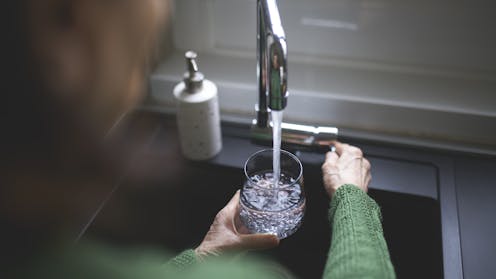
First, it’s important to note you can’t get primary amoebic meningoencephalitis from drinking contaminated water.
But any activity that allows infected water to enter a person’s nose is potentially dangerous. This can happen during a bath or a shower.
Some people flush their nasal passages to clear congestion related to allergies or a viral infection. This has been linked to infections with N. fowleri. If you’re going to flush your nasal passages, you should use a sterile saline solution.
Even young children playing with hoses, sprinklers or water activities could be at risk. A 16-month-old child was fatally infected following an incident involving a contaminated water “splash pad” in the US in 2023. Splash pads are water-based recreation activities, primarily for young children, that involve splashing or spraying water.
So what’s the risk in Queensland?
Regarding N. fowleri, Australian drinking water guidelines advise:
If the organism is detected, advice should be sought from the relevant health authority or drinking water regulator.
The guidelines also provide recommendations on how to disinfect water supplies and control N. fowleri, using chlorine and other chemical compounds.
All public town water supplies across Australia are regularly tested to ensure that water is safe to drink.
We don’t yet know the exact cause of the detection of the amoeba N. fowleri in these Queensland towns’ water supplies. But drinking or cooking with water contaminated with this amoeba will not cause an infection.
Any activity that allows potentially contaminated water to go up the nose should be navigated carefully for now in the affected areas.
Contamination of a town drinking water supply from this amoeba is very rare and is unlikely in other Australian town water supplies.
How about swimming?
To reduce your risk in potentially infected warm, fresh waters you should keep your head above water while swimming. And don’t jump or dive in. You can use a nose-clip if you want to swim with your head under water.
The amoeba cannot survive in salt water, so there’s no risk swimming in the ocean. Also, properly maintained swimming pools should be safe from the organism. New South Wales Health advises that the amoeba cannot survive in water that is clean, cool and adequately chlorinated.
Authors: Ian A. Wright, Associate Professor in Environmental Science, Western Sydney University



















