

Google AI


Modern Australian

If AI takes most of our jobs, money as we know it will be over. What then?

  • Written by: Ben Spies-Butcher, Associate professor, Macquarie University
If AI takes most of our jobs, money as we know it will be over. What then?

It’s the defining technology of an era. But just how artificial intelligence (AI) will end up shaping our future remains a controversial question.

For techno-optimists, who see the technology improving our lives, it heralds a future of material abundance.

That outcome is far from guaranteed. But even if AI’s technical promise is realised – and with it, once intractable problems are solved – how will that abundance be used?

We can already see this tension on a smaller scale in Australia’s food economy. According to the Australian government, we collectively waste around 7.6 million tonnes of food a year. That’s about 312 kilograms per person.

At the same time, as many as one in eight Australians are food-insecure, mostly because they do not have enough money to pay for the food they need.

What does that say about our ability to fairly distribute the promised abundance from the AI revolution?

AI could break our economic model

As economist Lionel Robbins articulated when he was establishing the foundations of modern market economics, economics is the study of a relationship between ends (what we want) and scarce means (what we have) which have alternative uses.

Markets are understood to work by rationing scarce resources towards endless wants. Scarcity affects prices – what people are willing to pay for goods and services. And the need to pay for life’s necessities requires (most of) us to work to earn money and produce more goods and services.

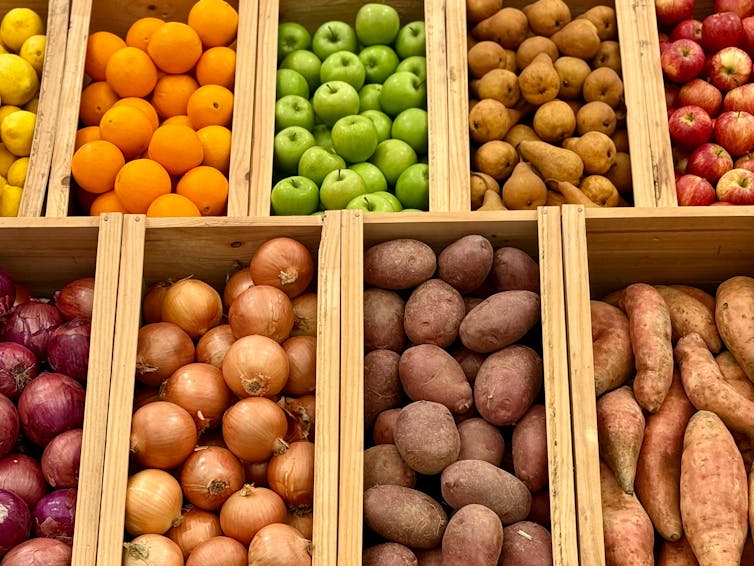
This article is part of The Conversation’s series on jobs in the age of AI. Leading experts examine what AI means for workers at different career stages, how AI is reshaping our economy – and what you can do to prepare. The promise of AI bringing abundance and solving complex medical, engineering and social problems sits uncomfortably against this market logic. It is also directly connected to concerns that technology will make millions of workers redundant. And without paid work, how do people earn money or markets function? Meeting our wants and needs It is not only technology, though, that causes unemployment. A relatively unique feature of market economies is their ability to produce mass want, through unemployment or low wages, amid apparent plenty. As economist John Maynard Keynes revealed, recessions and depressions can be the result of the market system itself, leaving many in poverty even as raw materials, factories and workers lay idle. In Australia, our most recent experience of economic downturn wasn’t caused by a market failure. It stemmed from the public health crisis of the pandemic. Yet it still revealed a potential solution to the economic challenge of technology-fuelled abundance. Changes to government benefits – to increase payments, remove activity tests and ease means-testing – radically reduced poverty and food insecurity, even as the productive capacity of the economy declined. Similar policies were enacted globally, with cash payments introduced in more than 200 countries. This experience of the pandemic reinforced growing calls to combine technological advances with a “universal basic income”. This is a research focus of the Australian Basic Income Lab, a collaboration between Macquarie University, the University of Sydney and the Australian National University. If everyone had a guaranteed income high enough to cover necessities, then market economies might be able to manage the transition, and the promises of technology might be broadly shared. An array of fruit and vegetables, including oranges, apples, onions, potatoes
If Australia already has an abundance of food, why are some people going hungry? Jools Magools/Pexels

Welfare, or rightful share?

When we talk about universal basic income, we have to be clear about what we mean. Some versions of the idea would still leave huge wealth inequalities.

My Australian Basic Income Lab colleague, Elise Klein, along with Stanford Professor James Ferguson, have called instead for a universal basic income designed not as welfare, but as a “rightful share”.

They argue the wealth created through technological advances and social cooperation is the collective work of humanity and should be enjoyed equally by all, as a basic human right. Just as we think of a country’s natural resources as the collective property of its people.

These debates over universal basic income are much older than the current questions raised by AI. A similar upsurge of interest in the concept occurred in early 20th-century Britain, when industrialisation and automation boosted growth without abolishing poverty, instead threatening jobs.

Even earlier, Luddites sought to smash new machines used to drive down wages. Market competition might produce incentives to innovate, but it also spreads the risks and rewards of technological change very unevenly.

Universal basic services

Rather than resisting AI, another solution is to change the social and economic system that distributes its gains. UK author Aaron Bastani offers a radical vision of “fully automated luxury communism”.

He welcomes technological advances, believing this should allow more leisure alongside rising living standards. It is a radical version of the more modest ambitions outlined by the Labor government’s new favourite book – Abundance.

Bastani’s preferred solution is not a universal basic income. Rather, he favours universal basic services.

Woman in a headscarf standing by a moving train
Under a universal basic services model, services like public transport would be made available for free. Ersin Baştürk/Pexels

Instead of giving people money to buy what they need, why not provide necessities directly – as free health, care, transport, education, energy and so on?

Of course, this would mean changing how AI and other technologies are applied – effectively socialising their use to ensure they meet collective needs.

No guarantee of utopia

Proposals for universal basic income or services highlight that, even on optimistic readings, by itself AI is unlikely to bring about utopia.

Instead, as Peter Frase outlines, the combination of technological advance and ecological collapse can create very different futures, not only in how much we collectively can produce, but in how we politically determine who gets what and on what terms.

The enormous power of tech companies run by billionaires may suggest something closer to what former Greek finance minister Yanis Varoufakis calls “technofeudalism”, where control of technology and online platforms replaces markets and democracy with a new authoritarianism.

Waiting for a technological “nirvana” misses the real possibilities of today. We already have enough food for everyone. We already know how to end poverty. We don’t need AI to tell us.

Authors: Ben Spies-Butcher, Associate professor, Macquarie University

Read more https://theconversation.com/if-ai-takes-most-of-our-jobs-money-as-we-know-it-will-be-over-what-then-262338

The Best Overseas Adventure Holidays for Australians Who Love the Outdoors

Australia offers no shortage of incredible outdoor experiences, but sometimes the best way to satisfy your sense of adventure is to head overseas. A...

Cape Town Wine Shuttle: Winelands Tasting & Tours

Embark on an unforgettable journey through the picturesque Cape Winelands, where world-class wines and breathtaking scenery await. Our Cape Town Win...

Why Giant Rats Tail Grass Keeps Coming Back After Spraying

Giant Rats Tail Grass (GRT) is one of the most frustrating pasture weeds for farmers and lifestyle property owners. You spray an infested area, see th...

When Custom Cardboard Boxes Make Sense for Your Business

Custom cardboard boxes can be useful when a standard carton does not fit a product, packing method or presentation requirement particularly well. A ...

Virtual Livestock Fencing and GPS Tracking: Improving Visibility Across Cattle Properties

What Virtual Livestock Fencing Means for Modern Cattle Management Managing cattle across extensive properties requires more than knowing where anim...

Sydney Pawnbrokers Explained: How Hocking Your Car Actually Works

Sometimes you need cash, and you need it soon. If you own a car, you may already have a way to get it. That's what people mean when they say they've...

Moving Interstate from the Gold Coast to Brisbane (or Back)? What Removalists Wish You Knew First

Have you talked to anyone who’s done the move? They say the same thing: the drive up the M1 is the easy part. It's everything around it that catches...

Why the Spring School Holidays Are a Great Time to Visit Coffs Harbour

The spring school holidays are a good time to spend a few days on the Coffs Coast. The weather is starting to warm up, there is plenty to do outdoor...

What to Do When an Older Car Is No Longer Worth Keeping in Melbourne

Ever looked at another repair quote and wondered whether your old car is still worth the trouble? It is a common turning point for Melbourne motoris...

Your Baby's First Year: A Local Guide to Feeding, Sleep, and When to Get Extra Support

Ask ten parents in a Brisbane mothers' group how their baby is feeding or sleeping, and expect ten different answers.  Someone's baby sleeps throug...

Kitchen and Laundry Makeover Ideas That Don't Require a Full Renovation

Full kitchen renos are expensive — and most people don't actually need one.  They need the kitchen to stop looking like it's stuck in 2009, or they...

How Technology Is Reshaping the Modern Australian Commercial Kitchen

The commercial kitchen has always been shaped by technology. Refrigeration changed how ingredients could be stored, modern ventilation transformed k...

The Number on a Roller Blind Fabric That Nobody Explains

Somewhere in the fabric book, next to the colour name, there is a percentage. Three per cent. Five per cent. Ten per cent. Nobody explains it, most c...

What’s Trending in Men’s Jewellery This Father’s Day!

Finding a Father’s Day gift that feels personal, stylish and genuinely wearable is not always easy. While socks and novelty mugs have traditionally ...

Road Signs: Understanding Their Role in Clear and Effective Signage

Effective signage and display hardware can help businesses communicate information, promote products and organise customer or visitor movement. Road...

Bottle Label Printing: Key Factors to Consider Before Your Next Packaging Run

Effective packaging begins with understanding the product, bottle material, artwork and production requirements when planning bottle label printing. H...

Planning a Long-Distance Move With Interstate Movers Melbourne

Moving between states involves more planning than a typical local relocation. Along with packing and transporting household belongings, you need to...

Understanding the Role of an I/O Controller in Industrial Automation

Modern industrial systems depend on accurate communication between sensors, machines and control systems. An I/O controller can help manage this commu...
















