

here's what Aboriginal survivors of child sexual abuse told us they need
- Written by: Carlina Black, PhD candidate, La Trobe University
It’s a year since the national apology to victims and survivors of institutional child sexual abuse. While national apologies can acknowledge survivors, sorry is just the beginning. Access to healing is needed.
Our research shows a program that strengthens culture and connection for Aboriginal survivors can be more meaningful than mainstream counselling. We’ve shown it’s a successful way to deliver cultural healing.
The context is important
There are an estimated 60,000 survivors of institutional child sexual abuse in Australia. Based on the private sessions held as part of the Royal Commission into Institutional Responses to Child Sexual Abuse, 15% of survivors are Aboriginal. That suggests an estimated 9,000 Aboriginal survivors.
This is likely an under estimation. Again from the Royal Commission, we know it takes survivors an average 24 years to disclose abuse. Some never do.
Not all Aboriginal survivors will seek counselling for past traumas. Many experience mainstream counselling as inappropriate or insufficient. That’s partly because mainstream therapeutic services are not built on Aboriginal knowledge and do not address the unique experiences of multiple layers of traumas, disconnection, loss and grief for Aboriginal peoples.
Read more: Acknowledge the brutal history of Indigenous health care – for healing
Not only do Aboriginal survivors experience the trauma of institutional child sexual abuse, if they were part of the Stolen Generations, they also experience the cultural trauma from being forcibly removed from family as children because they were Aboriginal. These children were denied connection to community, country, spirituality, language and culture.
The landmark Bringing them Home Report shows how children were often physically, emotionally and sexually abused by those supposed to take care of them in state institutions, missions, foster homes and other forms of “care”.
The Stolen Generations were part of broader policies of “protection” and assimilation that began with invasion and colonisation. It was characterised by destruction and denigration and included being displaced from land and forced onto missions.
This context and its impacts today, including ongoing disadvantage and systemic racism, needs to be understood in developing healing solutions for Aboriginal survivors.
Here’s what happened
The program we evaluated in our study was designed, developed and delivered by the Victorian Aboriginal Child Care Agency, an Aboriginal community controlled organisation. Engaging survivors in the design and development of the program ensured the healing activities were relevant to all survivors.
Survivors attended one or more events including multi-day camps or gatherings, and women-only events. Families could attend select events.
Three of the four facilitators were Aboriginal; the fourth was strongly connected to Aboriginal community and had worked in the community for over 35 years.
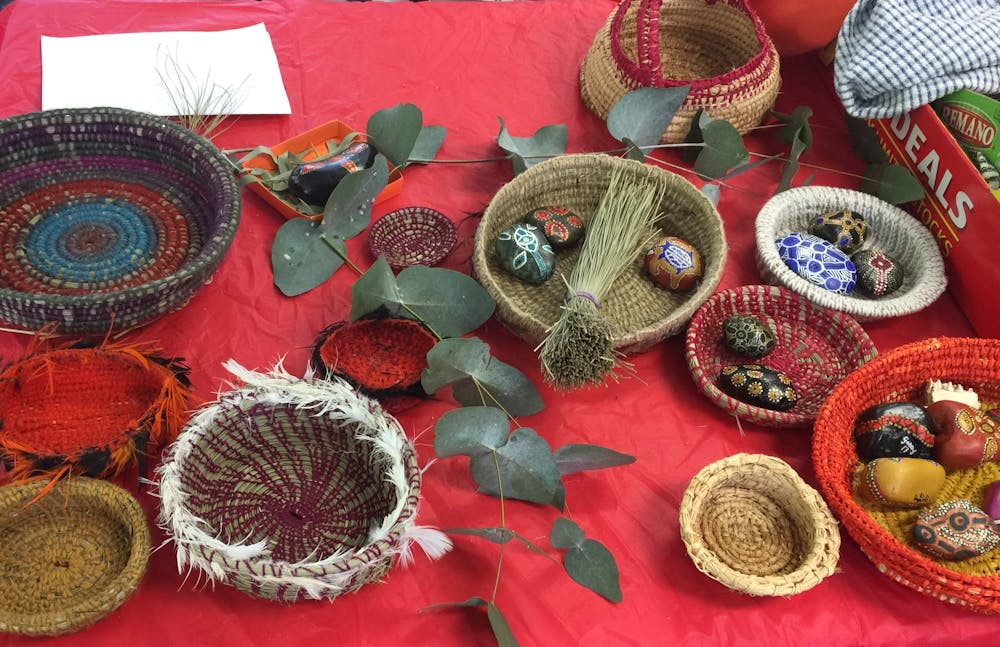 Arts and crafts were part of the healing process.
Author provided
Arts and crafts were part of the healing process.
Author provided
The program was sometimes divided into men’s and women’s business, and included:
ceremonies, including Welcome to Country, smoking ceremonies, song and dance
cultural practices, including arts and crafts, painting canvases and making possum skin cloaks
strengthening community, including tracing family history and cultural tours
self care and well-being activities, including meditation, massage and walks
sharing knowledge of past policies, laws, history of removal, impact of removal and losses
storytelling and yarning, including yarning circles, Elders’ yarns, storytelling with cultural custodians.
Yes, sharing helped and gave hope
All survivors and their families (nearly 60 people) said they benefited from taking part. They said it allowed them to reclaim their cultural identity and cultural pride, and build on their cultural knowledge. Their shared histories helped survivors support each other. Survivors were also empowered to continue healing, fuelling a sense of hope.
Here’s what survivors told us:
We no longer feel we have to be ashamed or hide.
[I’m] feeling empowered to teach my children about past history to ensure it never happens again.
Knowing culture is powerful, it helps you know your strength.
Each time I have told my story, [it] heals me and makes me stronger.
My mob is telling their story and it makes me feel good.
Because I have no extended family I feel connected to this mob in a spiritual sense.
It is so much better to heal together. It is so hard to heal in isolation.
We need a different approach
Trauma in Aboriginal communities needs different therapeutic approaches to mainstream, Western therapeutic ones. A key component to the success of the program was Aboriginal people being in control of the model of healing. Aboriginal people are part of a collective culture. And it’s collective healing and connection to culture that all survivors told us were crucial to their healing.
The level of support provided by the experienced facilitators, who are both culturally and trauma informed, ensured all survivors felt safe. The facilitators’ own life experiences, their immersion in culture and capacity to give of themselves was critical to promoting survivors’ healing journey.
Survivors also said being on country, having elders engage with the program, the power of ceremony and involving family were all important parts of their cultural healing.
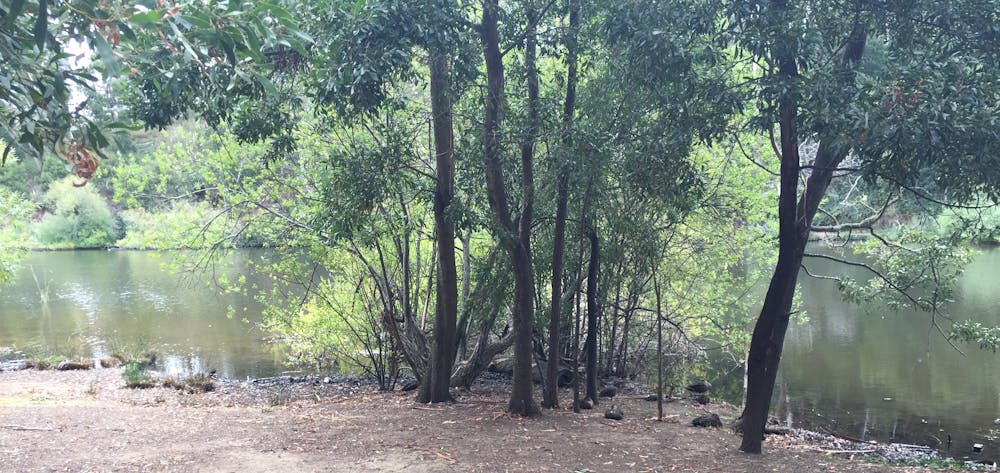 Participants told us being on country was important to their healing.
Author provided
Participants told us being on country was important to their healing.
Author provided
While cultural healing is based on thousands of years of wisdom, there is also increasing evidence of the success of cultural healing programs in peer reviewed journals.
Examples include the Marumali journey of healing for Stolen Generations delivered in various locations around Australia, including prisons, and Red Dust healing for trauma more generally, delivered with remote communities in the Northern Territory. Both programs have ongoing evaluation showing strong evidence they work.
This is in contrast to most programs for Aboriginal communities, which have little evidence they work.
One off, time-limited, programs cannot provide all the healing survivors need. Healing is a journey. The Royal Commission recommended access to life-long healing, healing for family members of survivors and cultural healing for Aboriginal survivors. This matches what survivors tell us they need.
The authors would like to acknowledge the traditional owners on whose land they live and work, the Wurundjeri people of the Kulin Nation, and pay their respects to their elders past and present. The authors also pay their respects to all Stolen Generations and to all survivors of child sexual abuse, acknowledge their suffering and pain, and honour their strength in survival.
The authors respectfully use the term Aboriginal to refer to the diversity of Aboriginal and Torres Strait Islander people and cultures in Australia.
If this article raises issues for you or someone you know, contact the National Sexual Assault, Domestic and Family Violence Counselling Service on 1800RESPECT (1800 737 732), beyondblue 1300 224 636 or Lifeline 131 114. Aboriginal resources and information is also available.
Authors: Carlina Black, PhD candidate, La Trobe University


















