

The climate case for planting trees has been overhyped — but it’s not too late to fix it
- Written by Pep Canadell, Chief Research Scientist, CSIRO Environment; Executive Director, Global Carbon Project, CSIRO
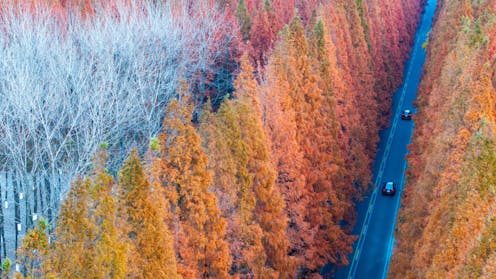
The climate benefits of planting trees may have been greatly overestimated, but swift action could ensure reforestation meets its potential to curb dangerous emissions, new research has found.
Reforestation – or replanting trees in areas that have been cleared and degraded – is considered an important tool to curb climate change. Plants absorb carbon from the atmosphere and store it in their leaves, roots, stems and wood, as well as in the soil.
But to what extent can planting trees actually limit climate change? That is the question my colleagues and I examined in research published today.
We found while reforestation can contribute significantly to tackling climate change, its global potential is only a fraction of what’s been claimed. Unless we change tack, reforestation is unlikely to significantly help achieve net zero.
Supporting net zero emissions
Some 135 countries have committed to net zero emissions. Most of them, including Australia, expect to remove carbon dioxide (CO₂) from the atmosphere to help achieve this goal.
Reforestation is expected to play a major role in this CO₂ removal.
China has undertaken the most global reforestation to date. Its efforts have stored 7 billion metric tonnes of CO₂ over four decades.
Other countries have made modest investments. For example, Australia’s 20 Million Trees Program is projected to capture about 0.2 million tonnes of CO₂-equivalents a year to 2030. This equates to 0.04% of national greenhouse gas emissions.
But the global potential for reforestation is more complex than it might seem. For instance, pressures such as agriculture and urban growth can limit the land available for tree planting.
Reforestation can also pose a risk to biodiversity and ecosystems when the wrong tree species are used, or they are planted in the wrong place.
Getting a clearer picture of how reforestation can help reduce global emissions is crucial to reaching the world’s net zero goals. That was the focus of our new study.
How much land is available for reforestation
We took all lands across the world that have previously been forested, then excluded urban areas, those used for agriculture and conservation, and those at risk of biodiversity loss.
We also excluded areas where reforestation could exacerbate global warming – that is, where the darker tree surface would outweigh the cooling effect of removing carbon from the atmosphere. For instance, planting forests in snowy regions can cause warming because dark canopies absorb more heat than snow, which reflects heat.
Finally, we excluded regions where water demand from growing trees would reduce stream flows by 5% or more.
And the result? We found about 389 million hectares on Earth could potentially be used for reforestation. This is about half of some previous estimates.
Of the 389 million hectares, the largest portion is in the Americas (42%) and Europe (26%). The countries of Brazil, Russia and the United States have the greatest potential.
Aspiration doesn’t match reality
We also totalled the commitments nations have made to reforestation under various global programs and agreements. About 230 million hectares of reforestation has been committed for 2021-2030, which is 59% of the global potential area we identified in our study.
However, about 90% of commitments have been made by low- and middle-income countries where land for reforestation is limited. For example, about half the land pledged for reforestation has been made by African countries, but they contain only 4% of the global area we identified as suitable for reforestation.
The limited potential is mainly due to biodiversity concerns. For instance, much of the land committed by Sudan, the Democratic Republic of Congo and Ethiopia comprises savannas. Savannas are naturally open ecosystems with few trees – a habitat many animal species require to survive, and not suitable for reforestation.
In contrast, Europe and South America have committed only 13% and 16% of their potential reforestation area.
How much carbon can actually be stored?
We developed a new machine-learning model – a computer program developed from observations that can be taught to recognise data patterns.
To build the model, we used estimates of the carbon content of vegetation and soils, along with other climate and soil properties, at about 3,190 locations. Half the locations had trees and the other half did not.
The locations spanned all major global forest regions, including tropical, boreal (those growing in cold high-latitude environments), and temperate eucalyptus forests.
With this new model we calculated the rate of carbon storage from reforestation in each region, based on its tree-carrying capacity – that is, how many trees can be planted in a particular location given the climate, soil and other conditions.
If trees were planted on the 389 million hectares identified in our study as suitable for reforestation, about 4.9 billion metric tonnes of carbon dioxide could be stored each year to 2050. This falls to about 1.5 billion tonnes when only considering current national commitments on suitable land.
These quantities are significant. But they’re only a small fraction of the world’s annual fossil fuel emissions.
To demonstrate further, global reforestation currently stores 1.9 billion metric tonnes of CO₂ per year. This is 5% of the 36 billion tonnes of CO₂ emitted by fossil fuel burning each year.
So reducing fossil fuel emissions remains the primary tool for tackling climate change.
The way forward
Our research shows the land suitable for global reforestation has been overestimated. What’s more, the largest reforestation commitments come from countries with the least suitable land and economic means. Meanwhile, many wealthy nations with abundant land have pledged the least.
So what can be done?
High-income countries need to commit more land to reforestation targets. They also need to provide finance to low-income nations for reforestation.
The rise in markets that put a “price on nature” can help boost reforestation globally. For example, schemes are emerging which reward landholders for tree-planting and other restoration activities.
Direct involvement of local communities and indigenous peoples will support broader implementation of reforestation programs. The programs should align with local economic priorities and cultural values.
And importantly, our results show reforestation should not be considered a substitute for either halting deforestation elsewhere, or quickly reducing fossil fuel emissions.
Authors: Pep Canadell, Chief Research Scientist, CSIRO Environment; Executive Director, Global Carbon Project, CSIRO

















