

Modern Australian
The Times

Fewer than 1 in 4 Australians work in a gender-balanced occupation. Fixing it is in all our interests

  • Written by Jessica Geraghty, Senior Associate, Economic Prosperity and Democracy program, Grattan Institute
Fewer than 1 in 4 Australians work in a gender-balanced occupation. Fixing it is in all our interests

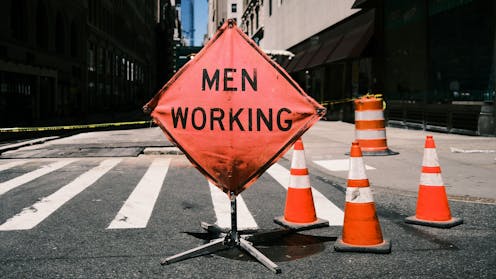
Australia’s workforce is almost evenly split between men and women. Yet fewer than one in four Australians work in a gender-balanced occupation.

This has improved over time, but at a glacial rate. In 1990, more than half of men (52%) worked in occupations that were more than 80% male. Thirty-five years on, that figure has only declined to 41% of men.

Meanwhile, the share of women in female-dominated occupations (which are more than 60% female) has largely hovered between 60% to 65% since the mid-1990s.

This also holds true within industries. Fewer than half of all employees are in gender-balanced industries, and three of the five industries with the largest workforces – health care and social assistance, construction, and education and training – have become even more segregated since 1990.

Between 2006 and 2021, just one in five occupations became less segregated.

Why does it matter? Turns out, it’s bad for workers, businesses and the economy.

The hit to incomes and productivity

As this graph shows, while most Australian industries have improved their gender balance between 1990 and 2025, one-third remain male-dominated.

Productivity and income are lower when men and women are channelled into different jobs.

Income per person is lower when women are under-represented in entrepreneurial positions and in highly-skilled occupations.

From scientific teams to company boards, international research shows innovation is higher in gender-diverse teams.

Segregation also contributes to the gender pay gap and inequality.

Nearly one-quarter of the pay gap in Australia is attributable to segregation within occupations and industries. Pay gaps are largest in the most segregated jobs. And there is some international evidence that suggests pay and prestige fall as the share of women in a role rises.

Businesses suffer when they are not drawing from the full talent pool when hiring workers. They have fewer applicants per job vacancy, which can lead to lower-quality hires or difficulty filling jobs. This makes the labour market less efficient and unemployment structurally higher.

Individuals pay a price too. People face social stigma and increased risk of harassment when working in non-traditional roles. And their ability to move between jobs as the economy changes and new opportunities emerge is restricted.

Different strategies for different industries

Gender segregation in Australia has proven resistant to the rapid rise in female educational attainment and the near-convergence in labour force participation rates between men and women.

That’s probably because gender segregation is driven by several linked and self-reinforcing factors: education pathways and gender norms, the unequal distribution of unpaid work, workplace cultures, and low pay in feminised industries.

Read more: New study finds the gender earnings gap could be halved if we reined in the long hours often worked by men

If we are to really shift the dial on this deep-seated problem, a mix of targeted and broader economic policies will be needed, alongside buy-in from businesses, workers, and society at large.

In female-dominated industries and occupations, which tend to be low-paid, the most direct lever available to governments is pay.

Higher wages should attract more workers – male and female. The federal government has committed significant funding to wage increases for aged care and childcare workers. But it should also focus on improving their working conditions.

In male-dominated industries and occupations, improving workplace cultures should be a priority. Here, most levers are in the hands of businesses.

Improving culture requires firms to have appropriate recruitment, conduct, family, and performance-evaluation policies. Plus commitments from senior leadership to model and enforce those policies.

Australia is making progress in these areas. But there’s still more work to do on reshaping gender norms.

Shifting gender norms

Gender norms are not static: they change over time and can be influenced by policy settings.

There is strong evidence that more gender-equal uptake of parental leave leads to more gender-equal attitudes among adults and their children, and a more equal distribution of unpaid work over time.

A happy, smiling baby and a dad with a beard kissing her cheek.
Mikael Stenberg/Unsplash, CC BY Too many men do not take the leave on offer, both from the government and, increasingly, from their employer. Changing that will require changing societal attitudes, to normalise men providing care. The government should consider extending the use-it-or-lose-it component of paid parental leave from four weeks to six, to encourage more men to take it. Things can change The gender imbalance of occupations and industries is slow to change, but it is not immutable. International variation in which gender dominates a particular job suggests that existing patterns need not be permanent. Indeed, occupations can reach a tipping point, after which improvement in the gender balance rapidly accelerates. Progress leads to more progress, as people respond to policies and cultures change. The job aspirations of teenage boys and girls reflect the current gender balance of the labour market. But over time, and with concerted effort, we can shift what future generations think is possible.

Authors: Jessica Geraghty, Senior Associate, Economic Prosperity and Democracy program, Grattan Institute


Read more https://theconversation.com/fewer-than-1-in-4-australians-work-in-a-gender-balanced-occupation-fixing-it-is-in-all-our-interests-264130

Modern AI SEO Agency vs Traditional SEO: What’s the Difference

Search engine optimisation has changed dramatically over the past few years. Search engines have become smarter, user behaviour has evolved, and bus...

Caravan Travel for Modern Australian Getaways: Plan a Comfortable Holiday

A family road trip is one of the best ways to explore Australia together. And, travelling by caravan gives you the freedom to take your time, stop a...

Mini Excavator and Trailer Package for Sale: What I Buy as One Deal in 2026

The first client who asked me for a mini excavator and trailer package for sale wasn’t trying to save a few hundred dollars on shipping. They we...

Make Dad a Guest in His Own Home This Father’s Day

Father’s Day can accidentally turn Dad into the unpaid event manager of his own celebration. He lights the barbecue, finds extra chairs, checks wh...

Where to Enjoy Your Off-Road Caravan on the Gold Coast

With a caravan, you can travel anywhere and everywhere without battling the rush of the peak holiday season or last-minute reservations. While the r...

How Osteopathy Supports Recovery from Sciatica and Nerve Pain

Sciatica isn't just annoying. It's genuinely painful. It sits deep in your glute and shoots straight down the back of your leg. It turns something as...

The Winter Jewellery Edit: Five Pieces You'll Wear All Season

As wardrobes shift to cosy knits, tailored coats and rich seasonal textures, jewellery becomes the finishing touch that pulls every winter outfit to...

7 Signs It's Time to Upgrade Your Piston Air Compressor

If you run a workshop, panel shop, or fabrication business anywhere around Perth, you already know what heat and dust do to equipment over a few sum...

How Long Do Bathroom Renovations Melbourne Take? Step-by-Step Process Explained

Planning a bathroom renovation is exciting, but one of the biggest questions homeowners ask is, "How long will it take?" While every project is uniq...

Why Your Skin Breaks Out: The Science of Acne Explained

Acne is the most common skin condition in the world. An estimated 85% of people experience it at some point between the ages of 12 and 24, and a gro...

10 Swimwear Trends Australian Women Are Wearing This Summer

Every Australian summer brings a fresh wave of swimwear trends, but some styles have much greater staying power than others. While fashion constantly ...

Why Regular Skills Updates Are Essential for Licensed Security Officers

A guard at a Brisbane shopping centre gets a call about a shoplifter who's turned aggressive.  They’ve done the job for six years. But their de-...

10 Benefits of Choosing Professional Tutoring Penrith Services

Every student has unique learning strengths, challenges, and academic goals. While classroom teaching provides essential knowledge and structure, so...

Sunshine Coast Baby Classes Prove Big Hit Among First-Time Mums

There's a movement gaining traction on the Sunshine Coast, providing a village of support, socialisation and relief for first-time mothers and babie...

Father's Day Gift Ideas for Men Who Are Hard to Buy For

Some dads are easy to buy for. Others do not want anything, already have everything, or give you the classic "don't worry about me" answer every yea...

Top 5 Mistakes That Wear Out Your Brakes Faster

Brakes don't need frequent replacements like oil changes do.   But a lot of the wear happens quietly, over months, because of habits most drivers...

Plantation Shutters vs Curtains: Which Is Better for Your New Home?

Moving into a new home is an exciting opportunity to personalise your space and make it your own. While many homeowners focus on furniture, flooring...

Celebration of Life vs Traditional Funeral: What's the Difference?

When saying goodbye to someone you love, there is no single way to honour their life. Every family has different traditions, beliefs, and preference...















