

From daycare through to uni, we’ve all had this type of teacher
- Written by: Jess Harris, Associate Professor in Education, University of Newcastle
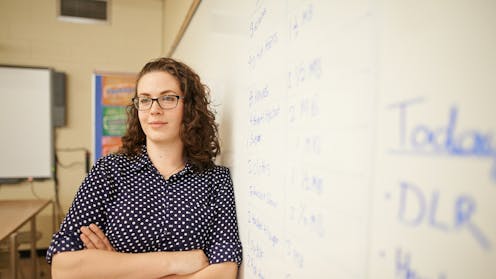
Casual and contract workers are crucial teachers to Australians of all ages: from infants and young kids at daycare, to children at school, to being key educators for adults at universities and TAFEs.
Casual staff or those on fixed-term contracts are needed in early childhood to ensure there are enough qualified educators to look after children.
Casual staff also support schools when permanently-employed teachers are sick or on leave. They bring current industry knowledge to prepare vocational education and university students for the workforce.
Our new book shows how many of the challenges of casualisation are shared across early childhood education, schools, vocational education and universities.
How many casuals are teaching?
Around 20% of Australian workers describe their employment as casual. Within education, however, the rates of precarious employment can be significantly higher.
According to Jobs and Skills Australia, as of 2023, more than a third of early childhood workers were casual or on fixed-term contracts.
Casual and contract teachers make up about 31% of the national school teaching workforce. Research shows school students spend, on average, the equivalent of a year or more being taught by casual relief teachers.
In 2023, the Universities Accord noted an estimated 50 to 80% of undergraduate teaching is done by casuals. More than half of the educators who teach in vocational education and training settings, such as TAFE, don’t have secure jobs.
Why has this happened?
All education institutions rely on per-student funding, which means their income changes alongside their student enrolments. But this funding don’t necessarily mean changes to the costs of running a school, classroom or a course.
Employing casuals can seem like a sensible, cost-effective solution for institutions because they don’t have to commit to the cost of a full-time permanent member of staff. Institutions can ask casual staff to work for a day here or there and stop offering them work any time.
The reasons for casualisation are complex.
In early years education, there are high numbers of casual workers because it’s also hard to find and keep staff.
In the school system, casual teachers are needed to fill in for teachers who are unwell or on extended breaks. Research shows us teachers are increasingly finding their jobs stressful and wanting to leave the profession.
In higher education, we have seen the number of casual workers increase as overall government funding has decreased.
Why is this a problem?
Broader research shows precarious employment can lead to financial and psychological stress for employees. People in precarious employment report feeling a lack of support and don’t receive the same benefits as their colleagues.
This includes everything from having no sick leave, to casual teachers often going for weeks without income.
Without oversight from one regular employer, casual employees can often work more than a full-time load across multiple contracts, for multiple employers. Casual staff in universities have also been underpaid as a result of poor governance and pay practices.
Teachers and educators on fixed-term contracts, which might be for a few weeks or even years, don’t always feel valued or respected.
Research has also found more early career teachers are fixed-term and casual than those later in their career. If they aren’t adequately supported in their early career stage, there is a risk they will leave the profession.
When it comes to early education, we also know it’s important for children to have stability with their educators. This helps child development and boosts safety in a centre.
A change in legislation
Last year, new laws came into effect to improve conditions for casuals.
Employers can no longer employ casual staff when there is a consistent need for, and regular pattern of work. We have particularly seen the impact of this in the university sector, where casuals are employed in regular patterns of classes over semesters.
In response to these changes, some universities have increased the number of fixed-term positions for teaching staff, employing them one semester at a time. Some have employed less-experienced staff to take the bulk of the teaching and marking loads, because they can be paid at a lower cost (akin to casual staff). Some senior academics have seen their teaching and administrative workload grow.
And some casual university staff have simply lost work.
This suggests we need laws that promote both flexibility and job security.
Changes are coming
New laws will put a limit on fixed-term contracts. They will only be allowed for two years, or one contract renewal.
The new rules are already in place in other sectors, but universities have received an exemption until November 2025.
Although intended to convert long-term precarious workers into more secure employment, it remains to be seen whether this will work in practice.
What else is needed?
Without funding to support the conversion of casual and fixed-term staff to secure, ongoing positions across education, insecure employment, staff shortages and uncertainty are likely to persist.
A dramatic shift in thinking is required to ensure that all education sectors and educators are adequately supported by governments.
Until we see substantial changes to education policy, governance and funding, educators in daycare centres, schools, universities and TAFEs will continue to struggle to meet the needs of their students.
Authors: Jess Harris, Associate Professor in Education, University of Newcastle
Read more https://theconversation.com/from-daycare-through-to-uni-weve-all-had-this-type-of-teacher-264111


















