

80 years since the end of World War II, a dangerous legacy lingers in the Pacific
- Written by Stacey Pizzino, Lecturer, School of Public Health, The University of Queensland
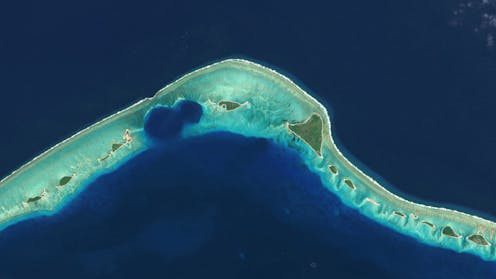
On September 2, 1945, the second world war ended when Japan officially surrendered. Today, on the 80th anniversary, the physical legacy of the conflict remains etched into land and sea.
Nowhere is this more evident than in the Pacific. There, fierce battles left behind sunken warships, aircraft and unexploded bombs. These remnants are not only historical artefacts but toxic time capsules.
They leak fuel, heavy metals and other hazardous substances into fragile ecosystems, threatening biodiversity and, potentially, human health.
This problem is a reminder of the enduring environmental harms of conflict. Toxic remnants of war can damage ecosystems and communities long after the fighting stops.
The Pacific as a dumping ground
World War II in the Pacific involved four years of conflict between Japan and Allied forces. The war began in the region in December 1941 when Japan attacked a United States naval base at Pearl Harbour, Hawaii.
The Pacific conflict included the Battle of the Coral Sea, the Battle of Midway and the Guadalcanal campaign in the Solomon Islands.
Pacific islands became staging grounds for battles. Weapons were stockpiled and hazardous material discarded. Ships and aircraft were sunk. When the war ended, much of this material was simply left behind.
Among the remains are an estimated 3,800 wrecks still lying on the Pacific Ocean floor.
An environmental hazard
As remnants of war degrade, they often leach toxic pollutants into nearby waters and soils. These can build up in marine life, enter the food chain and pose serious risks to both biodiversity.
At Palau, a WWII Japanese ship sank in Koror Harbour and became known as the Helmet Wreck. It contains Japanese depth charges leaking acid into surrounding waters.
Researchers have shown the long-term environmental impacts in the Baltic Sea of unexploded WWII ordnance – bombs, shells and grenades that failed to detonate. An estimated 3000kg of dissolved ammunition chemicals have been found.
Coral reefs and mangroves, which are vital for coastal protection, are especially vulnerable to both chemical exposure and physical damage.
For example, researchers examined the effects off Puerto Rico of unexploded ordnance. They found nearby sea animals contained potentially toxic compounds leaking from the ordnance, which meant the substances had entered the food web.
Human communities on high alert
Unexploded ordnance continues to endanger communities. Just last year, for example, more than 200 bombs were found buried beneath a school in the Solomon Islands.
In places such as Palau, Papua New Guinea and the Solomon Islands, these dangers are unearthed regularly. They can be found by farmers working their land, children playing or fisherman working.
Buried bombs, sunken ships and downed aircraft often contain fuel and heavy metals. This includes lead and cadmium which can interfere with the body’s hormone system and cause serious health issues.
Research into the human health impacts of war remains is limited – especially in the Pacific. But existing studies suggest exposure is linked to serious consequences.
For example, parental exposure to wartime contaminants has been linked to birth defects in Gaza and Vietnam.
And a study of Britsh Army ammunition technicians released earlier this year found significantly higher rates of bladder cancer than the general population. This suggests occupational exposure to explosive compounds may pose long-term health risks.
Climate change is increasing the risk
As Earth’s climate warms, extreme weather events are worsening and seas are rising. This is exacerbating the dangers posed by wartime remnants.
For example Cyclone Pam, in March 2015, exposed unexploded WWII ordnance in Kiribati and Tuvalu. Further investigations revealed remnants including high explosive projectiles, mortars and 5,300 rounds of ammunition.
In 2020, a visiting fisherman found an unexploded bomb near Lord Howe Island. Then-Environment Minister Sussan Ley suggested the device may have been shifted by a cyclone or ocean currents.
Similarly, floods and landslides can move these hazards over significant distances, increasing uncertainty around their locations and complicating clearance efforts.
Rising sea levels are threatening to breach one of the Pacific’s most toxic legacies – the Runit Dome in the Marshall Islands. This concrete structure was built in the late 1970s to contain radioactive waste from US nuclear testing decades earlier.
Research shows extreme storms could increase radioactive sediments in the area to up to 84 times higher than normal. There are also concerns cracks in the dome’s surface could lead to contamination of surrounding waters.
Reflecting on war’s toxic legacy
Despite the risks to people and health in the Pacific, remediation has been slow. The 80th anniversary of WWII offers an opportunity to reflect on the toxic legacy of war – and to act.
The scale of the problem demands coordinated, well-funded action. The work should not just remove dangerous materials, but restore damaged ecosystems and monitor long-term health impacts.
Some support has been offered. It includes Operation Render Safe, a program to remove war remnants led by the Australian Defence Force. But more is needed.
Regional partners – including Australia, New Zealand, Japan and the United States – have a chance to lead. This means investing in environmental cleanup, supporting affected communities and acknowledging historical responsibility.
It also means listening to Pacific voices, who have long called for greater attention to the war’s toxic legacy. Their knowledge, resilience and lived experience must be central to any response.
The authors acknowledge Nixon Panda for his contribution to this article.
Authors: Stacey Pizzino, Lecturer, School of Public Health, The University of Queensland

















