

Australian writers shocked and ‘disgusted’ by closure of 85-year-old literary journal Meanjin
- Written by: Alexander Howard, Senior Lecturer, Discipline of English and Writing, University of Sydney
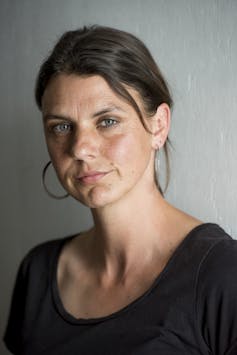
After 85 years of continuous publication, Meanjin, Australia’s second-oldest literary journal, is closing. Editor Esther Anatolitis and deputy editor Eli McLean have been made redundant and the final issue will appear in December. Melbourne University Publishing (MUP), which has housed the magazine since 2007, has cited “purely financial grounds” for the decision.
The closure has been roundly condemned by writers across Australia, including Jennifer Mills, Anna Krien, Claire G. Coleman and Sian Prior, along with former editors including Sophie Cunningham, Jonathan Green and Sally Heath.
“The loss of Meanjin is devastating news for Australian writers and readers,” Mills, a Miles Franklin shortlisted author, wrote on Bluesky. “Always meant so much to see my work there. Some of my best experiences of being edited.”
Award-winning writer Anna Krien told The Conversation:
As an outsider, clearly I don’t have a detailed script of what went on behind closed doors – but the public statement that this turn of events is a financial decision is laughable. I highly doubt Meanjin, in its entire 85 years, has ever made money.

Krien said Meanjin was “a literary journal for emerging and established writers to practise and experiment with form and craft, to say the unsayable and yes, the trite as well. Its very existence was an expression of valuing critical and creative endeavour in literary form.”
“Disgusted” Noongar writer Claire G. Coleman, writing on Bluesky, called Meanjin’s closure “cultural vandalism of the highest order”; she pointed out the journal is older than the Sydney Opera House.
Founded in Brisbane in December 1940 by Clem Christesen, Meanjin is not just a magazine, but an important cultural institution whose pages recorded and provoked national conversation and debate for the best part of a century.
In 1945, the journal moved to Melbourne at the invitation of the University of Melbourne, where it found stability and national reach. For decades, Meanjin has provided one of the most vital stages for fresh new forms of Australian writing and cultural commentary.
Its issues have featured work by major Australian writers, including Helen Garner, Alexis Wright, David Malouf, Judith Wright, Patrick White and A.A. Philips, whose 1950 essay on the topic of “cultural cringe” gave a generation of readers an enduring name for the unease of colonial self-doubt.
In a statement, MUP chair Warren Bebbington said the board “found it no longer viable to produce the magazine ongoing”. He said “the two part-time staff of Meanjin were not involved in the decision”.
Crikey quoted from an internal email sent to staff by MUP chief executive and publisher Foong Ling Kong, which said in part, “the decision was not made lightly”. “The financial pressures of publishing a literary magazine in today’s world, however, are inescapable and considerable, and the readership is shrinking.”
Louise Adler, chief executive of MUP when Meanjin was placed under its administration, told Crikey:
Given the coffers of the University of Melbourne, one would have thought the paltry amount Meanjin requires on a yearly basis was small coin for the intellectual contribution the magazine, at its best, can make to our literary culture.
Former Meanjin editor Sally Heath, now a nonfiction publisher at Allen & Unwin, told The Conversation the journal should be recognised “as a valuable part of the University of Melbourne’s cultural portfolio, alongside the Melbourne Theatre Company and the Ian Potter Museum”.
When creative writing and publishing courses are booming and Australian Studies under threat, the merit of such an independent magazine should be celebrated and seen as an important part of the reading and writing landscape.
Why was Meanjin so important?
Meanjin’s name derives from the Yuggera word for the land on which Brisbane now stands. From the outset, Meanjin was conceived as a forum for serious literary debate and as a conduit for cultural engagement. To read through Meanjin’s archive is to trace the evolution of modern and contemporary Australian intellectual life.

Across its lifespan, the journal was also, notably, a platform for First Nations authors. Wiradjuri writer and editor Jeanine Leane was appointed poetry editor in 2023 and the magazine has published the work of Oodgeroo Noonuccal, Tony Birch and Ellen van Neerven – who has an essay planned for the final edition.
Publishing researcher Alice Grundy, managing editor of Australia Institute Press, likens the reason given for the closure to “measuring the success of aged care on how much revenue it generates for the economy”. Literary journals, she told The Conversation, are “key cultural infrastructure”.
So many Australian books have grown from essays or stories in literary journals. Sian Prior is one of those authors: her 2014 debut book, Shy: A Memoir, began life as a personal essay in Meanjin. “I am deeply upset and disappointed that the publishing company of my alma mater, Melbourne University, has failed to recognise and secure the vital role of Meanjin in the fragile and eternally under-resourced Australian literary ecosystem,” she told The Conversation.
 Sophie Cunningham, former Meanjin editor.
Faber Academy
Editors who work on journals such as these can develop their careers and financially support their writing through those jobs.
“Our literary magazines are facing attacks on multiple fronts, a "deeply shocked” Stephanie Holt, Meanjin editor from 1998 to 2001, told The Conversation. “That they keep going at all is often down to goodwill and unpaid or underpaid labour on the part of so many.”
As we grapple with the impact of AI on our reading, writing and thinking, they offer the important prospect of a trusted forum for the thoughtful, singular and defiant voices we are in danger of losing.
Cunningham told Crikey Meanjin’s closure “reinforces my sense that universities are no longer spaces that support or nurture literature or the arts in this country”. In the last several years, she said, universities have “shown themselves unable to manage robust debates or the complexities of freedom of speech.”
‘Managed destruction’
Last year, Tom Doig, author of a book on the Hazelwood mine fire disaster, won the Hilary McPhee Award for his Meanjin essay revisiting the disaster a decade later. He, too, questioned the reason for Meanjin’s closure. “Almost no literary journals” make money, he pointed out – and nor are they expected to.
Emmett Stinson, senior lecturer in creative Writing at Edith Cowan University, told The Conversation the news is “highly distressing”.
If the most prestigious university in Australia will not fund our most prestigious literary journal, then it makes you question whether or not universities actually care about Australian culture.
The timing of Meanjin’s closure comes on the heels of Writing Australia’s July launch, with considerable fanfare and significant funding: more than A$26 million over three years, plus ongoing annual support and the appointment of Australia’s first National Poet Laureate.
The coexistence of these two developments – a state-sponsored national literary initiative on the one hand, the managed destruction of a historic literary periodical on the other – invites a difficult, if necessary question.
If Writing Australia is to truly support and promote the sector (to borrow its official phrasing), what does it say about our literary culture when one of the sector’s most venerable organs is simultaneously allowed to vanish?
One wonders how, in the years to come, the sudden winding down of the journal will be remembered – as a minor footnote, or a revealing commentary on what the very idea of “supporting literature” has come to mean?
Meanjin was, in part, about “articulating the Australian cultural moment” and ensuring Australia could speak to itself – critically, insistently, sometimes uncomfortably. Its closure raises the question of whether we – as a society – are still interested in hearing that voice.
At this moment in Australian life, is cutting-edge literature more welcome in practice than in principle?
Once the final issue of Meanjin has been published in December, a lively 85-year thread of our cultural conversation will fall silent. Whether that disquieting hush says more about our universities, our elected officials or ourselves is something all Australians will have to decide.
Authors: Alexander Howard, Senior Lecturer, Discipline of English and Writing, University of Sydney