

Young people want social cohesion too. This means tackling the causes of inequality
- Written by Philippa Collin, Professor of Political Sociology, Institute for Culture and Society, Western Sydney University
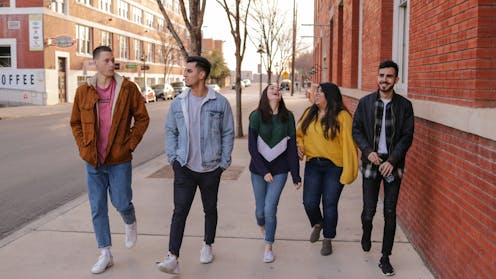
Young people are under intense scrutiny. They are subject to community, media and policy concerns about everything from technology use to public safety.
But of the more than three million young people in Australia aged between 15 and 24, most are just doing normal things, like school and work, trying to make a life.
Despite this, young people are one of the most disempowered groups in society. Their views are rarely sought, taken seriously or acted on by those with influence and power.
A new report by the national peak body for young people, the Australian Youth Affairs Coalition, hears directly from more than 1,000 young people about their thoughts on Australian society. Many feel unrepresented and excluded – but there’s things that can be done to help.
The report
Unlike other research on social cohesion in Australia, this study focused specifically on young people aged 12–25.
Online questionnaires and focus groups garnered the perspectives of 1,186 young people. While not representative, the sample broadly reflected the diversity of the Australian population including cultural background, identity and experience. This includes young people identifying as Indigenous, LGBTQIA+, living with a disability and “doing it tough”.
Young people were asked about their views on social cohesion. While not generalisable, the report provides new insights into the perspectives of some young Australians.
More fairness and equity
On the whole, young people believe a more cohesive Australia requires recognising and respecting diversity.
As has been shown in research, young people in Australia largely consider multiculturalism to be the norm.
But they recognise this doesn’t mean everyone’s treated equally.
As one young person said:
I think immigrants and refugees get it tough – even though we rely on them a lot in this country. I don’t think they get “the fair go” that everyone talks about in this country […] it’s a bit like we cling on to the idea we’re not as racist as we could be and there’s people worse than us. And it’s like that stops us improving […]
Moreover, other research shows young people identify discrimination, violence and climate change as significant issues that disproportionately affect them – especially those who are Indigenous, migrants and LGBTQIA+.
The report also supports other evidence of the acute sense of inequality and lack of economic opportunity that young people are facing.
Another participant said:
personally, I feel very sad about the gap in intergenerational wealth in Australia, and how it’s just getting worse and worse over the decades.
Expanding democracy
As the report finds, young people’s involvement in Australian democracy should not wait until they are 18. It should not be ad hoc or only for those with cultural and social capital to lead in ways that are recognised by established institutions. A participant shared:
I think [leadership programs involving advisory roles] are only for the select few. As much as there are opportunities to advocate and talk about these issues, they’re not open to everyone […]
Instead, more effort is required to define with young people what participation in democracy should look like.
This means co-designing spaces and mechanisms – with associated institutional accountability – for making these transformations in our political and civic cultures. This could be more deliberative processes and a role for broader networks and collectives of young people.
Read more: Should Australia lower the voting age to 16 like the UK? We asked 5 experts
Practical ways forward
The research offers some practical ways to address the causes of inequality, which undermine social cohesion.
1. Embedding youth impact assessments across all government policy
This novel idea is particularly valuable for addressing growing intergenerational inequality. As identified by the not-for-profit Think Forward, young people’s needs now and into the future are insufficiently considered in relation to policy areas such as taxation, which is highly inequitable.
2. Value and support youth work
Youth workers are the frontline support for young people to learn about themselves and the world around them.
In the United Kingdom, the direct economic value of the youth work sector is estimated to be £5.7 billion (around A$11 billion).
In Australia, research has found that the sector is under-resourced. Professionals are highly committed to the work they do, but they are under severe strain. This has likely gotten worse since the onset of the COVID pandemic.

3. Implement educational policy that promotes equity and improved outcomes
The economic benefits of an education system, from childhood to university, that provides equal opportunities for all young people is backed by evidence.
System changes should include, but not be limited to, funding models. For example, it’s crucial to broaden recognition of learning so students can identify and meet their learning goals no matter where they are born, what their life experience or the capabilities that they have.
Importantly, the costs of education and daily life must not consign young people to poverty.
4. Raise the rate of income support to at least above the poverty line
One in six children live in poverty. This affects their health and learning into their late teens.
If we are to support opportunity and social cohesion, we must ensure all young people – whether they live at home or independently – can afford to rent, eat and pursue their interests, education and work.
A matter of perspective
Research shows the more culturally, economically and politically equal a society, the healthier it is.
While societal “health” and social cohesion are different phenomena, they go hand in hand.
The report argues that to achieve ongoing social cohesion, we must deal with the drivers of inequality – and young people must not be left out of the conversation. They must be allowed to contribute to the terms of the debate and identifying responses to the challenges we face.
Young people know that this is not asking much. In the words of one participant:
I would like adults to view problems from a young person’s perspective.
Authors: Philippa Collin, Professor of Political Sociology, Institute for Culture and Society, Western Sydney University

















