

Do I have insomnia? 5 reasons why you might not
- Written by: Amelia Scott, Honorary Affiliate and Clinical Psychologist at the Woolcock Institute of Medical Research, and Macquarie University Research Fellow, Macquarie University
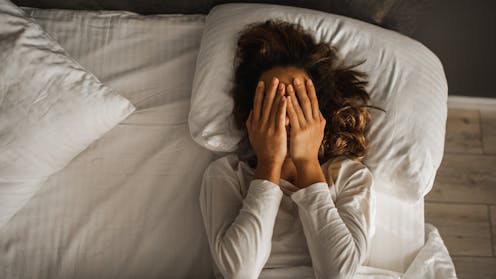
Even a single night of sleep trouble can feel distressing and lonely. You toss and turn, stare at the ceiling, and wonder how you’ll cope tomorrow. No wonder many people start to worry they’ve developed insomnia.
Insomnia is one of the most talked-about sleep problems, but it’s also one of the most misunderstood.
But just because you can’t sleep, it doesn’t mean you have insomnia. You might have another sleep disorder, or none at all.
What is insomnia?
Let’s clear up some terms, and separate short-term or intermittent sleep problems from what health professionals call “insomnia disorder”.
Sleep problems can involve being awake when you want to be asleep. This could be lying in bed for ages trying to fall asleep, waking in the middle of the night for hours, or waking up too early. Having a sleep problem is a subjective experience – you don’t need to tally up lost hours to prove it’s a problem.
But insomnia disorder is the official term to describe a more problematic and persistent pattern of sleep difficulties. And this long-term or chronic sleep disorder has clear diagnostic criteria. These include at least three nights a week of poor sleep, lasting three months or more. These criteria help researchers and clinicians make sure they’re talking about the same thing, and not confusing it with another sleep problem.
So, what are some reasons why a sleep problem might not be insomnia?
1. It’s short term, or comes and goes
About a third of adults will have a bout of “acute insomnia” in a given year. This short-term problem is typically triggered by stress, illness or big life changes.
The good news is that about 72% of people with acute insomnia return to normal sleep after a few weeks.
Insomnia disorder is a longer-term, persistent problem.
2. It doesn’t affect you the next day
Some people lie awake at night but still function well during the day. More fragmented and less refreshing sleep is also a near-universal part of ageing.
So if your sleep problem doesn’t significantly affect you the next day, it usually isn’t considered to be insomnia.
For people with insomnia, the struggle with sleep spills into the day and affects their mood, energy, concentration and wellbeing. Worry and distress about not sleeping can then make the problem worse, which creates a frustrating cycle of worrying and not sleeping.
3. It’s more about work or caring
If you feel tired during the day, an important question is whether you’re giving yourself enough time to sleep. Sometimes sleep problems reflect a “sleep opportunity” that is too short or too irregular.
Work schedules, child care, or late-night commitments can cut sleep short, and sleep can slip down the priority list. In these cases, the problem is insufficient sleep, not insomnia.
You might have noisy neighbours or an annoying cat. These can also affect your sleep, and reduce your “sleep opportunity”.
The average healthy adult gets around seven hours sleep (though this varies widely). For someone who needs seven, it usually means setting aside about eight to allow for winding down, drifting off, and waking overnight.
4. It’s another sleep disorder
Other sleep disorders can look like insomnia, such as:
obstructive sleep apnoea (when your breathing stops multiple times during sleep) can cause frequent awakenings through the night and daytime sleepiness
restless legs syndrome creates an irresistible urge to move your legs in the evening that often interferes with falling asleep. It’s often described as jittery feelings or having “creepy crawlies”, and is often undiagnosed
circadian rhythm problems, such as being a natural night owl in an early-bird world, can also lead to trouble falling asleep.
5. Medications and substances are interfering
Caffeine, alcohol and nicotine all create insomnia symptoms and worsen the quality of sleep.
Certain medications can also interfere with sleep, such as stimulants (for conditions such as attention-deficit hyperactivity disorder or ADHD) and beta-blockers (for various heart conditions).
These issues need to be considered before labelling the problem as insomnia. However, it’s important to keep taking your medication as prescribed and discuss any concerns with your doctor.
Getting the right help
If your sleep is worrying you, the best first step is to see your GP. They can help rule out other causes, review your medications, or refer you for a sleep study if needed.
However, once insomnia becomes frequent, chronic (long term) and distressing, you can worry too much about your sleep, constantly check or track your sleep, or try too hard to sleep, for instance by spending too much time in bed. These psychological and behavioural mechanisms can backfire, and make good sleep even less likely.
That’s why “cognitive behavioural therapy for insomnia” (or CBT-I) is recommended as the first-line treatment.
This is more effective, and longer-lasting than sleeping pills. This therapy is available via specially trained GPs, and sleep psychologists. You can take part in person or online.
In the meantime
If you’re in a rough patch of sleep:
remind yourself that short runs of poor sleep usually settle on their own
avoid lying in bed panicking if you wake at 3.30am. Instead, step out of bed or use the time in a way that feels restful
keep a consistent wake-up time, even after a poor night. Try to get some morning sunlight to reset your body clock
make sure you’re putting aside the right amount of time for sleep – not too little, not too much.
Authors: Amelia Scott, Honorary Affiliate and Clinical Psychologist at the Woolcock Institute of Medical Research, and Macquarie University Research Fellow, Macquarie University
Read more https://theconversation.com/do-i-have-insomnia-5-reasons-why-you-might-not-262701


















