

Cheap power to the people could shift the dial for renewables in the regions
- Written by Mehdi Seyedmahmoudian, Professor of Electrical Engineering, School of Engineering, Swinburne University of Technology
Australia’s energy story is at a turning point. Demand for electricity is rising rapidly as homes, industries, and transport systems electrify. The nation is also under pressure to cut emissions from its energy sector and elsewhere.
At the same time, some people don’t want renewable energy projects built in their area. So how do we meet all these challenges, and deliver energy that is cleaner, cheaper and more reliable than what we have today?
Climate Change and Energy Minister Chris Bowen has proposed one idea, urging renewable developers to provide cheap power to local communities in a bid to win support for projects such as wind and solar farms.
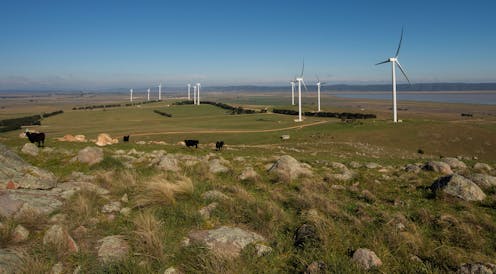
The idea has merit. Communities that host energy projects often don’t receive any meaningful benefit. Yet they bear the brunt of the projects, such as changes to the local landscape and social divisions. Cheap renewable electricity to local households could make the energy transition fairer – and faster.
Giving locals their share
Under the federal government’s target, Australia would reach 82% renewables in the energy mix by 2030.
But getting there means overcoming opposition in some areas to hosting renewables projects. The opposition includes fears over environmental impacts and loss of farmland, and perceptions that the community wasn’t adequately consulted.
Research shows providing communities with direct financial benefits can help win locals over. When people feel like partners rather than bystanders, opposition can decline and projects are more likely to succeed.
Cheap electricity is one of those financial benefits. Developers can offer households near renewable projects access to discounted power, generated locally, instead of paying the same retail rates as other areas.
The federal government has recognised the potential of this idea. As reported in The Australian, Chris Bowen said:
I’ve said to a lot of companies, ultimately, you’ve got to be thinking about energy discounts for people in the regions.
How ‘cheap power’ works
The principle is straightforward. Energy generated locally first serves nearby homes and businesses, which are charged a discounted rate. Any surplus power is exported to the wider grid, to customers paying general retail rates.
The discount ensures locals receive direct, tangible benefits for hosting the renewable energy project. It also reflects the fact that the electricity has not been transmitted over a long distance. Transmission costs can otherwise inflate energy bills.
Local-first energy systems also enhance resilience. During extreme events – such as bushfires, storms or blackouts – local generation and battery storage can maintain supply when the broader network is compromised. This can be a game-changer in regional Australia, where the grid is often weaker and outages can take a long time to fix.
Benefit-sharing also has wider implications. By keeping energy spending local, communities retain more money in their own economies. This creates opportunities for small businesses and local services to flourish.
Looking abroad
A number of successful overseas models offer a way forward.
In the United Kingdom, some wind farm developers offer nearby households discounted energy bills.
Some villages in Germany, such as Feldheim, operate community-owned renewable projects that supply low-cost energy directly to residents, bypassing traditional retailers.
In Denmark, residents can co-own turbines and receive both cheaper energy and dividends. This strengthens local investment in the energy system.
The Danish model inspired Hepburn Wind in Victoria, Australia. This wind farm is co-owned by more than 2,000 members, most of them local.
And renewables developers in the United States frequently create community benefit funds, supporting schools, sports facilities and local infrastructure.
Getting renewables right
All Australians should care about keeping the energy transition on track. Our electricity demand is expected to skyrocket out to 2050. Meanwhile, ageing coal plants are retiring and increasingly unreliable – and gas prices are volatile, leading to higher costs for consumers.
And of course, tackling climate change by reducing emissions is in everyone’s interests.
Renewable energy solves multiple challenges at once. It provides affordable electricity and reduces emissions. When combined with energy storage, it provides reliable electricity supply.
Australia’s energy transition is also an opportunity to reshape regional economies and empower communities.
Done well, renewable energy projects can improve trust between locals and developers. They can also deliver affordable power, new revenue streams and stronger community resilience.
Authors: Mehdi Seyedmahmoudian, Professor of Electrical Engineering, School of Engineering, Swinburne University of Technology

















