

Modern Australian
The Times

From batteries to EV chargers, Australia and NZ need these 3 fixes to hit net-zero at less cost

  • Written by Flavio Menezes, Professor of Economics, Director of the Australian Institute for Business and Economics, The University of Queensland
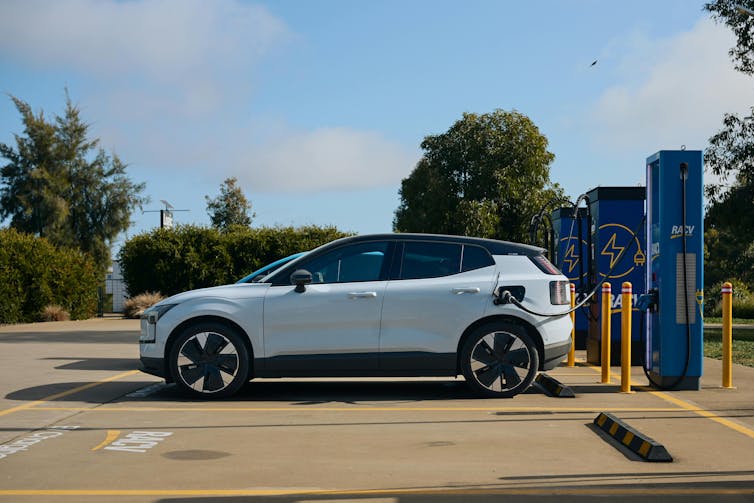
An electric SUV plugged into a car charger in country Victoria.

New figures show Australians bought a record 85,000 home batteries in the first half of 2025. That’s almost three times more than the year before, and nearly fivefold growth since 2022.

Eventually, those batteries will need to be reused or recycled. What happens then? The rules we create today will shape whether that’s affordable or easily available for householders.

My research – prepared for the federal Treasury at the request of the Australian and New Zealand governments – shows how both countries can reduce regulatory barriers to the net-zero transition.

For example, my consultation with industry revealed that moving a home or car battery from Melbourne to Perth can require multiple permits. This makes transporting batteries across different Australian states needlessly costly.

Unless this is addressed, battery recycling and repurposing markets will be smaller in some places than necessary. This drives up prices and reduces consumer choice.

So how do Australia and New Zealand compare on our current approaches to regulatory standards? And what three reforms do we need to deliver practical changes across the two countries, such as rolling out EV chargers that work with all electric cars, at the lowest price possible?

How standards affect our lives

When we picture barriers to a cleaner economy, we often think of coal plants or polluting petrol cars. Yet a serious obstacle is less visible: regulatory standards.

These technical rules were first introduced in Australia a century ago, for bolts on the Sydney Harbour Bridge. Today Australia has around 10,000 voluntary standards, covering everything from workplace and car safety to EV chargers and batteries. These can become mandatory when adopted by regulators or governments.

Operating out of sight, standards are like the economy’s plumbing.

Built well, they help the economy run smoothly. Standards give businesses, investors, and consumers confidence that products are safe, compatible and reliable. They enable trade, cut transaction costs, and help scale up new technologies.

But when standards are set up poorly, we get blockages: slower investment, stifled competition and higher costs.

It’s crucial we get this right now. Over the next decade alone, it’s estimated Australia will need up to 4,000 more new standards to help manage the net-zero transition, along with cyber-security and more.

The price of getting it right or wrong

Take the example of electric vehicle (EV) charging infrastructure.

If we want more people to buy EVs, drivers need to know that chargers are safe, “interoperable” (able to seamlessly work for different cars) and widely available.

But if each Australian state sets slightly different regulatory standards, manufacturers and operators face higher costs. Electric car owners then risk ending up with incompatible systems or paying higher prices.

An electric SUV plugged into a car charger in country Victoria.
Harry Tucker/Pexels, CC BY For new technologies, aligning with international benchmarks would cut costs, improve safety, and accelerate the development of a circular battery economy. The Australian Productivity Commission has estimated that simply broadening recognition of overseas standards in mandatory consumer safety product rules could save businesses A$500 million a year. In the energy sector, the commission found adopting international standards for vehicle-to-grid technology – to allow electric cars to feed power into the grid – could unlock a net present benefit of $2 billion by reducing the need for extra grid-scale battery storage. How Australia and NZ compare Right now, Australia faces three systemic problems. Duplication: regulators often replicate the work of international bodies, such as the International Electrotechnical Commission. For small economies, this adds cost without value and delays access to technology. Fragmentation: states, territories, and regulators adopt or interpret standards differently. Businesses must comply with multiple regimes, raising costs and discouraging investment. Outdated processes: standards are slow to update, leaving Australia out of step with global best practice. Consumers risk missing out on newer, safer, and cheaper products. The impact is clear. Australia’s small economy is split into eight smaller slices. Consumers face fewer choices, higher prices, and slower adoption of innovation. In contrast, I found New Zealand takes a more pragmatic approach. It defaults to trusted international or overseas standards unless there is a strong local reason to do otherwise. 3 fixes for Australia and NZ The report recommended three reforms for both Australia and New Zealand. Clarity: clearly define when standards should be mandatory. They should be adopted only when essential for achieving public policy objectives, and designed to avoid unnecessary burdens on competition and innovation. Default to international standards: international and trusted overseas standards should be the starting point, with regulators required to justify any departure. This would reduce duplication, cut compliance costs, and make it easier for firms to participate in global supply chains. Coordination: regulators must collaborate across jurisdictions to close gaps, avoid overlaps, and consider the broader policy impacts of standards. What to watch next Since receiving my report, the Australian and NZ governments recently committed to work together on electric vehicle charging, electrical products (including batteries), building and construction standards and product safety standards. If they do adopt a smarter approach – clarifying when standards are needed, defaulting to trusted international norms, and improving coordination across jurisdictions – Australia and New Zealand can better support and speed up the clean energy transformation.

Authors: Flavio Menezes, Professor of Economics, Director of the Australian Institute for Business and Economics, The University of Queensland


Read more https://theconversation.com/from-batteries-to-ev-chargers-australia-and-nz-need-these-3-fixes-to-hit-net-zero-at-less-cost-265197

A Digital Preparation Checklist For International Medical Conferences

An international medical conference compresses many responsibilities into a few days. A delegate may need to present research, move between venues, ...

The Growing Popularity of Lab Grown Diamonds in Sydney and Hong Kong

The diamond industry has changed significantly in recent years as more buyers seek ethical, affordable, and sustainable alternatives to mined diamon...

Modern AI SEO Agency vs Traditional SEO: What’s the Difference

Search engine optimisation has changed dramatically over the past few years. Search engines have become smarter, user behaviour has evolved, and bus...

Caravan Travel for Modern Australian Getaways: Plan a Comfortable Holiday

A family road trip is one of the best ways to explore Australia together. And, travelling by caravan gives you the freedom to take your time, stop a...

Mini Excavator and Trailer Package for Sale: What I Buy as One Deal in 2026

The first client who asked me for a mini excavator and trailer package for sale wasn’t trying to save a few hundred dollars on shipping. They we...

Make Dad a Guest in His Own Home This Father’s Day

Father’s Day can accidentally turn Dad into the unpaid event manager of his own celebration. He lights the barbecue, finds extra chairs, checks wh...

Where to Enjoy Your Off-Road Caravan on the Gold Coast

With a caravan, you can travel anywhere and everywhere without battling the rush of the peak holiday season or last-minute reservations. While the r...

How Osteopathy Supports Recovery from Sciatica and Nerve Pain

Sciatica isn't just annoying. It's genuinely painful. It sits deep in your glute and shoots straight down the back of your leg. It turns something as...

The Winter Jewellery Edit: Five Pieces You'll Wear All Season

As wardrobes shift to cosy knits, tailored coats and rich seasonal textures, jewellery becomes the finishing touch that pulls every winter outfit to...

7 Signs It's Time to Upgrade Your Piston Air Compressor

If you run a workshop, panel shop, or fabrication business anywhere around Perth, you already know what heat and dust do to equipment over a few sum...

How Long Do Bathroom Renovations Melbourne Take? Step-by-Step Process Explained

Planning a bathroom renovation is exciting, but one of the biggest questions homeowners ask is, "How long will it take?" While every project is uniq...

Why Your Skin Breaks Out: The Science of Acne Explained

Acne is the most common skin condition in the world. An estimated 85% of people experience it at some point between the ages of 12 and 24, and a gro...

10 Swimwear Trends Australian Women Are Wearing This Summer

Every Australian summer brings a fresh wave of swimwear trends, but some styles have much greater staying power than others. While fashion constantly ...

Why Regular Skills Updates Are Essential for Licensed Security Officers

A guard at a Brisbane shopping centre gets a call about a shoplifter who's turned aggressive.  They’ve done the job for six years. But their de-...

10 Benefits of Choosing Professional Tutoring Penrith Services

Every student has unique learning strengths, challenges, and academic goals. While classroom teaching provides essential knowledge and structure, so...

Sunshine Coast Baby Classes Prove Big Hit Among First-Time Mums

There's a movement gaining traction on the Sunshine Coast, providing a village of support, socialisation and relief for first-time mothers and babie...

Father's Day Gift Ideas for Men Who Are Hard to Buy For

Some dads are easy to buy for. Others do not want anything, already have everything, or give you the classic "don't worry about me" answer every yea...

Top 5 Mistakes That Wear Out Your Brakes Faster

Brakes don't need frequent replacements like oil changes do.   But a lot of the wear happens quietly, over months, because of habits most drivers...















