

74 countries have now ratified a landmark treaty to protect the high seas. Why hasn’t NZ?
- Written by Elizabeth Macpherson, Professor of Law and Rutherford Discovery Fellow, University of Canterbury
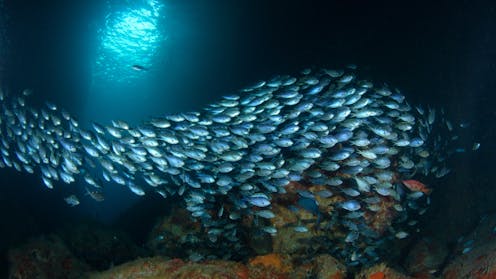
The ratification by more than 60 states, the minimum required to turn the Agreement on Biodiversity Beyond National Jurisdiction (better known as the High Seas Treaty) into law, means it will enter into force on January 17.
The treaty covers nearly two-thirds of the ocean – an area of sea and seabed outside the national jurisdiction of any country, which has come under growing pressure from mining, fishing and geoengineering interests, with climate change a compounding factor.
The High Seas Treaty sits under the United Nations Convention on the Law of the Sea, which New Zealand ratified in 1996.
This established the international legal framework governing the marine environment within each country’s jurisdiction, including the territorial sea, exclusive economic zone (EEZ) and continental shelf. New Zealand’s EEZ is the fifth largest in the world and 15 times its landmass.
The objective of the High Seas Treaty is to ensure the conservation and sustainable use of marine biological diversity beyond national jurisdiction – where the seabed and its resources are “common heritage of humankind”. It addresses four main issues: marine genetic resources and benefit sharing, marine protection, environmental impact assessments, and technology transfer.
New Zealand is the last country reported to be bottom trawling in the South Pacific high seas for species such as the long-lived orange roughy. It also has ambitions to allow seabed mining in its own waters. The High Seas Treaty is drawing much-needed attention to New Zealand’s approach to ocean governance, both at home and on the world stage.
What this means for NZ
New Zealand was an active participant in the drafting of the High Seas Treaty and an early signatory in September 2023. A total of 74 nations have now ratified it, but New Zealand is not one of them.
The deep seafloor beneath much of the high seas includes various habitats with rich biodiversity, much of it undescribed.
Bottom trawling uses large nets to scrape the seafloor. The bycatch can include deepwater corals and sponges, which destroys the habitat of fish and other species.
While the High Seas Treaty doesn’t directly regulate extractive activities such as fishing and mining in the high seas and deep seabed, it has implications for their exercise.
International organisations such as the International Seabed Authority and regional fisheries management groups regulate mining and fisheries, respectively. But new international institutions will be established to enforce compliance with the High Seas Treaty, including to establish marine protected areas in support of the Global Biodiversity Framework’s goal of protecting 30% of the ocean by 2030.
The Treaty also requires new activities in the high seas and deep seabed - aquaculture, geoengineering or seabed mining – to undergo an evaluation of environmental impacts.
A beacon for best-practice ocean governance
The High Seas Treaty reflects contemporary international legal consensus on best-practice ocean governance. Its guiding principles include:
Those who pollute marine areas should bear the costs of managing the issue
any benefits flowing from marine resources should be shared equitably (including with Indigenous peoples)
states should take a precautionary approach to marine uses where their effects are not well understood
states should take an ecosystem-based and integrated approach to ocean management
states should use an ocean-governance approach that builds resilience to climate change and recognises the ocean’s role in the global carbon cycle, and
states should use the best available science and traditional knowledge in ocean governance and respect the rights of Indigenous peoples.
These principles align with broader ocean-focused initiatives as part of the UN Decade of Ocean Science for Sustainable Development and the sustainable development goals, which signals a growing awareness of the need to improve how ocean resources are managed.
In New Zealand, international law is not directly enforceable in the courts unless incorporated into domestic legislation. But the courts can refer to international treaties when interpreting domestic legislation.
This happened when the Supreme Court used the Law of the Sea Convention to direct decision makers to take a precautionary and ecosystem-based approach to approving seabed mining within New Zealand’s EEZ, based on science, tikanga and mātauranga Māori.
The High Seas Treaty also reflects the unequivocal international recognition that states, including New Zealand, have obligations under international law to reduce the impacts of climate change on marine areas, reduce pollution and support the restoration of the ocean.
However, New Zealand lags behind other countries in the protection of marine biodiversity. The government has delayed marine protection legislation in the Hauraki Gulf and proposed the removal of a requirement for cameras on fishing industry boats. It has also increased catch limits for some commercial fish species, but reduced them for orange roughy after being taken to court by environmental advocates.
It has also opened up seabed mining to the fast-track consenting regime, despite a failure to meet basic standards for environmental impact assessment. And it is proposing to rework the coastal policy statement to enable the use and development of the coastal environment for “priority activities” such as aquaculture, resource extraction and energy generation.
Time for NZ to show ocean leadership
Ocean advocates and scientists have repeatedly called for reform of New Zealand’s highly fragmented and outdated oceans governance frameworks.
The international call to states to uphold the rights of Indigenous peoples stands in stark contrast to the New Zealand government’s recent track record on Māori marine and coastal rights and interests.
The courts recently overturned government polices that failed to uphold Māori fishing rights protected by Treaty of Waitangi settlements. But the government nevertheless plans legal changes that would further undermine Māori customary rights in marine and coastal areas.
Upholding Māori rights in line with international law is not just an obligation but an opportunity. Iwi and hapū Māori have significant knowledge to contribute to the management of the ocean.
It is high time for New Zealand to show leadership on oceans policy on the global stage by ratifying the High Seas Treaty. But it is as important to look after matters within domestic waters, aligning fragmented and outdated marine laws to match global best practice in ocean governance.
Authors: Elizabeth Macpherson, Professor of Law and Rutherford Discovery Fellow, University of Canterbury

















