

Reusing medical equipment is good for the planet. But is it safe?
- Written by Rochelle Wynne, Chair in Nursing, Western Health Deakin University Partnership, Deakin University
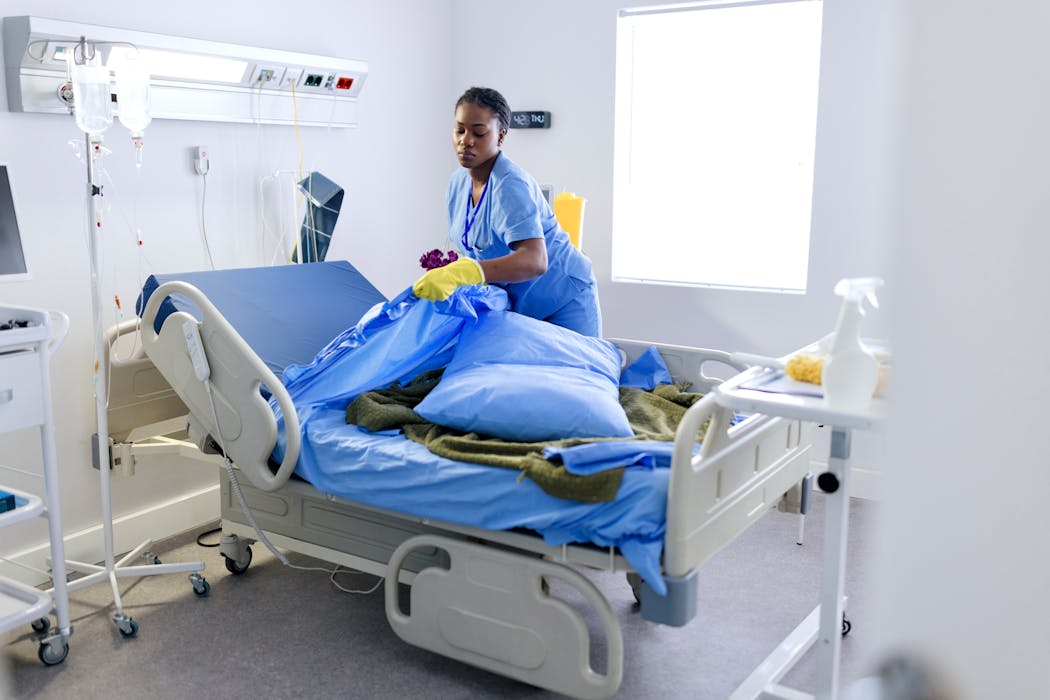
Even a short stay in hospital produces a large amount of waste. Just picture all the disposable items designed to be used once and thrown away: face masks, gloves, packaging, intravenous tubing, and even equipment such as stainless steel scissors.
This kind of single-use medical equipment was first introduced in high-income countries in the 1960s, thanks to advances in plastic manufacturing and a growing emphasis on infection prevention and control.
About 85% of the waste single-use products create is nonhazardous and can be recycled or disposed of without special processing. But a lot of the time it’s not sorted correctly. This means it is often mixed with hazardous waste that has to be incinerated before it is sent to landfill, which increases greenhouse gas emissions.
Our new study tested replacing just one kind of item – single-use absorbent pads, known as “blueys” – with a reusable version in the intensive care unit (ICU).
Blueys are pads made of layered tissue paper, with a plastic waterproof backing. They’re placed under patients to protect bedding and absorb bodily fluids such as blood and urine during patient care and other procedures.
We wanted to know how much waste could be diverted from landfill by replacing these single-use products with reusable linen – and importantly, whether it was safe and hygienic for patients. Here’s what we found.
What our study looked at
Over two years, we examined data from 2,114 ICU patients at a Melbourne hospital – 46% of them (970 patients) before we introduced reusable linen, and 54% (1,114 patients) after.
For the first year (the “before” phase), single-use blueys were used. In the second year (the “after” phase), these were replaced with reusable pads, made from soft cotton with a breathable backing. These had a similar capacity to absorb liquids as the disposable version but – instead of being thrown away – they were washed and reused.
The study compared how many kilograms of waste were generated by single-use blueys in the first year, compared to the reusable linen.
We also explored whether reusable linen increased patients’ risk of pressure injuries, sometimes known as bed sores. These are wounds that develop when patients are immobile and spend a lot of time sitting or lying in one position, causing the skin to break down.
Patients in the ICU have a high risk of developing pressure injuries. These can delay recovery and prolong their stay in hospital.
To evaluate the change, we surveyed nurses who’d used the reusable pads. We also reviewed medical records to compare the prevalence of pressure injuries in the two groups, along with patient demographics such as age, sex and length of hospital stay.
What we found
There was no difference in pressure injuries between the two groups. This means reusable linen did not increase the risk of an ICU patient developing a pressure injury.
But it did save a lot of waste. In the year before introducing reusable pads, 21,554 disposable pads were used in this one hospital ward, generating almost half a tonne of waste from this single-use item alone.
Shifting to reusable linen effectively eliminated this waste, saving about half a tonne (496 kilograms) from going to landfill in one year alone.
Initially, some nurses expressed concerns about whether the reusable linen pads would affect patients’ skin. However, once the reusable pads were introduced and used for a few weeks, staff were highly satisfied. Many noted they were more sustainable and helped reduce waste, and recommended continuing to use them.
While our study didn’t look at infection risk specifically, 50 years of data from the United States and the United Kingdom has previously shown reusable linen does not increase the risk of infections when it is washed and sterilised properly.
For example, Australian laundry standards for infection control require reusable items to be washed at a certain temperature (above 65°C for at least ten minutes, or 71°C for at least three minutes) or treated with a chemical disinfectant when material is heat sensitive.
Why this research matters
Australia’s health-care system produces up to 7% of the country’s total greenhouse gas emissions. Hospitals are the single biggest contributor.
Given this is largely from direct patient care, making day-to-day routines more sustainable can have a big impact.
There are other benefits, too. During the early parts of the COVID pandemic, when there were often equipment shortages in supply chains, our research confirmed that using reusable personal protective equipment (PPE) was safe and could help ensure products remained available. It was also more sustainable and less costly.
One potential drawback of reusable health-care equipment is how much water is consumed cleaning and sterilising it. Our study didn’t assess this directly.
But in further research, we plan to do a life cycle assessment that compares single-use blueys and reusable linen.
This is a widely recognised way to assess the environmental impact of products from “cradle to grave”. The assessment considers the energy consumption, water use, greenhouse gas emissions and cost involved not only in the products’ manufacture, but also in their use and disposal. This includes the impact of washing and sterilising products versus sending items to landfill.
Health-care workers often face barriers to sustainable practice when caring for patients. But as frontline workers are managing the health consequences of climate change and environmental disasters, it’s vital they understand their role in promoting environmentally responsible care. Access to equipment that is safe, for both their patients and the planet, is essential.
Authors: Rochelle Wynne, Chair in Nursing, Western Health Deakin University Partnership, Deakin University
Read more https://theconversation.com/reusing-medical-equipment-is-good-for-the-planet-but-is-it-safe-265681

















