

NZ’s native lizards are at risk from land development – future policy must ensure better protection
- Written by Christopher K. Woolley, Post-doctoral Researcher in Ecology, Te Herenga Waka — Victoria University of Wellington
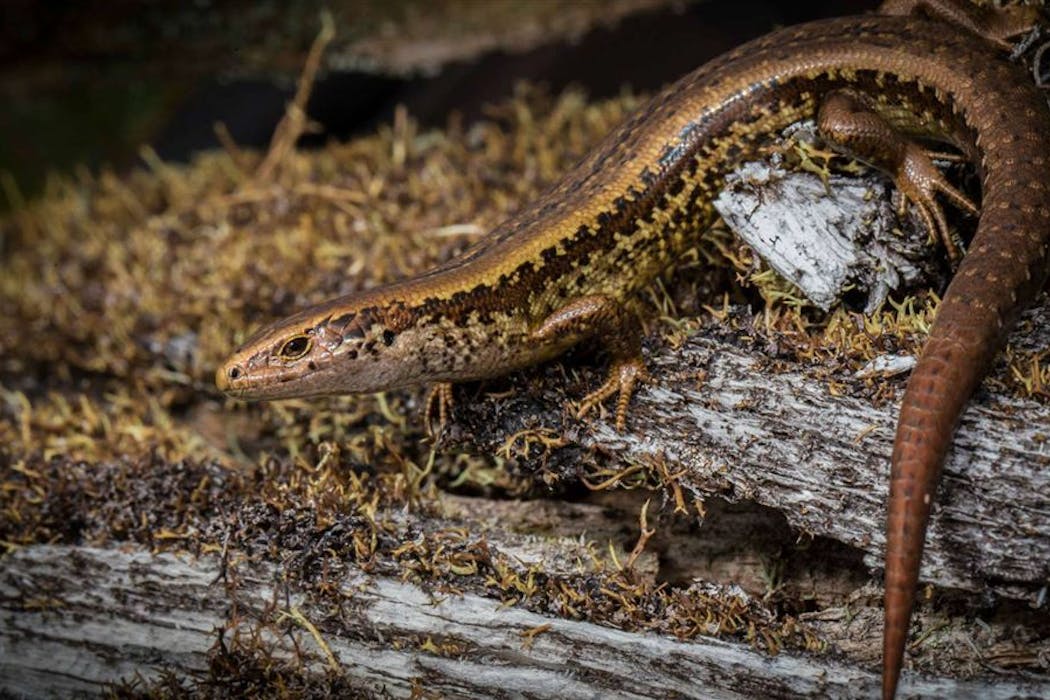
New Zealand’s land animals are not well protected when land is developed for new uses. Recent and proposed policy changes risk putting many species at further risk, and native lizards are particularly vulnerable.
New Zealand has more than 120 species of native lizards in two families: skinks and geckos.
As a group, lizards are widespread across the country and many occur in cities. While some species have strong habitat preferences, others live in a wide range of habitats, including non-native and weedy vegetation.
These habitat characteristics mean lizards are often present in places destined to be cleared, degraded or disturbed for development.
All but four lizard species are threatened or at risk. The pressures imposed by human land uses are a serious threat to them.
Two primary statutes determine how lizards are managed during land-use activities. The Wildlife Act 1953 provides protection from hunting and killing and the Resource Management Act 1991 (RMA) requires the sustainable management of resources. However, both have significant shortcomings in policy and implementation when it comes to preventing the loss of native lizards, and both are under review.
Policy issues
Our recent research explores some of the issues affecting native lizards during changing land use.
One of the problems with having different laws at play is that authorisation of activities and monitoring of compliance are split between several agencies.
The Department of Conservation (DOC) is in charge of the Wildlife Act and the Ministry for the Environment and various local authorities deal with applications under the RMA.
This means no one agency has complete regulatory oversight. While DOC has the authority to prosecute anyone who kills or disturbs lizards while clearing land for development, this almost never happens because there is rarely enough evidence or public interest.
Developers are far more aware of the need to gain resource consent from councils who regulate land use than a Wildlife Act authority from DOC. In many cases, DOC will not even be aware lizard habitat is being cleared.
Under the RMA, councils are required to protect significant areas of indigenous vegetation and habitat for indigenous fauna. In most cases, this is done by designating “significant natural/ecological areas” (SNAs). The criteria used to assess these areas vary among regional policies, but typically include values of representativeness, diversity, rarity and size of the area.
Because we lack knowledge of where lizards exist, these protected areas only cover a fraction of lizard habitat. This is especially true where lizards are present at sites of otherwise low ecological value (for example, weedy non-native vegetation or rank grass).
Outside of SNAs, rules often allow activities such as vegetation clearance and earthworks with few or no conditions. No ecological assessments are required. The fate of any lizards present therefore rests on developers and contract ecologists being aware and proactive about the need to manage them.
As a result, there is little consideration given to lizards during most land-use activities.
Issues in practice
Even when timely consideration is given to lizards and plans are made for their management, we lack evidence that the tools commonly used to mitigate impacts actually work.
Over the past 15 years, the capture and relocation of lizards away from the site of development (mitigation translocation) has become common practice. But international evidence shows translocations of lizards and other reptiles have high rates of failure.
Measuring the population outcome of a lizard translocation is difficult. Because lizards are commonly released at sites where other lizards may already be present, it is usually impossible to know whether the translocated individuals survive and breed at the new site.
Likewise, there is little evidence that attempts to improve the habitat at release sites by adding rockpiles or plantings, or even predator control, help to increase the population.
The breadth of these problems and the involvement of multiple actors and agencies makes protection of lizards and other wildlife during land-use changes challenging.
Both the Wildlife Act and the RMA are currently under review. The proposed reform of the Wildlife Act aims to clarify protection for native wildlife and to add better tools to address current and future threats to species. We argue any new law must ensure native species receive protection regardless of land ownership and the location of habitat.
This could be achieved through stronger monitoring and compliance auditing by DOC, requiring better evidence for the success of mitigation and compensation practices, and better integration with the RMA and resource consenting practices.
Underpinning all of this is the need for more information about where lizards live, so they don’t disappear without us even noticing.
Authors: Christopher K. Woolley, Post-doctoral Researcher in Ecology, Te Herenga Waka — Victoria University of Wellington

















