

Labor is close to a deal on environmental law reforms. There are troubling signs these will fall short
- Written by: Euan Ritchie, Professor in Wildlife Ecology and Conservation, School of Life & Environmental Sciences, Deakin University
The Albanese government has hinted it is close to a deal with the Coalition over the long-awaited overhaul of Australia’s environment laws. Environment Minister Murray Watt plans to introduce new legislation to parliament in November.
Can Watt deliver what is sorely needed to turn around Australia’s climate and nature crises? Or will we see a continuation of what former Treasury Secretary Ken Henry called “intergenerational bastardry”?
However the bill is passed, the new laws must include substantial improvements. But with pressure from all sides – including the Opposition and minor parties, mining companies, green groups and big business – will the new laws be strong enough to protect Australia’s embattled environment? Here are some of the ways our environment laws should be reformed.
Not fit for purpose
Australia’s key national environmental law, the Environment Protection and Biodiversity Conservation Act 1999 (EPBC Act) is 25 years old.
Two major reviews, ten years apart in 2009 and 2020, criticised it variously as “too repetitive and unnecessarily complex” and “ineffective”.
At the 2022 election the Albanese government promised to overhaul the laws. But most of its proposed reforms were abandoned in the lead up to the next election in 2025, citing a lack of parliamentary support.
In 2022, Labor was talking up its plan to reform Australia’s broken environmental laws.A strong watchdog
The success or failure of the reformed laws rests on developing well-defined National Environmental Standards – legally binding rules to improve environmental outcomes. These would apply to environmental decisions that affect nationally important plants, animals, habitats and places. Examples include land clearing in areas where threatened species occur, regional planning and Indigenous consultation.
Alongside strong standards, we need a well-resourced and fearlessly independent Environment Protection Agency to assess proposals, such as applications for new gas wells or to clear native vegetation for mining. A strong EPA is essential for legal compliance.
The Coalition doesn’t support an EPA and wants final approval powers to rest with the minister of the day. But if an EPA can be overruled by the minister, it could further reduce public confidence in the protection system, especially given recent examples of real or perceived industry pressure on government decisions.
If the minister is given powers to “call in” proposals to assess them they should be very specific and restricted. For example, for responding to national disasters but not for purely economic purposes. The reasons for calling in a decision should be published and made public.

Habitats are homes for wildlife and need greater protection
New laws should also clarify what are considered “unacceptable impacts” of new projects. For example, irreplaceable natural areas should be saved from destruction or damage by new developments.
Destroying or damaging habitats that are home to rare and endangered species should be illegal. Protected, “no-go” areas could be recorded on a register to guide project decisions, as Watt has discussed.
It is vital that environmental offsets, designed to compensate for unavoidable impacts from developments, are legislated as a last resort.
Climate change
The EPBC Act lacks a “climate trigger” that explicitly requires consideration of climate change impacts of greenhouse gas-intensive projects.
At least ten previous attempts to introduce a climate trigger have not succeeded, and Watt has all but ruled it out in these reforms.
Instead, Watt suggests “the existing Safeguard Mechanism as an effective way of controlling emissions”. The Safeguard Mechanism legislates limits on greenhouse gas emissions for Australia’s largest industrial facilities.
But it only applies to the direct or scope 1, greenhouse gas emissions. It does not include emissions produced from Australia’s fossil fuel exports of coal, oil and gas. Nearly 80% of Australia’s contribution to global emissions comes from its fossil fuel exports.
Even without a climate trigger, reforms to the EPBC Act must reflect the impact of climate change on Australia’s environments. They could require climate is taken into account in all decision making to achieve environmental outcomes under the Act, and prohibit development in places that offer refuge to native species during extreme events.
First Nations to the front
Environmental decision making must include genuine Indigenous engagement and a required standard should be part of the Act. A Commissioner for Country would help to ensure this expectation was adhered to.
Furthermore, calls have been made by First Nations for new laws to include the protection of species based on their cultural significance.
No more logging loopholes
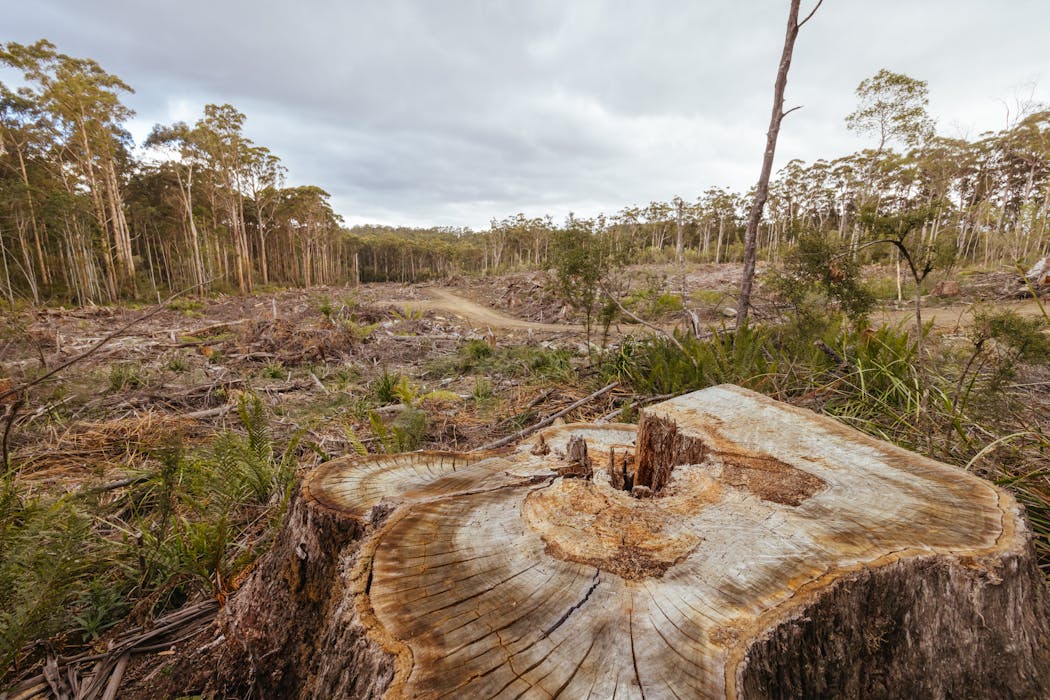
There must be an end to industry carve outs, including regional forestry agreements. A pact between the national government and certain states, these agreements define how native forests should be managed, harvested and protected.
For decades, they have allowed the logging of forests that are home to endangered native species, including the koala and greater glider. In 2024, Victoria and Western Australia both ended the native forestry industries in their states.
In August 2025, Watt confirmed that bringing regional forest agreements under the operation of national environment standards “remains our position”. But so far he has avoided questions about how that would work in practice.
Clear targets
If the Labor government is serious about delivering on its promise of “No New Extinctions” these reforms must include clear targets to better protect threatened animals, plants and their environments. Preventing further extinctions will take far greater, long-term funding than Australia currently provides.
We need a better understanding of how endangered species and ecological communities are faring. The newly-created Environment Information Australia body will collect data and track progress against an agreed baseline, for example the 2021 State of Environment Report.
Conservation leader not pariah
Australia is known globally for its unique and much-loved wildlife, and its diverse and beautiful nature places. However, in the face of enormous pressure to enable increased development, we are gaining a reputation for our gross failures to care for and conserve this extraordinary natural heritage.
Australia must step up as a global leader in nature conservation through strong environmental laws and biodiversity recovery strategies. As we bid to host the UN’s global climate summit COP31 next year, the eyes of the world will be on our environmental and climate ambition.
Authors: Euan Ritchie, Professor in Wildlife Ecology and Conservation, School of Life & Environmental Sciences, Deakin University


















