

It took just 60 years for red foxes to colonise Australia from Victoria to the Pilbara
- Written by Sean Tomlinson, Research Associate, Ecology and Evolution, University of Adelaide
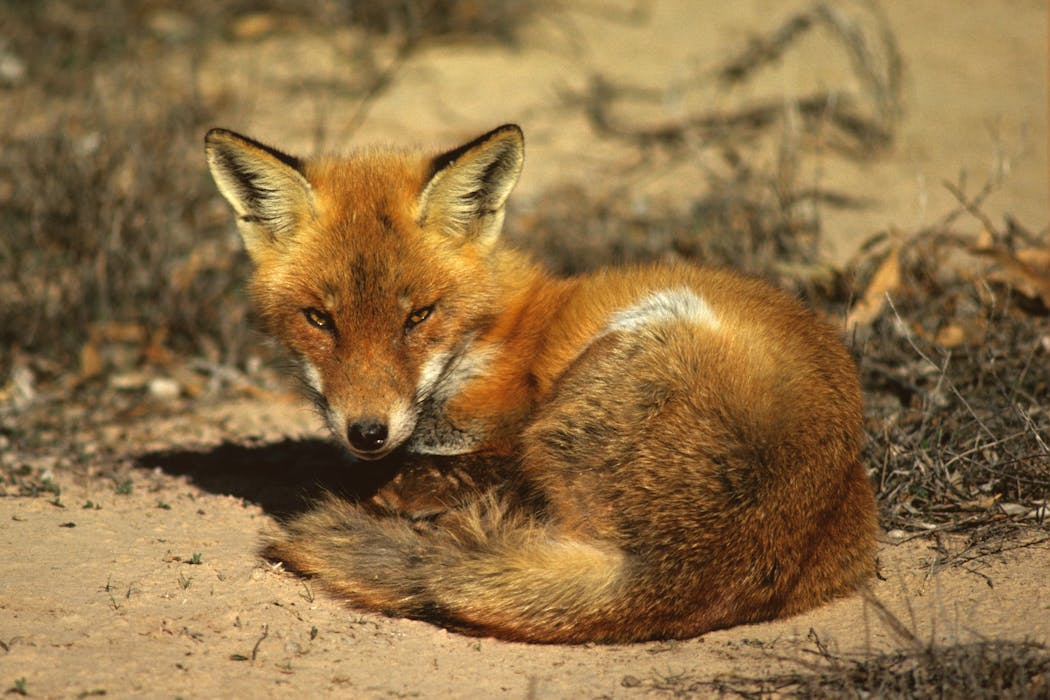
To a newly-arrived red fox, the abundant rolling grasslands and swamps of Wadawurrung Country, around what is now called Port Phillip Bay, must have seemed like a predator’s paradise.
This landscape was filled with small native marsupials and birds, and free of European wolves or bears that usually kept fox numbers in check.
The first red foxes, (Vulpes vulpes), to arrive in Australia were deliberately released by European colonialists in 1870 in three Victorian locations – Werribee, Corio (near Geelong) and Ballarat. They were introduced for the “noble” sport of fox hunting.
Small native animals became easy prey for foxes because they did not evolve with these predators and did not know to avoid them.
Red fox numbers ballooned and they spread rapidly. How fast? Our new research shows it took just 60 years for one of Australia’s most devastating invasive predators to colonise the continent. These days, foxes can be found everywhere except the tropical north and Tasmania.
Their rapid spread offers clues to how we might prevent future extinctions of native animals from foxes, and map the infiltration of Australia by other invasive species.
Mapping the spread
To model the arrival and spread of foxes across Australia, we relied on hundreds of historical “first-sighting” records collected from library, local government and state archives.
First sightings of foxes were particularly newsworthy at the end of the 19th and beginning of the 20th century in Australia. This is because of the threats that foxes posed to sheep and poultry.
We ran thousands of model simulations reconstructing the arrival and spread of foxes across Australia. We played out likely scenarios of fox survival, reproduction and dispersal based on what we know about their behaviour today.
We then compared these simulated patterns of population growth and expansion against inferences of demographic change from these historical records. Our best models were able to closely reconstruct the timing of arrival of foxes in places and regions as well as their current day population sizes.
Our modelling demonstrated foxes populated Australia at incredible speed. Between 1870 and 1895, they had spread across the southeastern corner of Australia. Then they spread more slowly to the north and west directions in arid regions. By 1940, however, they had reached the remote northwest.

Flourishing foxes
Foxes mate in winter, with females giving birth to four to five cubs. By autumn, the young foxes are on their own. They can travel up to 300 kilometres in search of new territory.
As omnivores, they eat everything from small mammals such as rodents and rabbits to birds, insects and plants. In their native range from Europe to the Middle East foxes have been suppressed by predators like bears and wolves, but in Australia, fox numbers have soared.
Unfortunately, the suppression of dingoes across Australia following European colonisation is at least partly to blame for the explosion in fox numbers because there are not sufficient densities of dingoes control foxes.
Foxes flourish in areas modified by humans. We show that their populations are densest around urban centres, and they do well after land is cleared for agriculture. Population growth rates of foxes in agricultural regions increased notably in the 1950s, as a result of large-scale agricultural expansion following World War II.
This research also showed that in arid areas, population cycles of foxes follow a “boom and bust” cycle, while their numbers seem more stable in agricultural landscapes.
Driving extinction
European red foxes and domestic cats brought to Australia kill about 300 million native animals in Australia every year and remain the major driver of past and current extinctions.
Australia’s fox population is about 1.7 million, and the Invasive Species Council estimates as many as 16 mammal species have become extinct mainly or partly because of foxes. This is about 40% of total extinctions since European arrival.
Our new research provides important insights into which native species have been threatened for the longest period of time, identifying areas that were potentially important refuges from foxes.
The adaptable simulation models we used to track fox expansion can be used for other invasive species that haven’t yet infiltrated all of Australia, such as cane toads. We hope these models will help us map the spread of other invasive species such as cats, and potentially curb Australia’s decline in native wildlife.
Authors: Sean Tomlinson, Research Associate, Ecology and Evolution, University of Adelaide

















