

A ‘lack of ambition’ over livestock emissions targets now threatens NZ’s reputation and trade
- Written by: James Renwick, Professor of Physical Geography (Climate Science), Te Herenga Waka — Victoria University of Wellington
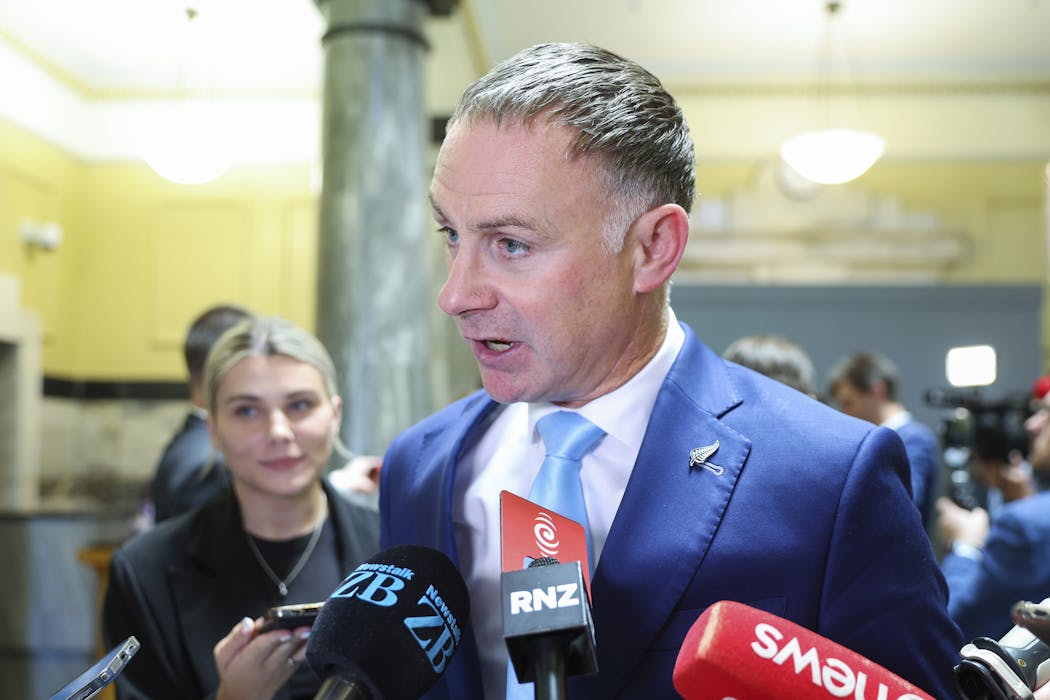
The government’s decision to shrink a legislated target for cutting agricultural methane emissions is the latest in a string of announcements signalling a lack of ambition to meet climate targets.
It represents a major step backwards and could threaten New Zealand’s trade relationships.
The methane reductions mandated under the Zero Carbon Act, passed in a cross-party agreement in 2019, called for cuts in the range of 24-47% below 2017 levels by 2050. This is in line with the findings of an Intergovernmental Panel on Climate Change special report that focused on what the world needs to do to keep warming at 1.5°C.
The government’s revised target aims to reduce methane emissions from farm animals by 14-24% by 2050. This means the minimum of the current range will be the highest possible ambition in the new one.
The government has also scrapped an election pledge to tax agricultural emissions, and it has pushed back a legal obligation to respond to the independent Climate Change Commission’s advice on future emissions budgets by two years.
The commission’s recommendation is to strengthen the country’s climate targets, both for long-lived greenhouse gases (carbon dioxide and nitrous oxide) and the short-lived but more potent methane because:
Evidence shows that the world is not on track to limit warming to 1.5°C, climate impacts are more severe and happening sooner than expected, and other countries are already doing more and expecting more.
For biogenic methane, the commission calls for more ambitious cuts to reach at least 35–47% by 2050. However, the government says achieving the upper end of the current range (47%) is “unrealistic” and would create “economic uncertainty, risks exacerbating land use change, and could increase food production costs”.
Pressure from the agriculture sector
The government appointed a review panel to assess how much methane emissions would need to be reduced to achieve “no additional warming” on 2017 levels – the idea being that it is enough for methane’s contribution to warming to remain at current levels.
This approach was promoted by industry lobby groups such as Groundswell but rejected by the Climate Change Commission. And it does not represent the “highest possible ambition”, as laid out in the Paris Agreement, to which New Zealand is a signatory.
It also goes against the 1.5°C goal, entrenched in New Zealand’s legislation and recently upheld by a landmark ruling by the International Court of Justice, which found even countries that leave the Paris Agreement are not exempt from international legal requirements to act in a manner consistent with 1.5°C.
Our trading partners are unlikely to smile on this lack of ambition. The New Zealand-European Union Free Trade Agreement includes the obligation to “refrain from any action or omission that materially defeats the object and purpose of the Paris Agreement”. It also includes the provision that parties may take “appropriate measures” in the event of such acts or omissions.
On top of the weaker ambition on methane reductions, the government recently reopened the country to oil and gas prospecting, removed a subsidy for electric vehicles, and disestablished a fund meant to help decarbonise industry. All moves are counter to the free trade agreement with the EU.
Despite the changes to the 2050 methane target, the 2030 target to reduce agricultural methane emissions by 10% has not changed. However, this will be harder to achieve as no price will be put on agricultural emissions, and the revised 2050 target takes the pressure off farmers.
The revised methane target represents a challenge for other sectors. The Climate Change Commission’s analysis shows that for every percentage point decrease in the ambition of the methane target, up to 44 million tonnes of carbon emissions would need to be offset. This would be either through more offshore credits, more tree plantings, or emissions cuts in other sectors such as transport or energy.
Partnerships and technology
To back the new target, the government says it is investing to speed up the development and rollout of methane-cutting tools. These include innovations such as the EcoPond, which cuts emissions from effluent ponds by more than 90%.
However, emissions from effluent ponds represent only about 10% of New Zealand’s total agricultural emissions because only dairy farms use them. Other possible solutions – including advances in breeding genetics and methane inhibitors – show promise but are not guaranteed to be rolled out in the near future.
Meanwhile, the climate is changing rapidly. We must do all we can to slow warming and avoid impacts from extremes and crossed tipping points.
Yes, cutting carbon dioxide emissions remains a priority, and we must get to zero emissions as soon as possible. But methane emissions are the next most important, and cuts should translate quickly into reductions in atmospheric concentrations (because of the short lifetime of methane), providing a cooling effect in the short to medium term.
The government’s announcement came on the eve of a major international conference on climate change adaptation taking place in New Zealand. This meeting is providing clear evidence of the effects of climate change in New Zealand and across the Pacific and the world, today.
We can currently adapt to climate change pressures, in most places, most of the time. But every tenth of a degree of warming makes that adaptation harder, and at some point we will no longer be able to do so.
There is urgency around reducing emissions of all greenhouse gases, in every sector and every country. New Zealand’s weakened methane target raises the risk of unmanageable consequences from climate change.
Authors: James Renwick, Professor of Physical Geography (Climate Science), Te Herenga Waka — Victoria University of Wellington


















