

Some US protein powders contain high levels of lead. Can I tell if mine is safe?
- Written by Evangeline Mantzioris, Program Director of Nutrition and Food Sciences, Accredited Practising Dietitian, University of South Australia
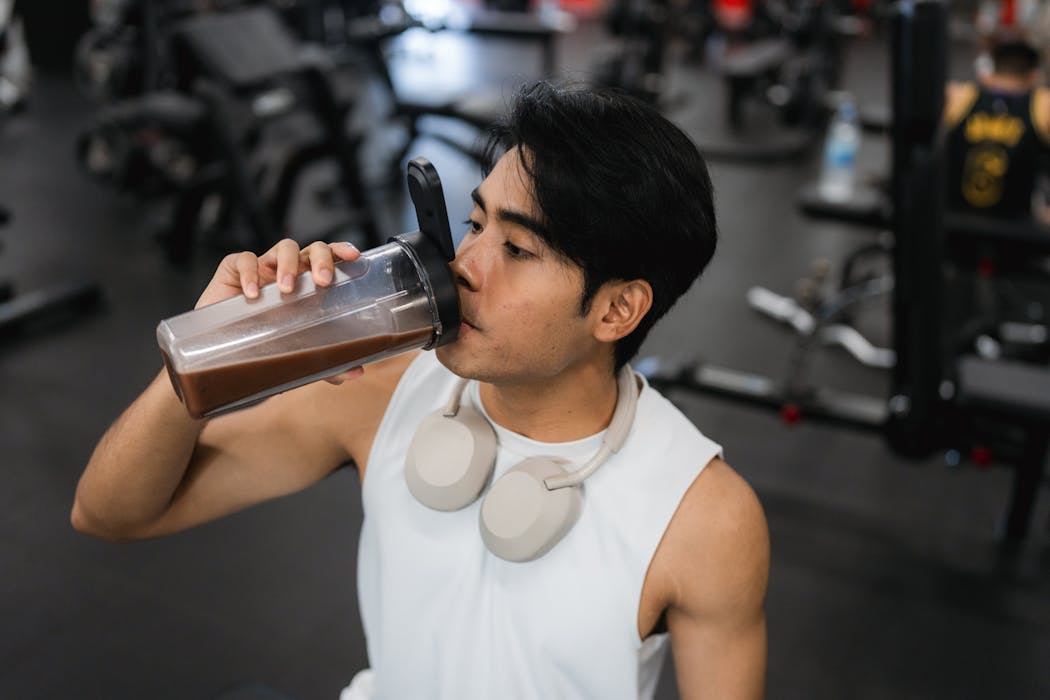
This week, the United States non-profit Consumer Reports released its investigation testing 23 protein powders and ready-to-drink shakes from popular brands to see if they contained heavy metals.
More than two-thirds of the products contained more lead in a recommended serving size serving than the Californian guidlines recommend in a day: 0.5 micrograms (mcg or µg).
Protein powders and shakes are most commonly used to build muscle. But some people may use it in a weight-loss program as a meal replacement, or to gain back weight lost after an illness or injury.
Some products Consumer Reports tested were plant-based, some were labelled as organic and some used animal and dairy-based protein. Only one product didn’t contain detectable levels of lead.
So what does this mean for people who use protein powder? And what’s the situation in Australia?
Lead has been found in protein powder before
Consumer Reports found lead levels increased since its last report in 2010. One product contained twice as much lead per serving than the worst performer in 2010.
A separate investigation in 2018 which analysed 130 protein powders available on Amazon found 70% had heavy metals in them.
Another analysis of 36 protein powders in 2021 found lead levels ranged from 0.8-88.4 mcg per kilogram of product. Consuming a single 20 gram serve a day, would mean a range of intake of 0.016 mcg to 1.77 mcg.
How does lead get into these products?
Lead comes from both natural sources (such as volcanic activity and chemical weathering of rocks) and human-made sources (such as leaded petrol, industrial processes and paint). This results in crops absorbing lead and the metal entering the food and water supply.
In US government testing from 2014 to 2016, 27% of all food samples (2,923) had lead detected in them.
In Australia, testing in 2019 found that of the 508 food samples, 15% had detectable levels of lead. Food Standards Australia New Zealand (FSANZ) modelling suggests this would result in an average lead intake of 0.018–0.16 mcg per kg a day across different age groups. For a 70kg person, this would range from 1.26 to 11.2 mcg per day from food and drinks.
Lead can also be inhaled as dust from industrial processes such as mining smelters or by inhaling (or licking) fragments of lead-rich paint when handling old lead toys or other lead equipment, or from consuming or coming into contact with contaminated water or soil.
How can lead affect your health?
Lead provides no health benefits. It’s harmful to the body and can damage nearly every organ system.
Its greatest impact is on the brain and nervous system. For children, this can lead to impaired cognitive and physical development, learning disabilities and behavioural problems.
With high levels of lead exposure, adults are at increased risk of anaemia, joint pain, kidney damage and nerve damage leading to tingling, numbness and muscle weakness.
During pregnancy, lead can be transmitted to the fetus, leading to complications such as premature birth, low birth weight and developmental issues in the baby. It’s also a concern for breastfeeding mothers, as some lead can be transmitted through the breast milk.
Lead has also been listed as a possible carcinogen, or cause of cancer, by International Agency for Research on Cancer.
As levels increase in the blood, health concerns grow. Very high levels in the blood (above 120 mcg per decilitre) can cause death.
What do other guidelines say is a safe level of lead?
Australia’s National Health and Medical Research Council (NHMRC) concludes there is no set safe level of lead in your diet. You should aim to consume as little as possible to avoid health impacts.
The NHRMC recommends blood levels, which take into account all exposures, should be below 5 mcg per decilitre of blood. (But Australia doesn’t have a daily limit.)
In 2022, the US Food and Drug Administration updated its maximum safe dietary lead levels to 2.2 mcg a day for children and 8.8 mcg a day for women of childbearing age. This is much higher than the Californian levels Consumer Reports used.
Using the FDA levels, all the products Consumer Reports tested could be consumed daily for adults – but this doesn’t account for exposure from other foods or the environment.
Should we be concerned in Australia?
Most of the products Consumer Reports tested are available for purchase online, and may possibly be available in stores.
There is no data on lead levels in protein powder sourced and manufactured in Australia.
So there is no way of knowing whether your protein supplement has lead in it, unless you get a chemical analysis done through an accredited laboratory as Consumer Reports did.
So should I limit my intake?
Probably, but not just because of concerns about lead.
We simply don’t know how much lead is in each scoop of protein powder, so it’s difficult to make recommendations about whether these products are safe to use daily. Levels will vary between products and even between containers. Occasional use is likely to be safe, but using it daily or more often could lead to unsafe intakes of lead.
It’s also important to remember that your blood levels will also be affected by environmental exposures and other foods.
But most of us don’t need extra protein, even if we’re training. Around 99% of Australians already meet their protein requirements.
It’s better to consume protein from whole foods, and you’ll get the benefits of other nutrients as well:
- dairy products also contain calcium and vitamin B12
- fermented dairy such as yoghurt and cheese also contains probiotics
- fish has omega-3 fats
- red meat contains iron and zinc
- lentils, beans and nuts give you antioxidants and fibre.
All these nutrients are equally important for our good health and are less likely to be concentrated sources of heavy metals such as lead.
Authors: Evangeline Mantzioris, Program Director of Nutrition and Food Sciences, Accredited Practising Dietitian, University of South Australia

















