

Is Australia still a lucky country – or has the ‘Australian way’ lost its way?
- Written by Marilyn Lake, Professorial Fellow in History, The University of Melbourne
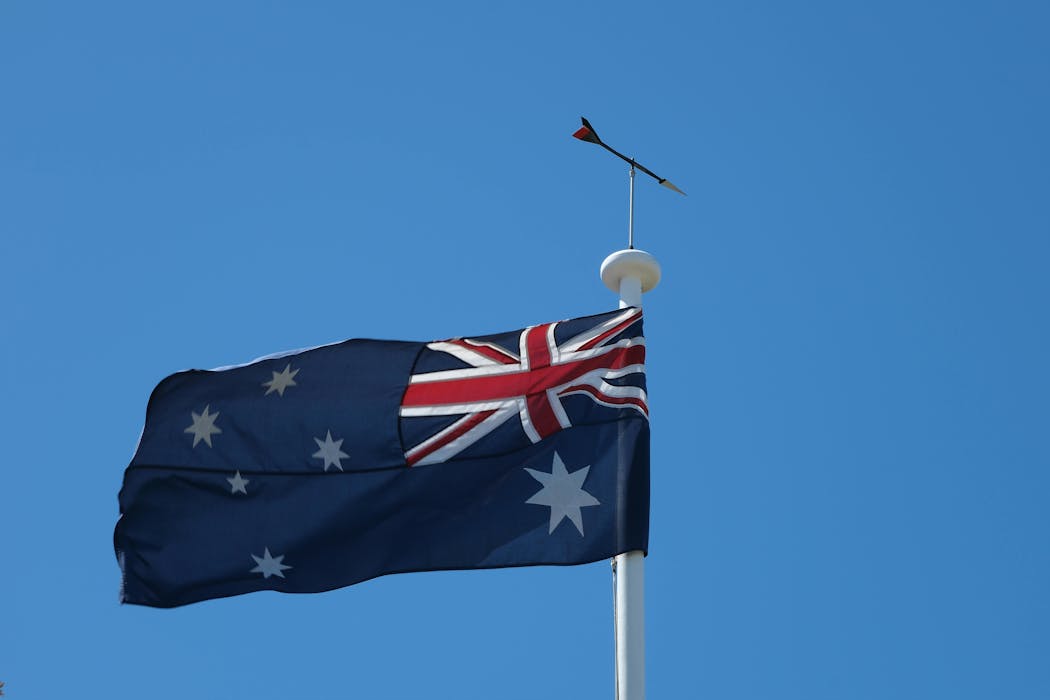
Suddenly everyone is talking about the “Australian way”. This is partly a nervous response by the prime minister to the reelection of Donald Trump, and partly (relatedly) a desire more generally to talk about “Australian values”.
In We Should Be So Lucky – subtitled “Why the Australian Way Works” – Andrew Low claims to uncover the secrets behind Australia’s success and what it can teach the world.
Review: We Should Be So Lucky: Why the Australian Way Works – Andrew Low (Prospect)
Published by Prospect Editions in London, and distributed in Australia by Black Inc., Low’s book is written primarily for British and American audiences. It sets out to inform them about a people who enjoy the second-highest median wealth in the world (the highest is Luxembourg) and a life expectancy higher than the residents of both the United States and the United Kingdom.
Australia has one of the world’s top-ranked healthcare systems, with its mix of public and private, effectiveness and equity. And it is a country with strong political institutions, which include a federal government determined by compulsory voting, preferential ballots, and a rigorously independent electoral system.

Inspired by Donald Horne’s The Lucky Country (1964), Low’s new account of Australia is much more upbeat than Horne’s jaundiced work. Low is an ardent advocate of Australia as a liberal democracy that works.
Framed by a multitude of global comparisons, We Should Be So Lucky laments that Australians – as well as foreigners – know too little about their nation’s distinctive history and political culture.
Low presents himself as an amiable guide, who eschews polemics. But his failure to engage with political ideas leaves him unable in the end to explain the specificities of Australian democracy – “the institutional and cultural foundations of the country” – as promised.
Progressive founders
Low is a former investment banker and a champion of globalisation and neoliberalism. It’s ironic, then, that the qualities and institutions of Australian life he admires – our egalitarianism, concern for the common good, compulsory voting, relatively high wages, centralised wage fixation, compulsory superannuation – derive from ideals that the progressive founders of the Commonwealth of Australia often called “state socialism”.
As Liberal leader Alfred Deakin mantained, the idealists who created the Commonwealth of Australia wanted to use the agency of the state to achieve social justice. Compulsory schooling, old age and invalid pensions, universal suffrage, a compulsory minimum wage, the Commonwealth Arbitration Court, maternity allowances, and compulsory voting were the result of political decisions made by a mix of progressive Liberal and Labor politicians and activists, such as Deakin, H.B. Higgins, Catherine Spence, Vida Goldstein and Chris Watson.

Low tends to attribute these progressive innovations to a vague British liberalism – “people who represented the liberal zeitgeist of 19th century Britain”. But what united Australian progressives was, in fact, a rejection of British values. They were determined to create a new society that explicitly avoided replicating the aristocratic, class and church hierarchies that characterised 19th-century Britain.
Horne was an Australian-born journalist, who after a short stint in England, mainly lived and worked in Sydney. By contrast, Low was born in Namibia, raised in Mount Isa, trained in Economics and Asian Studies, and worked and lived more than half his life in Hong Kong, Britain, North America and China. He brings an international perspective to his observation of Australia, along with a preference for open borders, free trade, free migration and foreign investment.
Educational standards
In Low’s version of history, the 1980s and 1990s feature as Australia’s golden years. They were also the years of privatisation, increasing tax breaks for property investors, incitement to greed, and deepening inequalities in income and wealth.
A recent report by the Australian Council of Social Service (ACOSS) and the University of New South Wales showed that the top one-fifth of households now hold two thirds of the country’s wealth.
 One of the issues Low identifies as a challenge for Australians today is what he
sees as a decline in educational standards at schools and universities.
But he fails to see that the relentless privatisation of schooling has deepened class inequalities, while the reduction of government funding to universities has reduced their capacity for teaching and research.
The introduction of high tuition fees for arts degrees creates a huge disincentive for thousands of young people to pursue higher education. All the while, the salaries of vice-chancellors and other senior administrative staff have become obscenely inflated. Teaching staff are casualised and underpaid. Many universities have been found guilty of wage theft, as have numerous Australian companies.
Deepening economic inequalities now have an inter-generational dimension. Many younger Australians now carry a heavier tax burden than older Australians, even as they find it increasingly difficult to access home ownership. And a new wealth gap is opening up between different classes of young people. The
fortunate ones will inherit property accumulated by their wealthy baby-boomer
parents. They should be so lucky.
Low’s book missed an opportunity to analyse the complex and contradictory effects of the neoliberal revolution – and the challenge it continues to pose to the founding Australian ideals of the common good and social justice.
Authors: Marilyn Lake, Professorial Fellow in History, The University of Melbourne
One of the issues Low identifies as a challenge for Australians today is what he
sees as a decline in educational standards at schools and universities.
But he fails to see that the relentless privatisation of schooling has deepened class inequalities, while the reduction of government funding to universities has reduced their capacity for teaching and research.
The introduction of high tuition fees for arts degrees creates a huge disincentive for thousands of young people to pursue higher education. All the while, the salaries of vice-chancellors and other senior administrative staff have become obscenely inflated. Teaching staff are casualised and underpaid. Many universities have been found guilty of wage theft, as have numerous Australian companies.
Deepening economic inequalities now have an inter-generational dimension. Many younger Australians now carry a heavier tax burden than older Australians, even as they find it increasingly difficult to access home ownership. And a new wealth gap is opening up between different classes of young people. The
fortunate ones will inherit property accumulated by their wealthy baby-boomer
parents. They should be so lucky.
Low’s book missed an opportunity to analyse the complex and contradictory effects of the neoliberal revolution – and the challenge it continues to pose to the founding Australian ideals of the common good and social justice.
Authors: Marilyn Lake, Professorial Fellow in History, The University of Melbourne 
















