

Harper Lee’s unpublished stories are not ‘thrilling’ – but offer insight into a literary legend
- Written by Paul Giles, Professor of English, Institute for Humanities and Social Sciences, ACU, Australian Catholic University
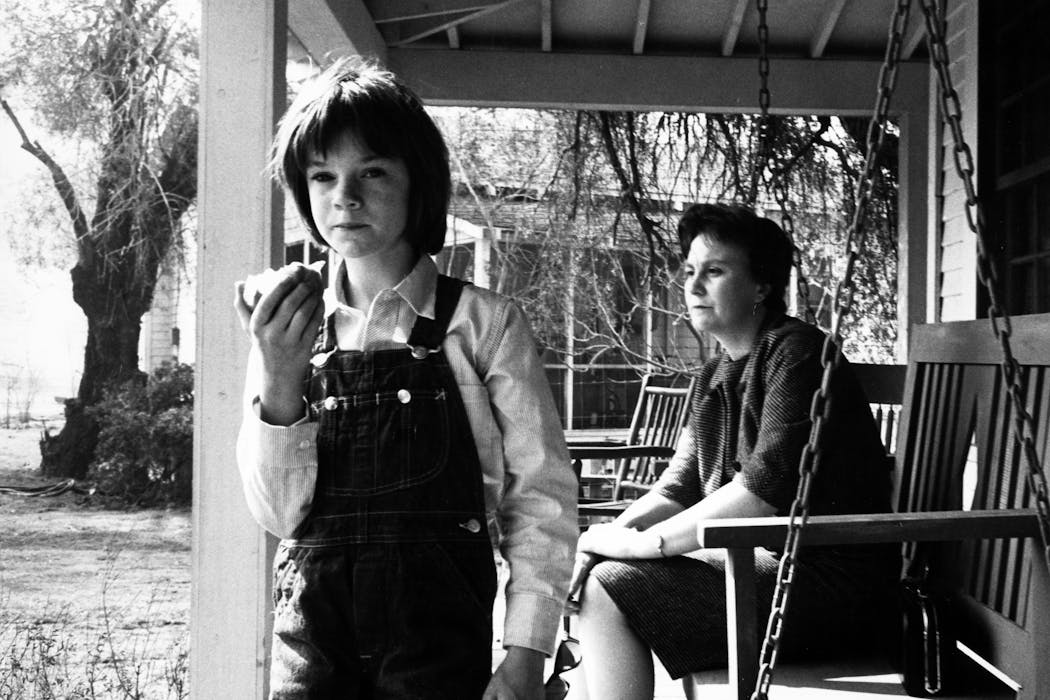
The Land of Sweet Forever consists of eight previously unpublished stories and another eight non-fiction pieces by American author Harper Lee, who died in 2016. The non-fiction essays first appeared in magazines such as McCall’s and Book of the Month Club Newsletter and they are all quite short.
Review: The Land of Sweet Forever – Harper Lee (Hutchinson Heinemann)
Lee’s fame as a writer derives from her novel To Kill a Mockingbird (1960), which sold around 40 million copies and became one of the most widely taught books in United States classrooms during the second half of the 20th century. Its emollient representation of racial tensions in the Deep South chimed nicely with widespread anxieties among traditional white communities arising from civil rights movements of the 1960s.
An earlier draft of Mockingbird, entitled Go Set a Watchman, was published in 2015, shortly before Lee’s death. Again it sold very well, shifting over a million copies in the US during the first week of publication, despite this first version being more ambivalent and less sentimental in tone about enduring racial hostilities.
The eight stories in this new volume, edited by Casey Cep – who is working on an “authorised biography” of Lee – date from the writer’s early years, before Mockingbird. They are set partly in her home town of Maycomb, Alabama, and partly in Manhattan, where Lee lived during the 1950s, working first as a proofreader and then as an airline reservations clerk.
Cep describes the rediscovery of these stories, which were found in Lee’s New York apartment, as “thrilling”. In truth they are mostly slight productions, all written before Lee was 30 and none published in her lifetime. They would probably always have remained in her bottom drawer had it not been for the subsequent success of Mockingbird, but their posthumous rediscovery is valuable because it offers valuable insights into Lee’s artistic development.


One of the most amusing stories, “This is Show Business?”, features the narrator trying to help out a New York friend who is running errands by driving her car round the block in Manhattan to evade a parking patrolman.
Possessing only an Alabama driving licence and having never driven in New York, she describes the car sardonically as “one of those push-button affairs where if you know what to do, everything is done for you”. The disorientation experienced by the Southern girl is treated in an offhand manner, but her discomfort is palpable.
Yet there is a similar sense of discomfort when the focus switches back to Alabama. The story that gives this collection its title, “The Land of Sweet Forever”, starts with an ironic pastiche of Jane Austen’s famous first sentence to Pride and Prejudice:
It is a truth generally acknowledged by the citizens of Maycomb, Alabama, that a single woman in possession of little else but a good knowledge of English social history must be in want of someone to talk to.
But the story then develops into a typically double-edged description of Maycomb’s Methodist church, with the narrator ghoulishly observing: “There is nothing like a blood-curdling hymn to make one feel at home.” Given this sense of alienation, strategic silence becomes a useful tool in dealing with Bible-bashers and recalcitrant family members. Warding off her overtly racist sister, the narrator of “The Cat’s Meow” says “the first lesson of living at home these days” is “if you don’t agree with what you hear, place your tongue between your teeth and bite hard”.
‘National fantasy’
Penguin Australia, under the Hutchinson Heinemann imprint, is clearly targeting a mass audience for this book, imposing a “strict embargo” until publication day. The publisher is hoping these early stories and incidental pieces will be eagerly seized upon by Lee’s loyal fans, just as Go Set a Watchman was ten years ago.
It is certainly interesting to have these obscure and unpublished works now made available, but in truth this volume more resembles a scholarly edition of a famous author’s juvenilia than the kind of major publishing event that would mark the unearthing of literary buried treasure.
The non-fiction pieces are particularly varied in quality, with some interesting comments by Lee on her friend Truman Capote and on Gregory Peck, who played the role of Atticus Finch in the film of Mockingbird. Lee describes this as “an inspired performance” by Peck. She also writes revealingly about slavery, describing it as “man’s oldest institution”.
 Harper Lee with actor Gregory Peck in 1962.
Bettmann/Getty Images
Harper Lee with actor Gregory Peck in 1962.
Bettmann/Getty Images
A 2006 letter to Oprah Winfrey, which appeared in The Oprah Magazine, includes some barbed remarks about e-books. Lee asks the television impresario if she could “imagine curling up in bed to read a computer” in the way she herself wept for Anna Karenina during her Alabama youth.
But Lee was certainly no systematic critic and to include her recipe from a 1961 edition of The Artists and Writers’ Cookbook seems to be scraping the barrel in every sense. The book is also not helped by the publisher’s choice of “The Land of Sweet Forever” as the running head throughout this volume, a flaw in production that makes it difficult to locate the book’s individual pieces.
Harper Lee will always have an important place in American cultural history because To Kill a Mockingbird touched a vital cultural nerve in the 1960s, just as Harriet Beecher Stowe’s Uncle Tom’s Cabin did a hundred years earlier. Like other immensely popular (and teachable) works such as The Great Gatsby, Lee’s work speaks to what critic Lauren Berlant called a condition of “national fantasy”.
In Berlant’s analysis, readers project their dreams and anxieties onto a particular version of the mythological mystique of the US. This kind of utopian vision manifests itself through material wealth and individual success in Gatsby, or through childhood security and racial harmony in Mockingbird.
Given the power of this idyllic vision, Lee was perhaps wise not to risk sullying it by engaging too actively with the rise and fall of critical fortunes normally associated with a long literary career. The social resonance of several writers in mid-20-century America – J.D. Salinger is the most obvious case – derived largely from their reticence, their unavailability for interviews or public appearances.
The apparently oracular nature of the author’s literary works seemed to be enhanced by the parsimonious scarcity of their output. Ralph Ellison’s Invisible Man (1952) promoted the invisibility not only of the novel’s fictional protagonist but also his elusive creator. This was, of course, the very reverse of today’s relentless circuit of authorial self-promotion, boosted as it is by publishing conglomerates eager for market spotlight. In this, as in so many other ways, Lee seems to be an author from a lost era.
Nevertheless, it is useful to gain from these pieces a clearer understanding of the complex historical situation within which Lee was working. It is chastening to recollect that the world Lee is chronicling is as distant in time from us as Herman Melville’s representation of New York in the 1850s was from that of F. Scott Fitzgerald in The Great Gatsby (1925).
Lee’s agent Maurice Crain described the author in 1956 as “a nice little Southern gal from Alabama”. Patronising though this undoubtedly was, it pinpointed an identity that Lee herself never entirely sought to outgrow. Many of Lee’s preoccupations can be recognised in embryonic form in The Land of Sweet Forever.
From the tone of her introduction to this book, it seems possible that Cep’s forthcoming “authorised biography” might possibly be too beholden to Lee’s legend. In due course, though, there might be opportunities for a fuller reassessment of Lee’s prominent position in 20th-century American literature.
I could imagine a critical work that would pay proper attention to her literary interplay between child and adult (perhaps involving queer theory), her perceptive probing of split selves, her capacity to bridge many different audiences and her canny awareness of how intense racial prejudice continued to lurk within ostensibly enlightened white communities in the Deep South.
Given her totemic popularity, Lee appears to be an author ripe for cultural reassessment. To that wider end, Cep’s biographical excavations may well in time prove indispensable.
Authors: Paul Giles, Professor of English, Institute for Humanities and Social Sciences, ACU, Australian Catholic University

















