

Why do some people get bad ‘hangxiety’ after a night of drinking and others don’t?
- Written by Rebecca Rothman, PhD Candidate in Clinical Psychology, School of Health Sciences, Swinburne University of Technology
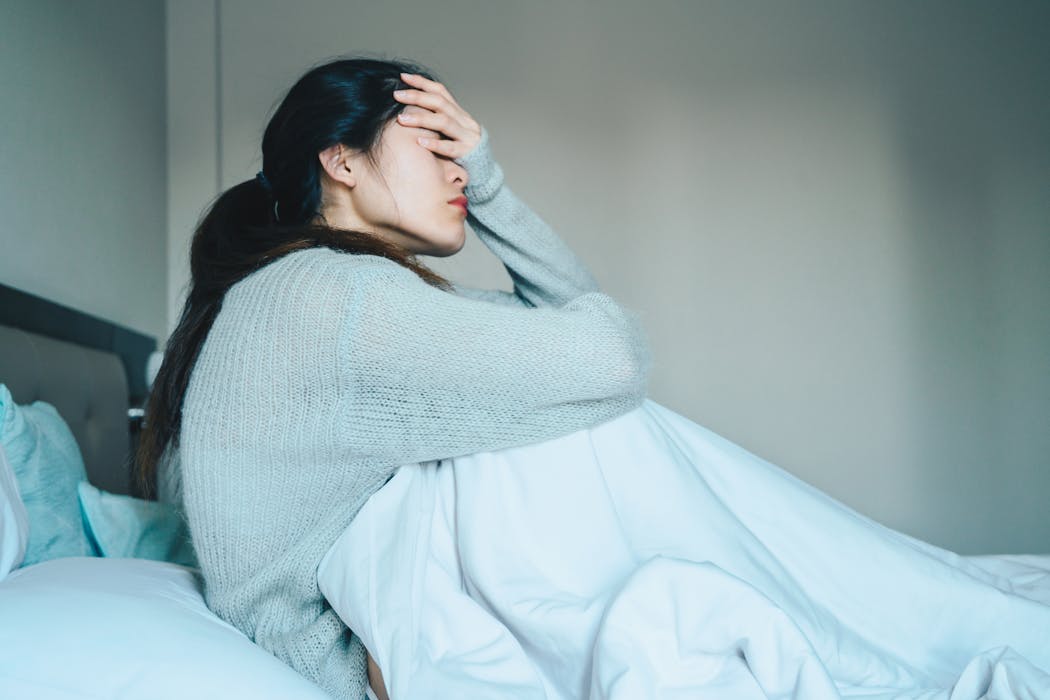
You wake up after a night out. Your head’s pounding and a wave of unease hits before you’ve even looked at your phone. Restlessness, self-doubt and flashes of regret creep in as last night’s conversations start to replay.
“Hangxiety” is not a clinical term but the anxious, uneasy feeling that follows drinking is widely recognised. Most people expect a headache, but the emotional comedown can hit just as hard.
Alcohol disrupts brain systems that regulate mood and stress. It boosts gamma-aminobutyric acid (GABA), a calming chemical, and suppresses glutamate, which keeps you alert. That’s why confidence rises and worries fade.
As your body processes alcohol, this balance flips. Calming signals drop, excitatory ones surge and your nervous system swings into overdrive.
Alcohol also disrupts the hypothalamic–pituitary–adrenal (HPA) axis – the body’s stress system – spiking cortisol, our main stress hormone.
Combine that with poor sleep, dehydration and low blood sugar, and you’ve got the perfect recipe for feeling on edge.
To understand how common these feelings are, we analysed 22 studies spanning four decades and involving more than 6,000 adults worldwide. Our systematic review published today included lab experiments, surveys and interviews capturing real-world experiences.
Despite differences in study designs and the challenge of asking hungover people to accurately recall their experiences, the results were consistent: hangovers triggered higher levels of anxiety, stress, guilt, irritability and sadness.
Certain traits make hangxiety hit harder
People prone to anxiety or low mood, or those who drink to cope with stress, experience hangxiety more intensely – not because hangovers create new problems, but because alcohol temporarily dulls negative emotions.
When the effects wear off, those feelings return in sharper focus, which can amplify stress and worry.
Hangxiety also hits harder when people act out of character while drunk. Saying or doing things that clash with personal values can trigger embarrassment or shame the next day, fuelling harsh self-criticism and intensifying emotional distress.
People who struggle with emotional regulation – recognising and managing your emotions in healthy ways – face particular challenges.
Good emotional regulation might mean noticing stress and choosing to go for run or call a friend, rather than reaching straight for a drink. It’s pausing to ask “what do I actually need right now?”
Without these skills, people get stuck in cycles of self-blame, amplifying the emotional rebound.
What traits make it less bothersome?
Not everyone experiences hangxiety the same way. People with higher emotional resilience – the ability to adapt to stress and keep perspective – tend to cope more effectively.
Reframing “I’m falling apart” into “my body’s recovering” shifts hangxiety from crisis into something temporary.
Social support helps too. Sharing a laugh about the night before or talking it through eases isolation and shame. Knowing you’re not alone makes the experience less overwhelming.
Bad hangxiety doesn’t stop people drinking
You might assume a brutal hangover would deter future drinking, but most people in our review saw hangovers as a routine inconvenience or rite of passage.
Rather than reducing their alcohol intake, people relied on short-term fixes such as, drinking water or eating beforehand to lessen the severity of their hangover.
When alcohol becomes a coping tool for stress, hangxiety can actually reinforce the cycle. Alcohol dulls discomfort, but when it wears off, the same feelings return, prompting another drink for relief.
This loop helps explain why even frequent hangovers rarely lead to meaningful behaviour change.
If you’re experiencing hangxiety, aside from planning to drink less next time, to get through the day:
hydrate, rest and eat well to support your body’s recovery
skip the “hair of the dog”. More alcohol only delays the crash
ground yourself with slow breaths or a short walk to calm the nervous system
reach out to friends or loved ones. Connection eases both guilt and anxiety.
In the longer term, reflect on why you drink and whether it’s become a way to manage stress.
If you’re drinking daily to manage emotions, if hangxiety disrupts your work or relationships, or if anxiety lingers long after the hangover fades, it’s time to seek professional help. A GP or a psychologist can assess whether underlying anxiety or problematic drinking patterns need support.
Hangxiety is more than a bad mood after drinking – it’s your brain and body recalibrating after chemical turbulence, where brain chemistry, personality and coping strategies interact.
Some people feel it mildly, others more deeply, depending on levels of emotional awareness, resilience and support. Understanding this can help replace self-criticism with self-compassion, and perhaps rethink what the “morning after” really means.
Authors: Rebecca Rothman, PhD Candidate in Clinical Psychology, School of Health Sciences, Swinburne University of Technology

















