

Foreign spies are trying to steal Australian research. We should be doing more to stop them
- Written by Brendan Walker-Munro, Senior Lecturer (Law), Southern Cross University
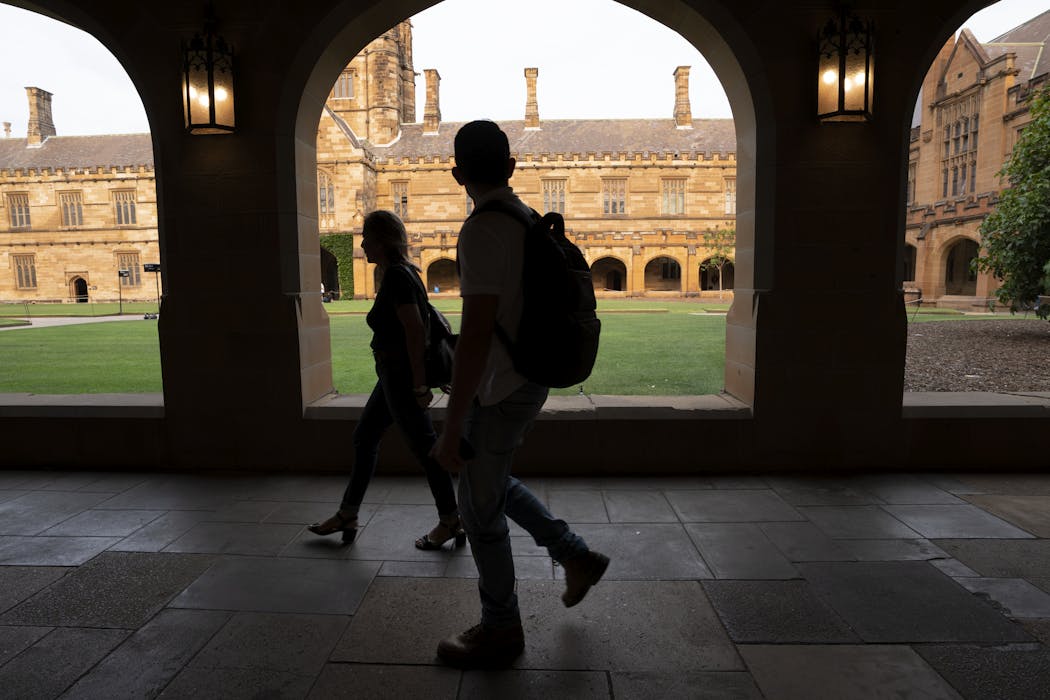
When we think of spies, we may go to images of people in trench coats and dark glasses, trying to steal government papers. Or someone trying to tap the phone of a senior official.
The reality of course can be much more sophisticated. One emerging area of concern is how countries protect their university research from foreign interference. And how we safely do research with other countries – a vital way to ensure Australia’s work is cutting edge.
This week, research security experts including myself will meet in Brussels to talk about how to conduct free and open research in the face of growing security risks around the world.
What does Australia need to do to better protect its university research?
What is research security?
Research security means protecting research and development (R&D) from foreign government interference or unauthorised access. It is especially important in our universities, where the freedom to publish, collaborate, and work together is seen as a virtue.
Australia’s universities face escalating, deliberate efforts to steal commercially or militarily valuable research, repress views critical of foreign regimes, and database hacking.
As my July 2025 report found, adversaries are no longer just stealing data or cultivating informal relationships. We’re seeing deliberate efforts to insert malicious insiders, target researchers and exploit data and cyber vulnerabilities.
ASIO head Mike Burgess has stressed there is an incredible danger facing our academic community from spies and secret agents.
In 2024, Burgess warned of an “A-team” of spies targeting academia:
leading Australian academics and political figures were invited to a conference in an overseas country, with the organisers covering all expenses […]. A few weeks after the conference wrapped up, one of the academics started giving the A-team information about Australia’s national security and defence priorities.
But Australia can’t just stop collaborating with foreign nations. Some are far more scientifically advanced than we are, and we risk cutting ourselves off from developments in the latest technology.
In other cases, we might be unfairly discriminating against researchers from other countries.
The international research landscape is changing
Since January, US President Donald Trump has slashed university funding, banned foreign students and orchestrated a campaign of lawsuits and investigations into campus activities.
This has a huge flow-on effect to Australia, as we have tied ourselves strongly to the US for science and technology funding.
So Australia is looking to the EU as a more reliable and sustainable funding partner.
It has reactivated talks to join the €100 billion (A$179 billion) Horizon Europe fund. Australia abandoned its original attempt in 2023 citing “potential cost of contributions to projects”.
Horizon Europe isn’t just a massive pot of money for Australian researchers. It’s also a way to bring Australia closer to the EU on other initiatives, like the EU Science Diplomacy Alliance, which ensures scientific developments are pursued for the safety, security and benefits for all people.
Yet if Australia wants to join Horizon Europe, it will need to prove it takes research security as seriously as other EU nations. In April 2024, Australia and the EU agreed to strengthen research security and
measures to protect critical technology and to counter foreign interference in research and innovation.
Australia does not have an adequate policy
But Australia does not have a proper national policy on research security. It also does not have a proper guide for our 43 universities in how they should approach it or what the minimum standards are.
The guidelines we have for “countering foreign interference” are entirely voluntary, and not centrally monitored for compliance in any way.
A 2022 federal parliamentary report detailed a litany of attempts by foreign agents to get access to our universities. It made 27 recommendations about improving that situation. To date, the federal government has not yet acted on about three quarters of these.
These included a recommendation to ban involvement in “talent recruitment programs”, where academics are offered vast sums of money or other benefits to duplicate their research in countries like China.
The EU approach
Australia’s approach is in stark contrast to the EU, which has made research security a priority.
In May 2024, the European Commission directed all 27 member states to adopt laws and policies to “work together to safeguard sensitive knowledge from being misused”.
Germany has since adopted “security ethics committees” – modelled on human and animal ethics committees – to scrutinise potential projects for dangerous or high-risk research.
The Netherlands, Denmark and United Kingdom all set up government contact points to help academics answer questions about research security practices.
It will take more than just policies
Australia needs clearer, stronger national policies for research security. But if we are going to take this seriously, we need more than just policy guidance.
To properly scrutinise and set up research, universities need time, support and information. This also means they need more funding.
In some universities there might be one person responsible for research security, and this may not be their sole job.
So we also need funding to give academics a way to identify and manage risks in research and support information sharing across institutions.
Through these measures we will be able to demonstrate to the world we are doing research securely – and it is safe to fund and work with Australia.
Authors: Brendan Walker-Munro, Senior Lecturer (Law), Southern Cross University

















