

Rare reptiles are moving up mountains as the world warms. They can’t keep doing it forever
- Written by Jane Melville, Senior Curator, Terrestrial Vertebrates, Museums Victoria Research Institute
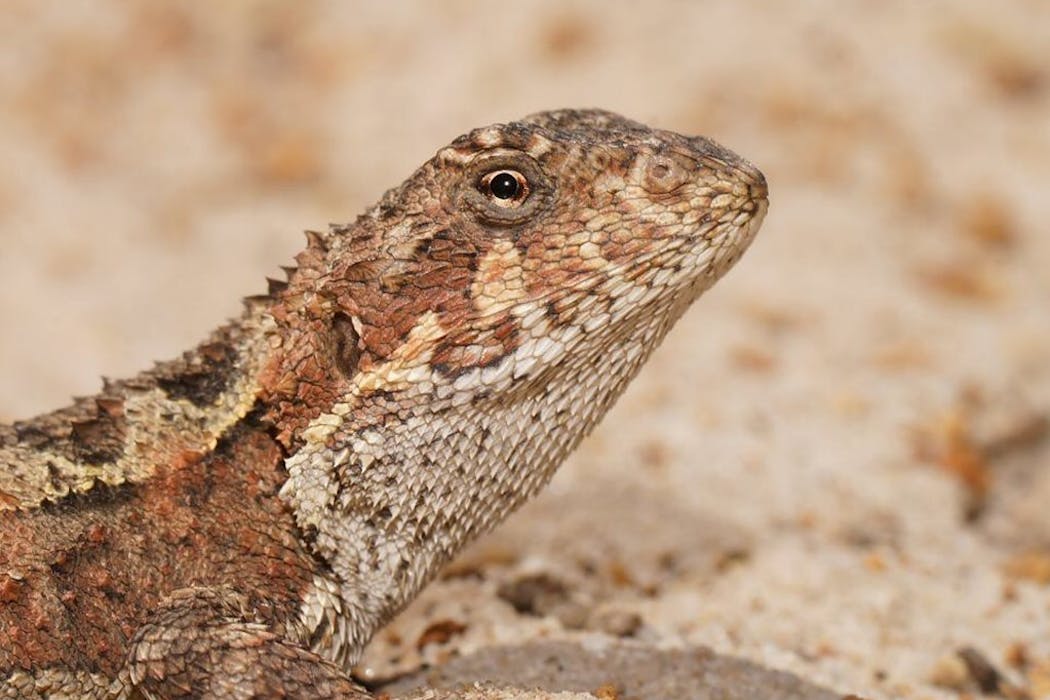
In pockets of highlands across Australia’s east lives a shy and secretive lizard. It’s usually reddish grey in colour, with two pale strips running the length of its spiky back. Growing to a maximum of 20 centimetres, it could easily fit in the palm of an adult’s hand.
But although the mountain dragon (Rankinia diemensis) is small, it can teach us big lessons about the influence of climate change on Australian biodiversity, as our new research, published today in Current Biology, demonstrates.
Tracking change over geological timescales
The predictions about how climate change will impact native species aren’t good. But it is challenging to truly understand how future climate changes will impact how species are distributed. That’s largely because climate change happens at a scale and time frame that is difficult for researchers to directly observe and measure.
This is where the emerging field of conservation paleobiology comes in.
It uses the fossil record to understand how animals and other living organisms responded to past environmental changes over geological timescales – that is, thousands to millions of years.
Conservation paleobiology can also help overcome another challenge: distinguishing the impacts of human-induced environmental threats such as climate change, habitat destruction, introduced disease, pollution or invasive species from “natural” variations in climate.
All of these factors may be acting at the same time and may equally lead to species declines.
From cold and dry to warm and humid
The Quaternary – from roughly 2.5 million years ago until today – is a particularly promising period to study.
During this period the climate in Australia changed drastically and repeatedly from cold and dry glacial periods to warm and more humid interglacial periods. These changes shaped where today’s species are found. They also offer an opportunity to measure influences of climate change in the absence of human impacts.
By studying fossils, often preserved as isolated pieces of bone, it’s possible to find out how species react to these natural climatic changes during the Quaternary. These results then allow predictions of their reactions to the human-induced climate change we experience right now.
Our new research links this historical period with the present by combining analyses of fossils with genetic data from museum specimens. We used a technique called microCT imaging to study fossils. We then combined this information with genomic data to see if current populations of mountain dragons were still healthy.

A shrinking population
The mountain dragon is now found in Victoria, New South Wales and Tasmania, where it is the only native dragon lizard. An isolated population in the Grampians National Park in western Victoria is currently listed as critically endangered.
We found the range of mountain dragons was much larger roughly 20,000 years ago, during the peak of the last cold and dry glacial period. Isolated upper jaw bones found at two different fossil sites revealed these reptiles were once present in two locations where they’re are absent today: Kangaroo Island and Naracoorte in South Australia.
Our genetic results also revealed the populations of mountain dragons that still exist today are largely disconnected from each other, increasing their vulnerability.
Some populations in lower altitudes are genetically less diverse. This is an indicator of threatened or declining populations.
This species was also more widely distributed at lower altitudes 20,000 years ago compared to today. This suggests it has slowly been pushed up the mountains by changing climate.
This situation is alarming, because under rapid global warming, the species will at some point have nowhere to escape.
A hotspot of endangered reptiles
Mountain dragons don’t seem to be the only species reacting to climate change in this way.
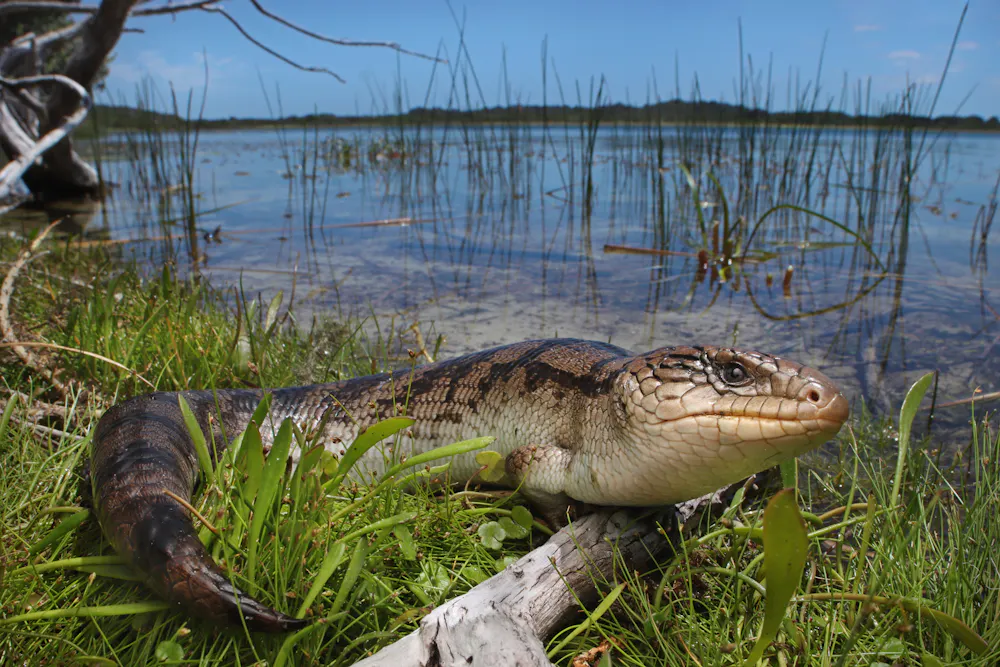
Comparisons with other reptiles living in the same areas indicate the pattern we see in mountain dragons may also cause other reptile species to decline. For example, the blotched blue tongue lizard (Tiliqua nigrolutea) was also found on Kangaroo Island 20,000 years ago.
Other species such the she-oak skink (Cyclodomorphus praealtus), the Blue Mountains water skink (Eulamprus leuraensis) and White’s skink (Liopholis whitii) show similarities in terms of their genetic diversity and population connectivity. They also likely had larger ranges when the climate was more favourable.
Reptiles can’t actively regulate their body temperatures. This makes them less able to adjust to changing temperatures. Previous research shows the temperate southeastern Australian ecosystem, including the southern Alps, is a hotspot of endangered reptiles within Australia.
Now our research on mountain dragons suggests climate change is a likely cause for the high number of threatened reptiles in this area. It also highlights the urgent need for updated conservation strategies that take into account where Australia’s unique native species may move to as the planet continues to warm.
Authors: Jane Melville, Senior Curator, Terrestrial Vertebrates, Museums Victoria Research Institute

















