

Yes, cricket is a contact sport. We have safety gear – but we need to do more
- Written by Stephen Townsend, Research Fellow, UQ School of Human Movement and Nutrition Sciences, The University of Queensland
Early on Thursday, a seventeen-year-old cricketer died in hospital after being injured in a training session in Melbourne days earlier.
While details of the tragic accident are still emerging, it appears Ben Austin’s death was the result of being struck by a bouncing ball.
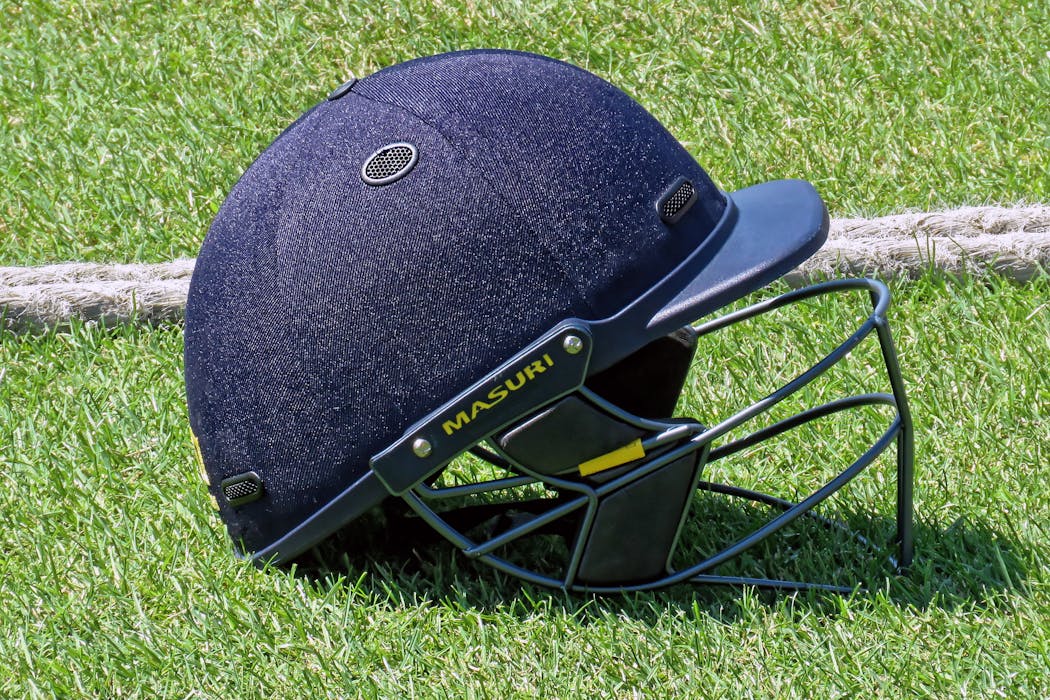
Cricket Victoria told the ABC Ben was wearing a helmet, but not a neck protector, at the time of the impact. The ball appears to have struck the base of his skull or high on the back of his neck, an area that remains exposed by most cricket helmets.
For those who knew Ben, the emotional weight of his passing cannot be overstated.
Understandably, it has also raised questions about the effectiveness of protective equipment used in cricket.
What we know about neck and head injuries
This kind of injury immediately recalls the blow that killed New South Wales and Australian international batsman Phillip Hughes during a Sheffield Shield match in 2014.
Hughes’ death prompted the introduction of neck protectors attached to the back of batters’ helmets. But the injury risks had been known long before he died.
Data available since 2013 for elite cricketers showed that 17% of head injuries occurred at the back of the skull and 6% occurred at the neck, with no contact to the helmet.
A 2023 study in elite Australian cricketers reported 22% of injuries in state and national level cricketers were to the neck.
In 2020, a review of available evidence found the head/face/neck was the second most commonly injured body region in community cricket.
This suggests the injury is common across all levels of the game, and points to the difficulty of fully protecting players from head injury with a helmet alone.
Current rules for helmets
The International Cricket Council requires any helmet worn in international matches to be compliant with the British Standards. In 2019, these were updated to include specifications for neck protectors.
Since 2019, Cricket Australia requires all players in its competitions to wear a helmet while batting and when fielding close to the batter. This includes Sheffield Shield, domestic T20 competitions such as the Big Bash League, and international fixtures with Australian teams.
Since 2023/24, Cricket Australia has also made neck protectors mandatory for its players, when they are facing fast or medium pace bowling.
Essentially, this means all elite cricketers playing in Australia are required to protect both their head and neck during training and games, going beyond the International Cricket Council’s requirements.
While evidence suggests helmets have reduced injuries overall, we don’t know about neck injuries specifically, given data is grouped together under “head and neck injuries”.
Different rules for community sport?
The rules are less concrete for community level cricket.
Cricket Australia “strongly recommends” community level players wear a helmet compliant with the British Standard from 2013. Neck protectors are also “strongly recommended” but not mandatory for community players.
However, enforcing helmet and neck protector use is left up to local associations.
We can’t speculate whether a neck protector would have prevented this tragic death in Melbourne.
But what is clear is that the potentially fatal consequences of a fast-moving cricket ball are not confined to the sport’s elite levels.
Resistance to protective gear
Helmets did not become commonplace in Australian cricket until the 1980s, a trend which sports physician Peter Brukner argues led to a significant decrease in the number of deaths.
But cricket is often seen as a genteel and generally safe game, especially compared with football codes. This perception – combined with the sport’s historical emphasis on tradition, forbearance and toughness – can make it difficult for new safety technologies to gain traction.
English player Dennis Amiss was the most prominent early proponent of wearing a helmet, famously donning a modified motorcycle helmet for the 1977 series against Australia.
A decade prior, suggestions Australian players should wear helmets to protect themselves from a ferocious West Indian bowling attack were debated in the press as a sign “sportsmen of the present day are going soft”.
Much earlier, a 1935 editorial in The Referee dismissed the deployment of protective equipment, including helmets, as “fastidious, ridiculous, and unchecked”.
Even the 2015 introduction of neck protectors was met with initial resistance from prominent players such as David Warner and Steven Smith, who argued the devices were restrictive and uncomfortable.
All sport is contact sport
Research and public debate on brain trauma in sport has mainly focused on combat and contact sports such as boxing and football. But the tragic deaths of Phil Hughes and now, Ben Austin, are a reminder that all sports are contact sports.
These accidents also show the risks are not confined to elite sport. Further attention must be paid to monitoring and mitigating the risk of brain injury in community sport.
Devices such as neck protectors can partially mitigate these risks – but they need to be normalised at all levels of sport.
To do this, Cricket Australia should mandate their use at the community level. At the elite level, we need prominent and charismatic athletes to break through the cultural stigma associated with their use.
Authors: Stephen Townsend, Research Fellow, UQ School of Human Movement and Nutrition Sciences, The University of Queensland

















