

A deadly European hornet has reached NZ – we can all help stop its spread
- Written by Phil Lester, Professor of Ecology and Entomology, Te Herenga Waka — Victoria University of Wellington
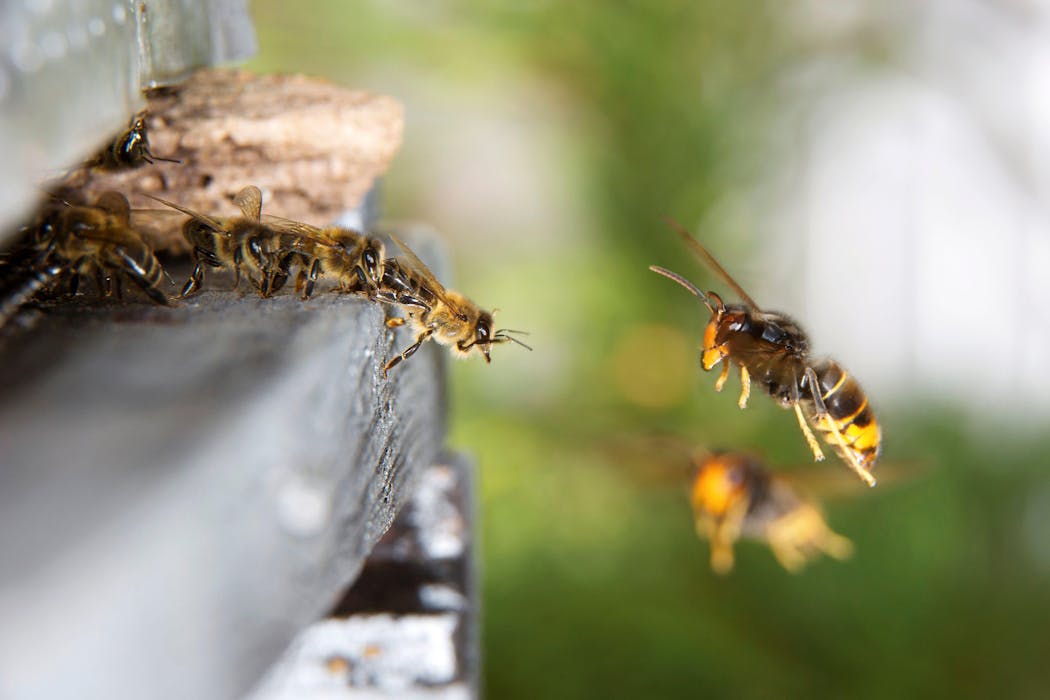
The discovery of yellow-legged hornet nests in Auckland is frightening.
There have been five confirmed detections to date. Two of these were small nests, more than a kilometer apart, which suggests there are likely more in the region.
Why should we worry? This hornet is a serious concern for all New Zealanders. Yellow-legged hornets are aggressive predators and can become highly abundant. They threaten people’s health, biodiversity and especially honey bees.
The yellow-legged hornet (Vespa velutina) was accidentally introduced into France in 2004. It then spread rapidly, at around 100 kilometres per year, and was established across France by 2017.
The hornet is now well established in Spain, Portugal, Germany and other European countries. It was first detected in the UK in 2016, and its predicted range extends as far north as Scotland. Their success in Europe suggests they could thrive across much of New Zealand.
In some European areas, densities of up to 13 nests per square kilometre have been recorded, with mature nests housing several thousands of workers. Some even reach up to 13,000 individuals.
Risk to people and pollinators
People can die from hornet stings. Yellow-legged hornets will aggressively defend their nests and have been known to attack people even from hundreds of metres away.
In parts of Europe, they are now considered one of the most common causes of analphylaxis, with multiple stings potentially leading to multi-organ failure. There have also been reports of eye injuries, particularly when well-meaning people attempt to destroy nests. Hornets can spray venom into eyes through the visors of beekeeping suits.
Their diet includes a significant proportion of honey bees. One European study found that 40% of their prey were honey bees, 30% flies and the remainder included other wasps and pollinators. In some high-pressure regions of Europe, beekeepers have reported losses of up to 80% of their hives once yellow-legged hornets became established.
More typical hive losses cluster around 30%. European beekeepers have resorted to desperate control measures – some even stand outside their hives with badminton rackets, swatting the hornets as they hover near the hive entrance.
When preying on honey bees, hornets hover outside hive entrances, waiting for tired bees to return from their foraging trips. The hornet snatches the bee mid-flight, kills it, and carries its body back to its nest as food. If bees sense the hornets, they may stop foraging altogether, staying inside the hive – a behaviour known as “foraging paralysis”.
The yellow-legged hornet poses a serious threat to both native and introduced pollinators, and to pollination itself.
Beekeepers in the UK are intensely worried, with reports of record numbers of nests this year, with infestations as far north as Yorkshire. One nest can consume around 11 kilograms of insects in a single season.
Quick action is key to eradication
New Zealand is uniquely vulnerable to wasp and hornet invasions. Unlike the UK and Europe, our biodiversity did not evolve alongside social hornets or wasps. Our native insects have no co-evolved or natural defences.
Add to that our warm, temperate climate, and it’s no surprise we already have some of the world’s highest wasp nest densities and hold the world record for the largest individual wasp nest, at 3.7 metres long. Hornets would likely become widespread and highly damaging if they established here.
If there is any chance of eradication, we must pursue it now.
Invasive hornets and social wasps are hard to eradicate, but it has been done before. In the United States, a programme to eliminate the giant Asian hornet (Vespa mandarinia) appears to have succeeded.
Closer to home, German wasps were successfully eradicated from the Chatham Islands. And Spain at least temporarily celebrated the eradication of the yellow-legged hornet from the island of Mallorca – although populations have since been rediscovered.
The key to success in any eradication programme is acting early, while populations are still small and localised.
Citizen science has played a vital role in early detection and eradication efforts for many invasive species, including these hornets. We have to find the hornet nests to destroy them and it is crucial to do so early in the year, before new queens and males are produced in autumn.
Public trapping and reporting of sightings have already proved invaluable overseas. We need people engaged and watching for these hornets now. Traps have been designed specifically for yellow-legged hornets in Europe, and the Ministry of Primary Industries would be wise to implement them here.
But homemade traps made from plastic drink bottles, cut in half with the top inverted, can work, too. The hornets are attracted to a range of foods in spring, including protein such as fish or meat, and even beer.
If any country can catch this hornet early, it’s New Zealand. Our tradition of public vigilance and commitment to protecting our unique biodiversity would be of major benefit now.
You can report any suspected sightings either online at report.mpi.govt.nz or by calling the exotic pest and disease hotline on 0800 809 966.
Authors: Phil Lester, Professor of Ecology and Entomology, Te Herenga Waka — Victoria University of Wellington

















