

It's the 10-year anniversary of our climate policy abyss. But don't blame the Greens
- Written by Rebecca Pearse, Lecturer, Department of Political Economy, University of Sydney
Federal Labor this week commemorated a dubious anniversary – a decade of climate policy failure. And it pointed the finger of blame squarely at the Greens.
Labor claimed that had the Greens not voted against its Carbon Pollution Reduction Scheme (CPRS) in 2009, Australia’s carbon emissions would be more than 200 million tonnes lower and electricity would be more affordable.
Labor MP Pat Conroy said the Coalition and the Greens “bear a heavy responsibility for the fact that, a decade later, Australia still does not have an effective policy to tackle climate change by reducing emissions”.
But one moment in 2009 is not the root cause of ongoing parliamentary disagreement over climate action. And the Greens cannot be blamed for what came afterwards.
The main lesson from that time is that cynical parliamentary strategies and weak reforms from the major parties are at the heart of climate policy failure.
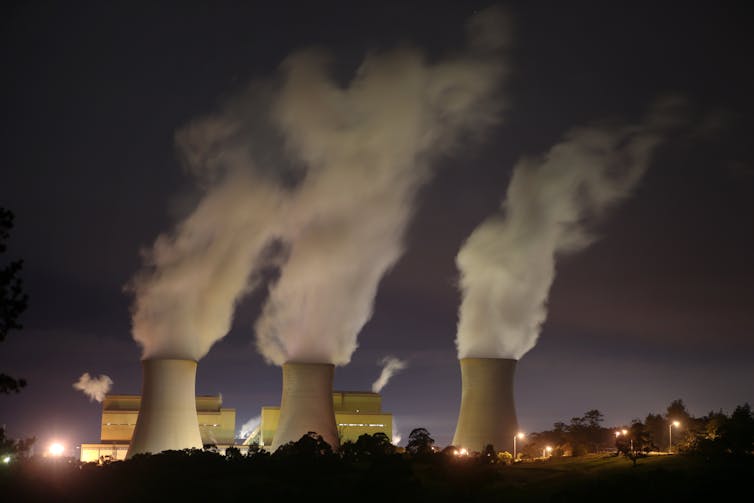 The Greens believed industries such as coal-fired power got off too lightly under the CPRS.
DAVID CROSLING/AAP
The Greens believed industries such as coal-fired power got off too lightly under the CPRS.
DAVID CROSLING/AAP
A brief recap
To understand what played out in Parliament in 2009, it is useful to briefly refresh our memories on the couple of years that led up to it.
Labor’s proposed CPRS followed then Prime Minister Kevin Rudd’s famous call to act on the “great moral challenge” of climate change. The policy was a “cap and trade” emissions trading scheme (ETS) which in theory would have limited greenhouse gas pollution from industry.
Public concern about climate change at the time had peaked and Labor won the 2007 election partly on the strength of its climate policies.
The CPRS legislation followed the Garnaut Climate Change Review. Ross Garnaut, a prominent economist, proposed emissions targets that environmentalists considered inadequate. Meanwhile industry, which would have incurred costs under the scheme, was unhappy with the limited compensation proposed.
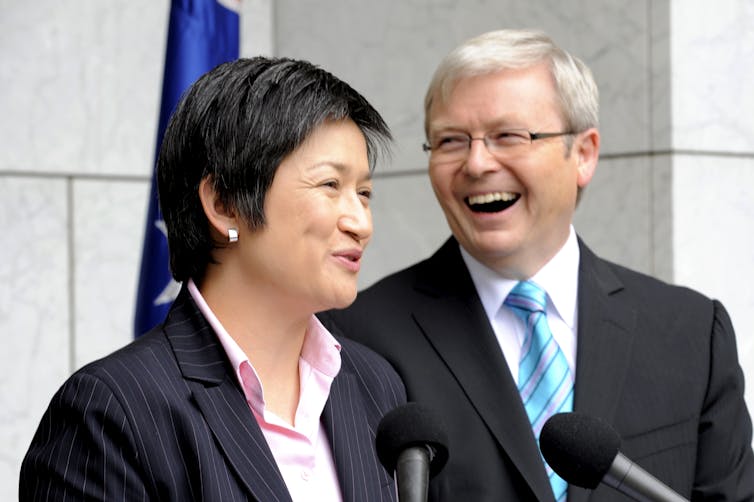 Kevin Rudd and then-climate change minister Penny Wong outlining the CPRS.
Alan Porritt/AAP
Kevin Rudd and then-climate change minister Penny Wong outlining the CPRS.
Alan Porritt/AAP
During the Rudd Government’s first two years, Garnaut’s vision was severely weakened – not least due to proposed industry exemptions and compensation, and unlimited industry access to carbon offsetting.
Read more: The latest turn in the twisty history of Labor's climate policies
It seemed likely the scheme would have created corporate windfalls at considerable public expense, without achieving much emissions reduction. It was opposed by the Greens, led by Bob Brown, along with many economists and most environmental groups.
The CPRS bill was twice rejected in the Senate, partly because the Greens voted against it both times.
Rather than call a double-dissolution election, Rudd announced in April 2010 the proposal would be shelved.
Cynical politics
The political failure of the CPRS reflects the deeper malaise in parliamentary responses to the climate crisis. In 2009, federal politicians were as they are now – extremely unwilling to develop reforms commensurate with the severity of the climate crisis.
As 2009 wore on, fissures opened in the Coalition over the CPRS as then Opposition Leader Malcolm Turnbull clashed with Tony Abbott and the Nationals over the policy.
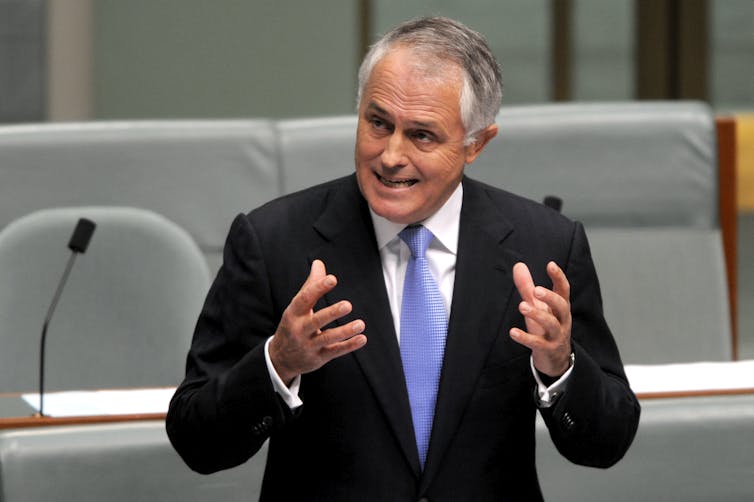 The Coalition’s Malcolm Turnbull clashed with Tony Abbott over whether to support Labor’s emissions policy.
AAP
The Coalition’s Malcolm Turnbull clashed with Tony Abbott over whether to support Labor’s emissions policy.
AAP
Labor sought to leverage the CPRS for short-term political gain. It strung out the parliamentary dispute and frequently reminded the Coalition of its internal tensions, rather than genuinely try to broker agreement for emissions reduction.
Labor was also said to be unwilling to cooperate with the Greens by engaging with their proposed amendments.
But does Labor have a point?
Labor’s view that we would be better off now if the CPRS had been instituted in 2009 seems reasonable on the surface.
It’s possible that an Abbott campaign to repeal the CPRS may not have taken off as it did later against the Gillard government’s carbon price. However it’s too much of a leap to assume better-timed legislation for one weak policy alone could have built consensus for real emissions reduction.
Had the CPRS been voted in, the Coalition would still have railed against it, likely preventing the future reform needed to achieve meaningful emissions reduction. The European Union experience shows that cap-and-trade schemes, once implemented, don’t neatly resolve the competing political demands of the fossil fuel industry and public concern about climate change.
Read more: Global emissions to hit 36.8 billion tonnes, beating last year's record high
By design, the CPRS had negligible impact on fossil fuel extraction, partly due to overly generous compensation arrangements for miners. So the CPRS would not have prevented the damaging internal debate in Labor over support for new coal and gas mines, which has curbed the ambition of its emissions reduction policies.
Rising electricity prices could not have been attenuated by a stable carbon price alone. And the effective Renewable Energy Target might not have been preserved had the CPRS endured.
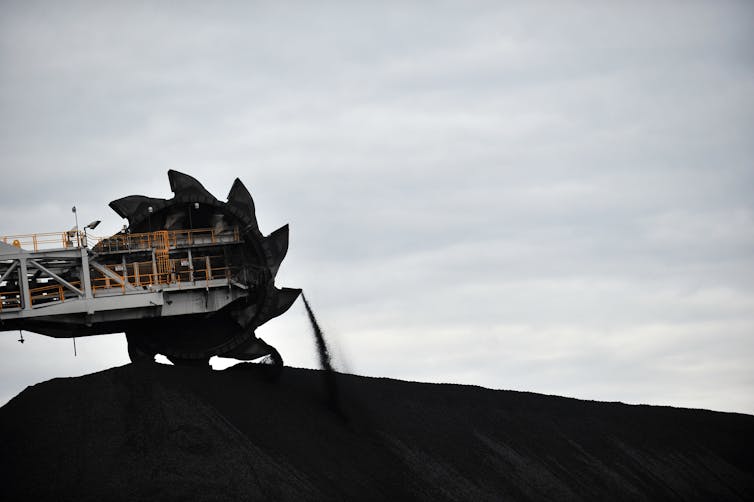 The Greens were concerned that the CPRS gave too many concessions to coal.
AAP
The Greens were concerned that the CPRS gave too many concessions to coal.
AAP
A new decade of ambition
Australia’s major parties have never proposed a climate and energy reform package that transforms how we work, live and relate to non-human nature.
Internationally, there is growing appetite for such policies. In the US for example, momentum is growing for a Green New Deal focused on industry policy and social reforms such as job guarantees and basic incomes.
Read more: Labor's reset on climate and jobs is a political mirage
Both Labor and the Greens are moving in this direction. Labor leader Anthony Albanese has emphasised opportunities to rebuild manufacturing through a green industrial revolution. The Greens are calling for the same kind of plan. They want a 2030 cut-off point for thermal coal exports and coal-fired power too.
Now, more than ever, we need bold, effective and fair climate policy that people can get behind. The Coalition continues with the opposite.
Labor and Greens have a responsibility shelve the CPRS blame game, and work together on something better.
Authors: Rebecca Pearse, Lecturer, Department of Political Economy, University of Sydney

















