

Cane toads are hopping towards the Pilbara, but a water-free containment zone could stop them
- Written by: Judy Dunlop, Research Fellow in Molecular and Life Sciences, Curtin University
It is early evening in Australia’s top end, and a hunter stalks its prey. Keenly alert, the northern quoll follows the sound of rustling in the leaf litter. It must be some kind of frog, the small carnivorous marsupial decides, and pounces. But the quoll is seized by an immediate pain in the mouth, and drops its prey. It’s already too late.
The rustling was not a frog, but a poisonous cane toad. The toad’s toxin has sprayed into the quoll’s mouth and within seconds the quoll is vomiting. Within minutes it is incapacitated and spasming as its heart fails. And 20 minutes later the quoll is dead.
This scene has played out countless times in the 90 years since invasive cane toads were released on the Queensland coast and hopped west to Australia’s tropical north. They were originally native to South America, and brought to Australia to control beetle pests in sugarcane. And they kill not only quolls and their kin, but other predators such as freshwater crocodiles, goannas, and snakes.

What do we have to lose?
The cane toad is one of Australia’s worst feral animal invaders. They have nearly completed their conquest of northern Australia and in the next couple of years they are expected to reach Broome on the west coast, and head south. Our work shows that without intervention, the destruction will continue, as toads invade Australia’s unique Pilbara region in the north of western Australia.
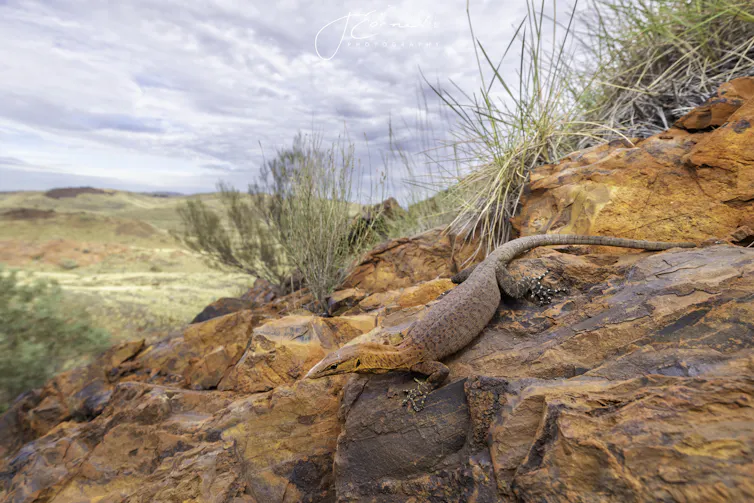
The Pilbara is an ancient rocky landscape, with some of the oldest geology in the world. Many species are found here and nowhere else. With abundant waterholes and rivers in stunning rocky gorges, the Pilbara would be perfect habitat for cane toads.
Our research outlines what will happen if toads arrive in this unique landscape. It finds that with no intervention, cane toads will likely invade a further 27 million hectares, including almost all of the Pilbara, and spread further south towards Shark Bay.
A blow to animals and culture
Cane toads arriving in the Pilbara would cause populations of about 25 species of reptiles and mammals to crash in numbers. These include ten species of goanna, nine small marsupial predators like the Kaluta and northern quoll, three snakes, two blue-tongue skinks and one bat. For endangered northern quolls and vulnerable ghost bats, the Pilbara is the last toad-free stronghold. Several endemic goannas, blue tongue skinks and marsupial predators will likely join the threatened species list.
Many of these species are culturally important to the Traditional Owners of Country for stories, songlines and bush tucker. Toad invasion of the Northern Territory, for example, led to lost bush tucker such as goanna, crocodile, blue-tongue skink. It also meant increased reliance on store-bought food, and a loss of skills and knowledge around hunting activities where Elders spent time with younger generations.
Overall, it’s a bleak prospect if toads spread into the Pilbara. The good news is that there is an opportunity to avoid this future.
A wicked problem
Many people have attempted to solve the cane toad problem, via cracking its genetic code, teaching native animals not to eat toads and even putting the creautres on the menu.
None of these methods have stopped the toad invasion across the tropical north of Australia. There has simply been too much permanent water in the landscape that toads use as habitat.
But the situation is not the same in Western Australia. South of Broome, toads will hit a natural “bottleneck” where the Great Sandy Desert meets the ocean, on Karajarri and Nyangumarta country. This narrow stretch of naturally dry country represents a once-in-a-lifetime opportunity to halt the toads’ progress further down the west coast.
Plumbing, not rocket science
Water is the toads’ Achilles heel. In the dry season, toads must sit in water every two to four days to stay alive. In the bottleneck between the Kimberley and the Pilbara, almost all permanent water sources are human made. And these create a connected watery tendril for invasion. Making these water sources inaccessible to toads by creating a “Toad Containment Zone” means toads cannot use these as stepping stones through this dry part of the country.
A collective of scientists, pastoralists and Traditional Owners has proposed to create this zone by toad-proofing cattle water sources (by upgrading ground-level water sources to tanks and troughs) in a 150 kilometre long by 50 kilometre wide stretch of country. This solution would create a “toad fire-break”. The containment zone covers three times the distance that toads travel each year, so every wet season toads will infiltrate the north of the zone but as the water dries up, they will perish in the dry season.
Bang for buck
Effective containment would prevent toads from accessing the water-abundant Pilbara and beyond, protecting 27 million hectares of Western Australia.
This is not a new idea – it’s been subject to 15 years of scientific rigour that shows preventing toads accessing water is the most effective way to stop them. It’s also one of the cheapest solutions: managing pest species after they have established is expensive and ineffective, and we are much better off preventing their spread.
Authors: Judy Dunlop, Research Fellow in Molecular and Life Sciences, Curtin University


















