

The next great performance booster for athletes? Sleep
- Written by Charli Sargent, Professor, Professorial Research Fellow and Research Cluster Co-Lead - Sleep and Biological Rhythms, CQUniversity Australia
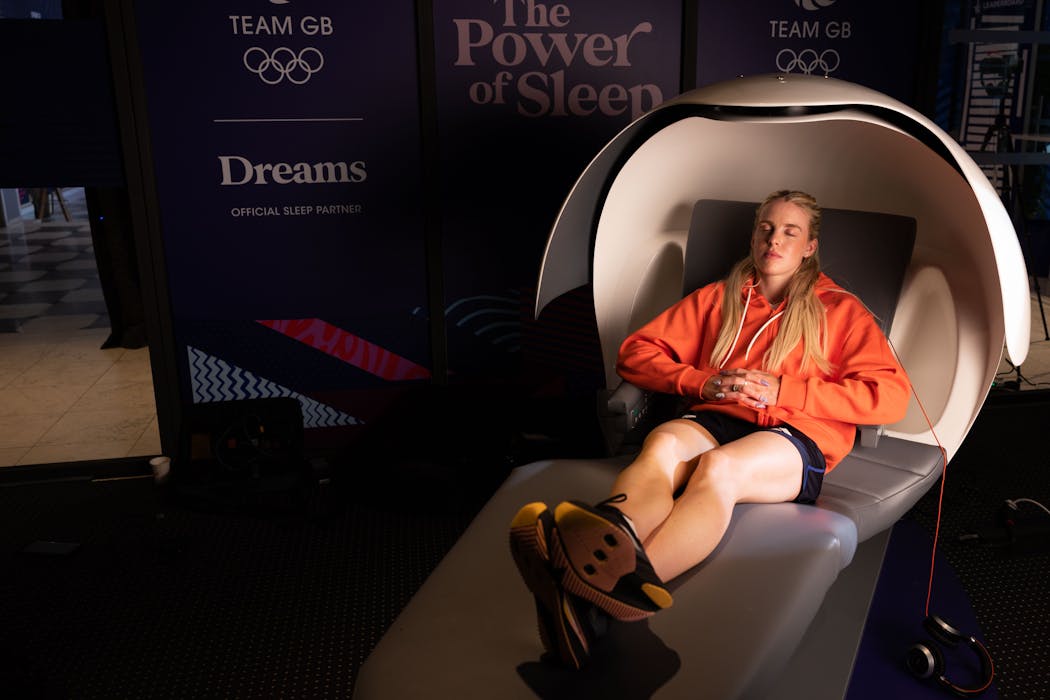
When we think of elite athletes, we generally think of people who are at the top of their game physically.
We assume they do everything better than mere mortals – but what about when it comes to getting a good night’s sleep?
Does being a superhuman athlete make you a superhuman sleeper?
Why sleep matters
Exercise has long been associated with better sleep and it seems reasonable to assume most elite athletes are good sleepers – after all, their job is to exercise and recover.
However, many athletes fail to clear the bar when it comes to getting enough sleep.
In fact, in a 2021 sample of 175 elite Australian athletes from 12 sports, only 3% obtained enough sleep on a regular basis, while 71% fell short by an hour or more.
This research mirrors studies on able-bodied and para-athletes from the United States, Brazil, Germany, Switzerland and China.
So why is sleep such hard work for an elite athlete?
Barriers to sleep
When it comes to sleep, an athlete’s toughest opponent is usually their training and competition schedule.
For some athletes (think individual sport athletes like swimmers, triathletes and cyclists), it is regular early morning training sessions combined with very few days off that makes things difficult.
For others (think team sport athletes like Australian rules footballers and netballers), it is training and competition schedules that change from week to week combined with travel that impact sleep.
Anxiety prior to competition, can also make it hard for athletes to get enough sleep.
So why does it even matter? In short, because sleep plays a part in athletic performance.
In a recent consensus statement, sleep and sports scientists from around the world recognised sleep’s importance for athletic performance. They also agreed elite athletes are particularly susceptible to insufficient sleep.
Many leading athletes – including eight-time Olympic gold medal sprinter Usain Bolt, four-time National Basketball Association title winner LeBron James, and 20-time Grand Slam tennis champion Roger Federer – agree sleep is crucial to success.
Read more: LeBron James will be the first NBA player to reach 23 seasons. How is he still one of the best?
Sleep, illness and injury
Studies suggest elite athletes can still perform at or near their best after a night of insufficient sleep.
But whether they can perform day after day (like during an intensive training block) after multiple nights of insufficient sleep is the real championship question – one that we don’t quite have the answer to yet.
But let’s not forget the two words that can stop any athlete in their tracks – illness and injury.
People who obtain 5-6 hours of sleep per night are 4.5 times more likely to develop a common cold following exposure to rhinovirus compared to people who obtain seven hours of sleep per night.
If elite athletes don’t get enough sleep, they are more likely to get ill.
The relationship between sleep and risk of injury in elite sport is not as clear.
But insufficient sleep slows down response time, impairs movement patterns and reduces sport-specific skill execution – all of which may lead to injury.
But perhaps the biggest issue for elite athletes when it comes to insufficient sleep is how it makes them feel.
After multiple nights of insufficient sleep, athletes feel more fatigued before training, perceive the exercise to be harder and experience greater mood disturbance compared to when they are well rested.
The ability to tolerate high levels of training is critical for athletes. Without enough sleep on a regular basis, an athlete may struggle to recover from training and poor recovery can impair subsequent performance.
For this reason alone, many sleep and sports scientists believe sleep is critical for performance because it is the foundation of recovery.
Some tips for coaches and athletes
At the highest level, small improvements in performance can be the difference between finishing on the podium or back in the bunch.
A case in point is the Tour de France – widely regarded as the most physically and mentally demanding endurance race in the world.
Recently, many teams have attempted to optimise the sleeping conditions of their riders by using “recovery buses” – that transport cyclists from one stage of the race to the next – and outfitting hotel rooms with personalised mattresses and pillows.
Despite the gruelling demands, riders’ average sleep duration is surprisingly reasonable – about 7.2 hours per night.
But not all athletes and teams have access to recovery buses and personalised hotel rooms.
What are some of the other strategies that athletes can adopt to ensure good sleep?
Here are some tips (for athletes and coaches) to consider when thinking about sleep:
- ensure you are spending enough time in bed to get the sleep you need – to get the recommended eight hours of sleep per night, we need a “sleep opportunity” of about nine hours in bed
- avoid training too early (before 6am) and/or minimise the number of early morning starts in a row
- evening competition results in delayed sleep opportunities. Minimise the number of activities athletes engage in immediately after competition and if possible, delay the start time of next-day recovery sessions
- use strategic daytime naps to supplement reduced night-time sleep opportunities (limit naps to one hour, use an alarm and target late morning or early afternoon)
- aim for regular bed/wake times on nights when you can control your sleep opportunity.
Authors: Charli Sargent, Professor, Professorial Research Fellow and Research Cluster Co-Lead - Sleep and Biological Rhythms, CQUniversity Australia
Read more https://theconversation.com/the-next-great-performance-booster-for-athletes-sleep-256224

















