

‘Leadership is morality magnified’ – what police must learn from the McSkimming scandal
- Written by Michael Macaulay, Professor of Public Administration, Te Herenga Waka — Victoria University of Wellington
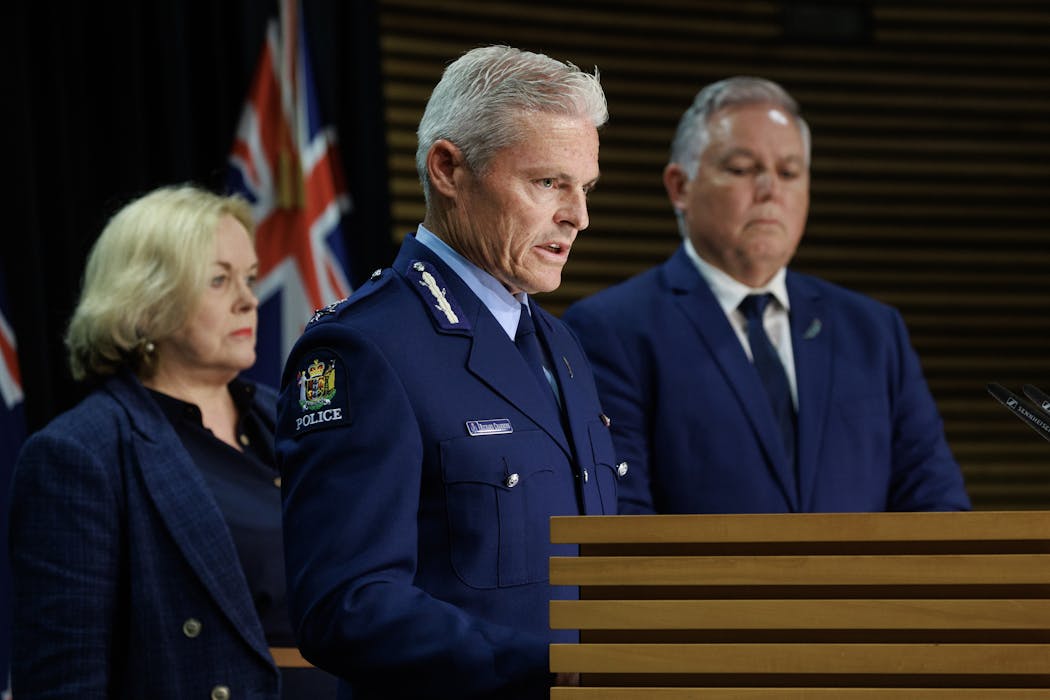
The scandal over how police handled complaints against former deputy police commissioner Jevon McSkimming has exposed serious failings at the organisation’s highest levels.
It has also brought into sharp focus how poor judgement and processes can corrode public confidence in an institution that relies so heavily on integrity.
This week, the Independent Police Conduct Authority (IPCA) released a 135-page report outlining how senior officers failed to act on serious allegations against McSkimming.
The IPCA’s investigation began after a non-sworn police employee, with whom McSkimming had an affair dating back to 2016, made allegations of sexual offending.
But the authority’s findings went beyond McSkimming’s conduct, to the actions of the police executive – including then-commissioner Andrew Coster, another deputy commissioner and senior staff.
Concerningly, it detailed how senior officers sought to manage or influence the woman’s complaints rather than properly investigate them, resulting in a series of “serious failings” between 2023 and early 2024.
Despite internal recommendations to refer her allegations – which included sexual assault, misuse of police property and threats to share intimate images – to the National Integrity Unit and the IPCA, those steps were repeatedly delayed or ignored.
Instead, the police focus initially turned to investigating the complainant herself under the Harmful Digital Communications Act, based on more than 300 emails she had sent to McSkimming and copied to senior officials. The charges against her were eventually withdrawn.
When unethical decisions are normalised
While Police Commissioner Richard Chambers has acknowledged a coverup around the complaints, he has denied a systemic failure within the organisation, which will now be overseen by an inspector general of police.
As it stands, it’s unclear whether there is any ethical problem at the core of police culture. But the case certainly tells us much about judgement. Indeed, unethical decisions can easily become normalised by the people making them.
It also speaks to the lack of processes and practices that are, sadly, not unfamiliar the world over, and which have been discussed many times in the past. There shouldn’t be one ethical culture in the executive and another elsewhere in the organisation.
The IPCA concluded that officers showed an inability to balance a proper concern for McSkimming with the need to investigate potential misconduct. When police finally notified the IPCA in October 2024, the report indicates that senior officers attempted to influence the investigation.
That behaviour shows the darker side of trust in colleagues: that people can become so trusting of a particular person’s narrative that the situation becomes one of closed ranks.
We know this pattern well, as previous high-profile cases such as that of sexual violence survivor Louise Nicholas have shown.
It’s not just seen within policing. In many large organisations, people ignore allegations, take in partial evidence and – sometimes inadvertently – cover things up.
Nevertheless, people who were already sceptical or even cynical about the police will doubtless be even more so now, while supporters of the police may be unchanged in their views.
What is a shame is that the New Zealand Police have improved public trust to some degree this past decade and, proportional to other countries, are more highly trusted than elsewhere.
Lessons for leadership
Importantly, this is also a human story.
When we focus only on systems, culture or structure, we risk forgetting that these decisions affect real people’s lives and wellbeing.
There is always a balance to strike between behaviour – especially leadership behaviour – and process. Neither alone is the solution; both must be addressed together. That seems to be the case here, and it needs to be tackled in the round.
Leadership, after all, is morality magnified.
It is a moral activity because it’s built on human relationships – and the further up the ladder we go, the more important it becomes to be visible in modelling good conduct and behaviour.
It’s therefore positive to see the IPCA has recommended significant changes, concluding that the current structures and processes designed to protect the integrity of policing are “inadequate”.
There are many accountability mechanisms that would be helpful, some of which former MP Jan Logie and others tried to include in the Protected Disclosure Act 2022, but which were rejected by the government at the time.
These include a genuinely independent way to report misconduct, full risk assessments when someone comes forward, and active support – whether legal, psychological or emotional – rather than just a promise of no retaliation.
While it’s vital that leaders exercise good judgement – it can’t just be about process – measures like these are proven to work and should be put into practice.
Authors: Michael Macaulay, Professor of Public Administration, Te Herenga Waka — Victoria University of Wellington

















