

What should you do if you find a meteorite? Space rock experts explain
- Written by Heather Handley, Senior Curator, Geosciences, Museums Victoria Research Institute; Monash University
On Sunday November 2, people in eastern Victoria witnessed a bright streak across the sky followed by a loud sonic boom that felt like an earthquake. The event was captured by security cameras and mobile phones.
Last month, in South Australia, the SA Museum investigated whether a meteorite had struck a moving car, cracking and scorching its windscreen.
Two months earlier, in August, another fireball lit up central Victoria, prompting scientists and volunteers to search farmland near Ballarat and Bendigo for fragments, though none have yet been found.
So meteorites are more common than you might think. But what should you do if you find one?
How often do meteorites land on Earth?
Every day, Earth is showered with more than 100 tonnes of cosmic dust. Every year, hundreds of meteorites fall somewhere on Earth, but most splash unnoticed into oceans or land in remote wilderness.
Only around ten witnessed falls each year are currently recovered. Australia, with its vast deserts and sparse vegetation, is one of the world’s best places to spot and preserve these rare visitors from space.
To date, more than 78,000 meteorites have been identified worldwide. Most originate from asteroids, with some even traced to Mars or the Moon.
Collecting meteorites on Earth is often described as the cheapest form of space exploration. Scientists now have over five times as much Moon rock from meteorites than was returned by the Apollo missions, and with a greater diversity of rock types, providing insights into parts of the Moon that astronauts never sampled.
Famous Australian meteorites
Australia has produced some of the world’s most notable finds. The Cranbourne meteorites (Victoria, described scientifically from 1854 onward), include massive iron specimens and are among the largest recovered in the country.
The Murchison meteorite (1969, Victoria) contains the oldest minerals to form in our solar system, amino acids – the building blocks of life – and “stardust” that formed in exploding stars billions of years before our Sun existed.
More recently, Bunburra Rockhole (2007, Western Australia) was captured on camera by the Desert Fireball Network. The meteorite’s unusual basaltic composition offers rare insights into the diversity of asteroids.

Today, observation programs such as the Desert Fireball Network track meteors across Australian skies. These help researchers locate and recover new falls such as Murrili (2015, Kati Thanda-Lake Eyre, SA), Puli Ilkaringuru (2019, Nullarbor Plain, WA) and Pindarri Punju Puri (2025, Lake Hope, WA) meteorites. Australia’s arid regions, particularly the Nullarbor Plain, preserve meteorites exceptionally well, with more than half of Australia’s known meteorites found there.
What to do if you think you’ve found a meteorite
If you stumble on a dark, unusually heavy rock with a smooth, sometimes glossy or dimpled surface – known as a fusion crust – and it looks different from the surrounding stones, it could be a meteorite. Some of the most unusual meteorites, such as Murchison, are not particularly heavy, so don’t rule your possible meteorite out on weight alone.
If you think you might have found one, follow these steps to preserve its scientific value.
Photograph it before touching. Include wide and close-up shots and include something for scale, such a coin.
Record GPS coordinates, date and time. Your phone’s location data is fine.
Don’t clean it. Avoid washing, scrubbing or polishing to preserve delicate minerals and chemical signatures.
Handle carefully. Use gloves and wrap in clean aluminium foil, not plastic.
Note everything. Describe the ground type and any features, including nearby rocks.
Contact your state or territory museum for advice and identification.
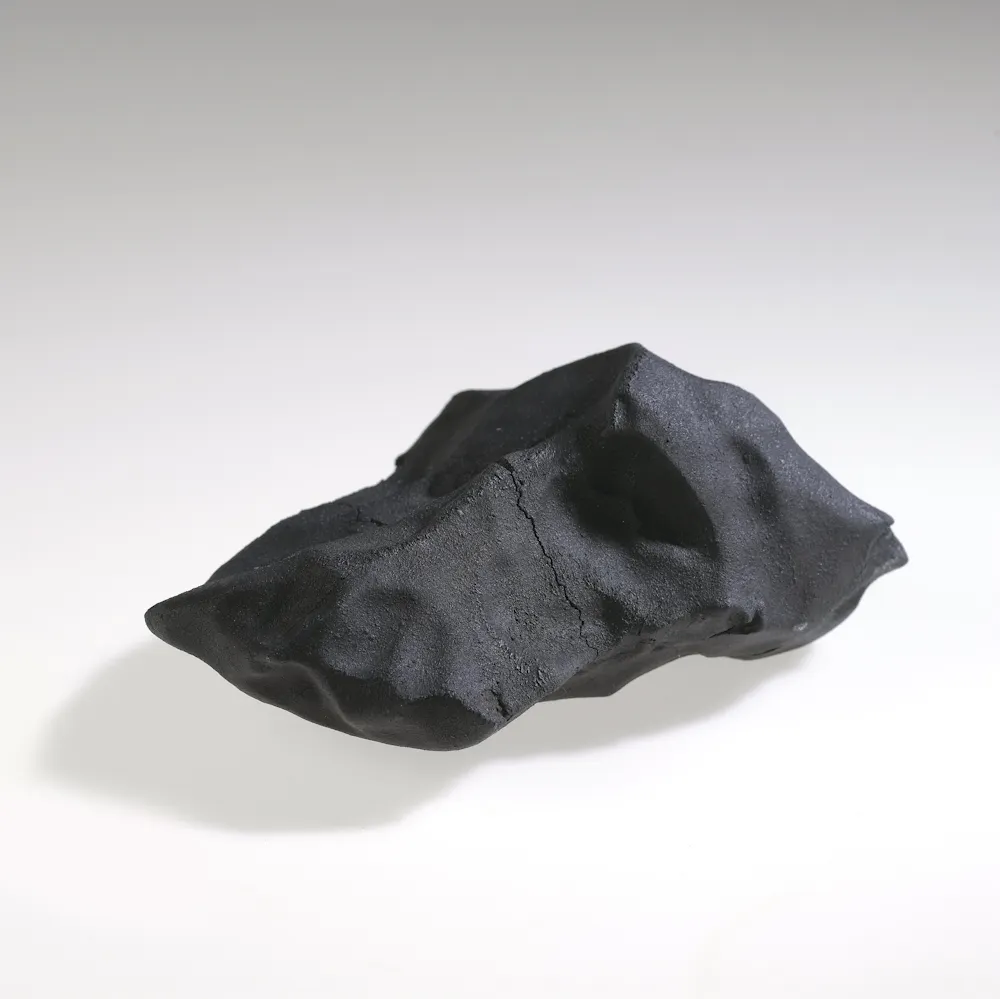
When good intentions go wrong
Unfortunately, not all meteorite finds have been handled with care. Over the years, many have been damaged by well-meaning collectors who soaked them in acid, accelerating corrosion. Some have been scrubbed or hit with a sledge hammer, destroying their fusion crust. Still others were removed them from strewn fields without recording their locations.
Some were even sold or exported illegally, putting them beyond scientific reach. These actions have caused the permanent loss of valuable evidence, sometimes the only clues to a meteorite’s cosmic origin.
Who owns meteorites?
In Australia, meteorite ownership is governed by state and territory laws rather than a single national rule, so it depends on where the meteorite lands.
In WA, all meteorites are state property under the Museum Act, while in SA they belong to the Crown and are managed by the SA Museum. The Northern Territory also declares meteorites Crown property under the Meteorites Act 1987. Finders must report discoveries to the relevant museum. Museums may acknowledge the finder, but the specimens remain part of public collections for research and display.
Other states may allow finders to keep meteorites, though it’s always best to check and report the find to your state museum. Export of meteorites from Australia is regulated at the federal level and permits are required.
These rules ensure meteorites remain accessible for scientific study and for the public to see, contrasting with some other countries where ownership often passes directly to either the finder or private landowner, such as the United Kingdom, United States and some Canadian provinces.
 Meteorites on display at Melbourne Museum.
Ursula Smith / Museums Victoria, CC BY
Meteorites on display at Melbourne Museum.
Ursula Smith / Museums Victoria, CC BY
Australia’s skies are still falling – and you can help
Fireballs continue to light up Australian skies each year. By documenting finds carefully, reporting them, and respecting ownership laws, anyone can contribute to planetary science. And sometimes, the next big discovery might literally fall at your feet.
If you’re in Victoria, please contact the Ask Us team at Museums Victoria to have your potential space rock inspected.
Authors: Heather Handley, Senior Curator, Geosciences, Museums Victoria Research Institute; Monash University

















