

how voice recognition tech fails for Aboriginal English speakers
- Written by Celeste Rodriguez Louro, Associate Professor, Chair of Linguistics and Director of Language Lab, The University of Western Australia
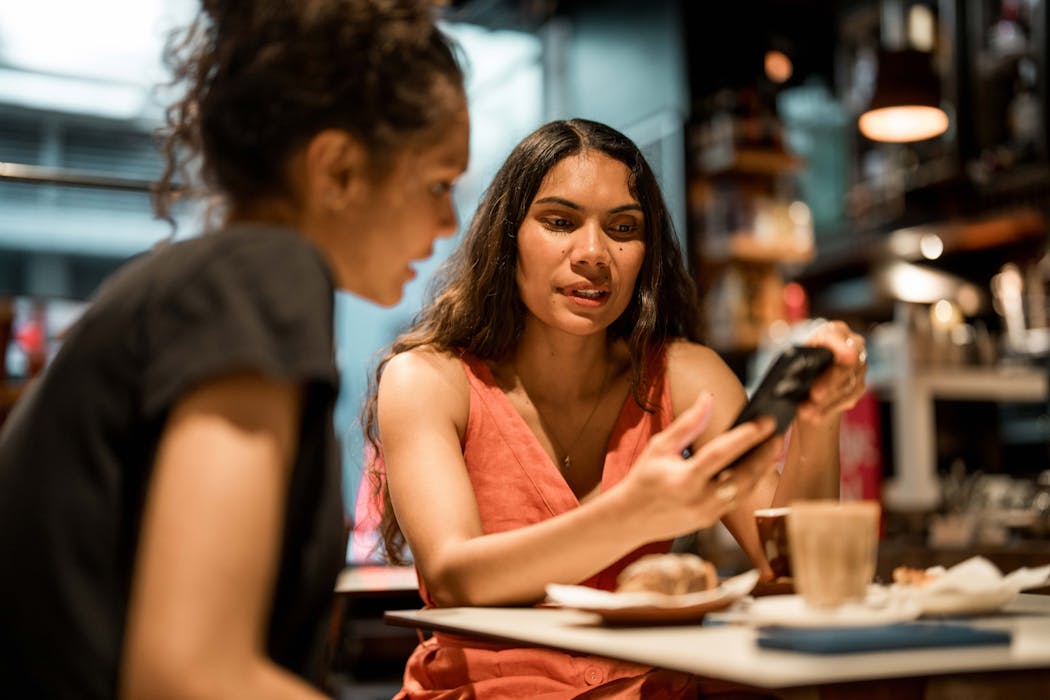
“I asked it to call one of my sisters, and it then started calling an old boss that I don’t talk to any more.”
—Amy, 25, recalling an awkward experience using a voice-operated device.
Using voice to operate technologies is increasingly convenient in daily life, whether at home or while driving.
More and more phones, televisions, smart speakers, and cars are embedded with automated speech-recognition technologies that transcribe speech into written words. These technologies enable the devices to understand what songs we want to listen to, where we want to drive, and whom we want to message.
For many Indigenous people in Australia, however, voice-operated technologies can be a constant source of frustration, and occasional anger.
Imagine having to change the way you speak just to ask your phone to play music or call a family member. This is the daily reality for many Indigenous people who speak Aboriginal English.
This variety of English is spoken by Aboriginal and Torres Strait Islander people in Australia, and is the first and only language used by many Aboriginal children.
Our recent Indigenous-led interviews with Aboriginal English speakers have found that when Indigenous people try to use voice-operated consumer technology products, the technologies often fail for their variety of English. Our results have been presented at the PULiiMA Language and Technology Conference 2025.
Aboriginal and Torres Strait Islander interviewees reported more than just frustration or anger: they said they felt excluded from the benefits of technology. Many explained that the technology only works well for “white people”. As a result, they feel significant pressure to switch to speaking “whitefella way” to use the technology.
Home talk
“I was saying ‘Hey, play Gina Williams Bindi Bindi.’” – Tina, 49, describing her unsuccessful attempts to play a popular song by an Aboriginal artist.
Voice technologies work well for many people, so these findings might be surprising. However, automated speech recognition technologies are only as good as the data they are trained on, and those training data sets tend to represent mainstream ways of speaking, marginalising non-mainstream varieties of English spoken in Australia.
Like other linguistic varieties, Aboriginal English has its own rules. It also has unique words that are sometimes borrowed from First Languages, including “bindi bindi”, which means butterfly in the Nyungar language spoken in southwest Western Australia.
Aboriginal English is known by many names. One of these is “home talk”, due to it being the preferred language for use at home with family, friends or other mob.
In contrast, Aboriginal English has often been stigmatised by speakers of mainstream English, including in schools, at work and in medical settings. Most Aboriginal English speaking adults are adept at switching the form of English they speak to avoid being misunderstood – or, even worse, corrected – by non-Indigenous people.
Our interviews show these pressures are now extending into the living rooms, kitchens and cars of Indigenous people. To successfully use the technology products that mainstream speakers use effortlessly, they must perform the linguistic labour of switching away from their “home talk” even when at home.
Instead, they must use what interviewees called their “customer service voice” or their “professional white voice” to be able to phone a friend while their hands are occupied with cooking or childcare.
Stressful and exhausting
“I didn’t know how to present myself in a different way, I don’t like to.” – Lucy, 32, explaining her feelings of frustration when devices don’t understand her.
Previous studies have found that speakers of mainstream English tend to attribute the causes of failures by technology to be bugs within the technology itself. Some of our interviewees instead perceived the failures as their own fault.
When they saw the technology working better for others, they thought “maybe it’s because I have a low IQ” or wondered “am I a real slow learner?”
Pressure on Indigenous people to abandon their natural way of speaking – even when addressing a machine – creates a stressful, exhausting form of linguistic labour.
Technology is advancing at an unprecedented pace. However, the benefits of those advances are not being evenly distributed. Their distribution is reflecting historic and colonial biases that persist in Australian society, including the marginalisation of Indigenous ways of being and speaking.
Interviewees were hopeful that the technology would improve. They spoke of “feeling cool” when the technology understands how they speak, and explained that “you see everyone else using it in the TV and the movies”.
They wanted the technology to understand words such as “dardy”, which means cool and is borrowed from the Nyungar language. They spoke of wanting the technology to understand Aboriginal accents, but also cautioned technologists that not all Aboriginal people sound the same.
Technology developers must work with Indigenous communities to create technologies that respect and understand their varieties of English. The demand for inclusive technology requires developers to address not only the algorithmic flaws but also experiences of racialised exclusion.
Authors: Celeste Rodriguez Louro, Associate Professor, Chair of Linguistics and Director of Language Lab, The University of Western Australia

















