

an anthology of Autistic writers celebrates difference
- Written by: Josephine Barbaro, Associate Professor, Principal Research Fellow, Psychologist, La Trobe University
Traditionally, women and gender-diverse people were less likely to be identified as Autistic because they didn’t fit the stereotype of how autism “should” look. This generalisation was based on research conducted with mostly young, white boys.
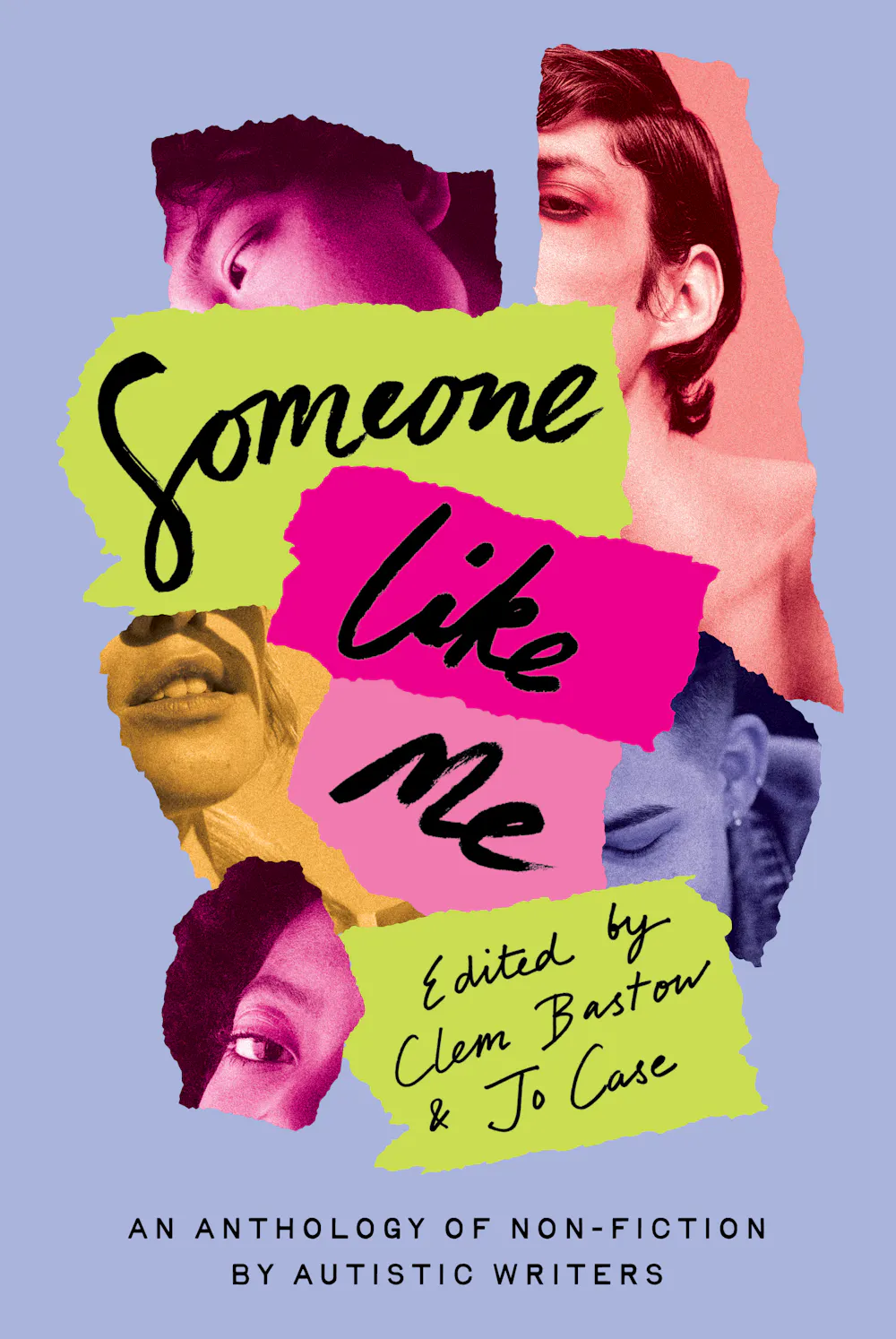
More women and gender-diverse individuals are now being identified as Autistic: we have a better understanding of the many unique ways autism can present in people. The anthology Someone Like Me, edited by Clem Bastow and Jo Case, contributes to this momentum, providing a platform for voices that have historically been overlooked and misunderstood.
Review: Someone Like Me: an anthology of non-fiction by Autistic writers – edited by Clem Bastow and Jo Case (UQP)
The book captures the intimate experiences of 25 Autistic women and gender-diverse writers. The impact of incorrect, missed or delayed diagnoses is threaded throughout, as are often-painful accounts of growing up in a world not built for neurodivergent people.

Reading this book prompts reflection on the myriad ways our society contributes to failing Autistic people. The school system, for example, (as investigated by one contributor, Sienna Macalister) is structured by, and measures success against, “even” learning trajectories based on year levels, rather than by the “spiky” learning profiles we often see in our Autistic kids, who struggle in some areas but skyrocket in others.
Misunderstandings in communication are often attributed to Autistic “deficits”, rather than the misaligned communication that can occur between Autistic and non-Autistic people, sometimes known as the double empathy problem.
Through the story of their autism diagnosis, Caitlin McGregor explores the “right” and “wrong” value-judgements often made about communication styles, rather than accepting the diverse ways Autistic people interpret and participate in social exchanges.
Sometimes, this “social misalignment” can be relieved through deep connections between Autistic people and animals. Tash Agafonoff explores this effortless, unconditional connection, which re-fills her cup after difficult or draining socialising.
 Tash Agafonoff.
UQP
Shadia Hancock explores this human-animal connection as a refuge – their safe place for regulation. They also recount their shift away from riding horses to simply engaging with them. This shift from compliance-based training of horses towards relationship-building is reminiscent of the shift to person-centred care in health settings. Methods where people’s behaviour was once pushed toward “normativity” through conditioning, are now shifting toward approaches affirming neurodiversity, embracing different ways of being.
Another contributor, Amanda Tink, examines the many “faces” comprising one’s identity and the challenge of piecing these aspects together to form a congruent “self”. Likewise, teacher Adele Dumont reflects on her intuitive connection with the children in her classrooms, which she understands now through the lens of being an Autistic adult.
Children, writes Dumont, “rely on other dimensions of the self, something more instinctual, something that transcends language and culture,” to connect with others.
Stigma and masking
 CB Mako.
UQP
Autistic people often internalise social and cultural stigma. Those who belong to multiple-minority groups (e.g., disabled, Queer, or a racial minority) often face simultaneous prejudices.
CB Mako’s work contemplates the intersection of ableism and colourism. The author reminisces about how their sister’s paler skin was revered, while the darkness of CB’s skin caused their family to worry for their future. Mako writes that they experienced ableism through belittling and taunting by peers and relatives, who pigeonholed them as less capable and less likely to succeed. By contrast, their sister was praised and highly valued.
 Khadija Gbla.
Speaking Out.
As a child in Sierra Leone, Khadija Gbla’s only concern was survival. The concept of autism was beyond comprehension. Today, Gbla reflects on how their race, gender, and disability impact both them and their son. They often feel forced to mask their authentic Autistic self to pass as “more palatable”, to protect their son from stigma and racial profiling.
The book prompts us to consider how masking erodes our sense of self, the harm this causes and the difficult journey we must undergo to grow into a “new” identity and reconnect with our authentic selves.
If neurodivergent authenticity was embraced rather than stigmatised and more compassion given to the complexities of intersectionality, perhaps we could all be our true selves from the beginning, without the need to reassemble ourselves in adulthood.
Burnout
Productivity as a measure of self-worth is explored in Danni Stewart’s and Erin Riley’s contributions on “crip time” and “Autistic burnout” respectively. Whilst the capitalist definition of “productivity” is a socially constructed concept, many Autistic people push themselves beyond their capacity to “achieve” it, at the expense of their wellbeing.
To accommodate fluctuations in energy and ability, some Autistic people embrace “crip time” – a disability-justice concept about bending time to match disabled bodies and minds. An example of this could be allowing Autistic people extra time to complete tasks or work less or different hours. Yet, despite these internal adjustments, efforts to “keep up” often falter. Burnout will arrive, and the mask will fall.
The author writing under the initials L.T., an Autistic GP, details the heartbreaking realisation that the attributes that make her perfectly suited to her job – high focus on detail, her need for predictability and order and the intense care she gives her patients – also led her to extreme burnout. Under immense time pressure, driven by society’s “productivity” expectations, she had to sacrifice her own self-care to meet that of her patients.
From fear to affirmation
Sometimes reclaiming the negative names we are called is a form of healing. Sara Kian-Judge’s essay flips the Autistic experience of “not fitting in” into a celebration of the power of authenticity and uniqueness. She writes:
Historically used to ridicule and ostracise people with physical, neurological and psychological differences, ‘freak’ dehumanised, and damaged my confidence. Today freak means openly living my differences and unmasking and healing. Once used to shame, freak now celebrates my strange eccentric ways of being.
In a similar vein, Kai Ash describes his euphoria when people use his correct name and pronouns, as he goes back in time to give his younger self some advice about embracing life as an Autistic trans man.
Similarly, Alison Sampson recounts the liberating realisation that their “quirks” and “eccentricities” are the very attributes that empower them to create safe, life-saving spaces for others, in their work as a pastor. These traits are not problems to be fixed, but assets to be nurtured.

Indeed (as outlined in Fiona Wright’s piece), the irony of autism diagnostic reports is that the documented “deficits” are “all the things we like about each other!” Tangential conversation styles, oversharing, “info dumping”, special interests, pattern recognition, and big feelings (to name a few) are the very things that connect Autistic people and generate shared joy.
Someone Like Me provides deeply human insights into what it means to live in a neurotypical world as a neurodivergent person. It is not just a collection of stories – it’s a vehicle for advocacy that demands a broader, more inclusive understanding of difference.
With so many authors contributing, there wasn’t always enough space to explore each story to its full depth. However, this editorial choice seems intentional, driven by the desire to honour the immense diversity of lived experiences. The sheer number of accounts only serves to highlight the abundance of stories that need to be told.
Collectively they form a resounding chorus, louder and stronger together, which insists on being heard.
Authors: Josephine Barbaro, Associate Professor, Principal Research Fellow, Psychologist, La Trobe University


















