

how to boost your child’s multilingual skills these holidays
- Written by: Julie Choi, Senior lecturer in Education (Additional Languages), The University of Melbourne
About 5.7 million Australians speak a language other than English at home. Most multilingual children spend their school days speaking English and during term-time, home languages often take a back seat. So holidays – particularly the long summer break – offer a chance to hear and speak their heritage languages more often.
Research shows home languages matter for identity, belonging and cultural connection. With relaxed routines and extra time, families can use low-stress, creative methods to strengthen heritage-language use and build confidence.
Here are five practical, research-informed tips to help families make the most of this holiday time.
1. Aim for short sessions or moments
Research shows small, meaningful exchanges can be more effective than long, formal sessions.
So schedule short bursts of home-language use. For example, a ten-minute chat over breakfast, a board game in the home language, or a quick WhatsApp call with grandparents.
These moments fit easily into daily routines and don’t feel like lessons. Frequent, low-pressure interactions build confidence and keep the language active in children’s minds.
2. Use artistic, creative play
Try making books, scrapbooks, comics, or holiday memory books together. Children can draw, write captions and tell stories in their home language.
Creative activities make language use enjoyable and purposeful. Studies show artistic approaches give children more confidence across languages. One Vietnamese parent in research I conducted with colleagues reflected:
Vietnamese is not a language my kids think is ‘cool’ […] But now they are actually proud to be Vietnamese. They’re proud to be part of this project and the events that came out of it.
This shift happened after a bookmaking project that connected family stories to public events.
3. Make the home language visible
Label household items, display bilingual books, leave short notes, or record voice messages for family members. These small actions weave the language into everyday spaces. Visibility doesn’t just signal the language is valued, it normalises its presence.
When children see and hear the home language in ordinary contexts, it feels natural rather than “special” or “extra”. This environmental support encourages spontaneous use and reinforces the idea that multiple languages belong in daily life.
4. Be flexible
Children may want to switch languages mid-sentence. This is not a problem!
Mixing languages is natural and helps children draw on all their linguistic resources to make meaning. Research shows mixing languages (also called “translanguaging”) supports learning and identity.
Making meaning and communicating matters more than perfect grammar.
5. Involve other senses
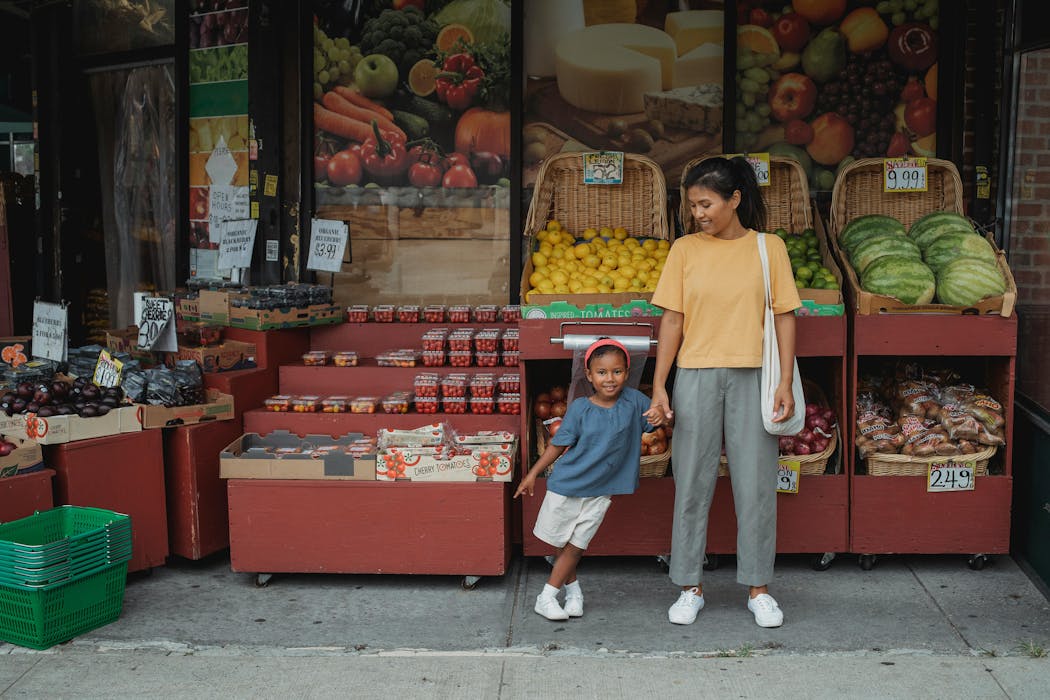
If you are at the shops or market, invite children to touch, smell, and taste unfamiliar foods. Ask simple questions in the home language: “How does it look? Do you like it?” Language learning isn’t just about words, it’s about experiences.
Engaging multiple senses also makes language meaningful and memorable. As one parent in research I conducted with colleagues explained:
Food is always big for my family […] I pick out items that are quite uncommon. I introduce them to the kids. So feeling it, smelling it, tasting it […] If they are interested enough, they will naturally start picking things up if they enjoy it.
You can also play music or watch movies/TV in your home language. Research shows students who regularly watch foreign-language TV programmes outside school perform better at reading, listening and vocabulary in that language. This makes entertainment a powerful and enjoyable pathway to language maintenance.
These approaches can work for all kids from all backgrounds
It’s not just home languages that matter. Children today often show interest in languages beyond their family backgrounds – such as Japanese, Korean, Spanish or Auslan.
Supporting this curiosity can open new windows to culture, creativity and global perspectives.
Parents can encourage exploration through music, games, apps, or community events. This helps children see languages as tools for engaging with difference and understanding the world.
Authors: Julie Choi, Senior lecturer in Education (Additional Languages), The University of Melbourne


















