

Modern Australian
Men's Weekly

.

Just 2 in 3 patients are treated on time in emergency departments. Check how your public hospital performs

  • Written by Anam Bilgrami, Senior Research Fellow, Macquarie University Centre for the Health Economy, Macquarie University

If you arrive at an emergency department (ED) today, you’ll be triaged. That’s a quick judgement about how urgently you need care. Those in crisis are seen quickly, while others may wait hours.

A decade ago, three-quarters (74%) of emergency patients in public hospitals were seen within the clinically recommended time by a nurse, doctor or other health professional after arrival. Now, only two-thirds (67%) of patients are seen on time.

The same pattern shows up in elective surgery. Ten years ago, the median wait was around 35 days between a doctor deciding you need surgery and you having the operation. Today, it’s 45 days. Some wait over a year.

Longer wait times reflect the balance between demand for services, the supply of staff, beds and theatre time, and how efficiently hospitals coordinate care and discharge patients through the system.

Let’s look at who waits longest.

How quickly should patients be seen in EDs?

Every patient arriving at an ED is assigned a triage category based on urgency:

  • resuscitation: requires immediate treatment, within seconds (for example, during a cardiac arrest)
  • emergency: should be seen within ten minutes (for example, a suspected heart attack or stroke)
  • urgent: within 30 minutes (symptoms such as high blood pressure or persistent vomiting)
  • semi-urgent: within 1 hour (for example, a minor head injury or non-specific abdominal pain)
  • non-urgent: within 2 hours (for symptoms of low-risk conditions or minor wounds).

Fewer ED patients seen on time than a decade ago

On-time performance mostly slipped over the past decade, although there’s been a small rebound since 2023–24, after a low the year before.

But median waiting times have changed little over the same timeframe and remain steady at 18 minutes. This is partly because there have been proportionally more patients in the “emergency” category and fewer classified as “non-urgent”.

However, most people who come to EDs aren’t in life-threatening situations. Last year, there were 9.1 million presentations. Only 0.96% were resuscitation cases (86,831). Nearly all these patients were seen immediately.

How states and territories compare on ED waits

There were 1.6 million “emergency” category cases in 2024-5. New South Wales and Queensland performed relatively well, with around three-quarters of emergency cases seen within the ten-minute target.

In contrast, South Australia, Tasmania and the Northern Territory lagged behind, with half, or just under, seen on time.

The largest patient groups were “urgent” (3.8 million) and “semi-urgent” (3.0 million) presentations, accounting for around three-quarters of ED activity.

Western Australia was an outlier for urgent patients, with less than a third treated within 30 minutes, the lowest rate nationally.

Most “non-urgent” patients were seen on time, but performance for semi-urgent patients dipped below 50% in Western Australia and the Northern Territory.

What about elective surgery? How does the queue work?

Elective surgeries are planned surgeries that are medically necessary and may be urgent, but not the result of an ED presentation.

These are classified by level of urgency based on clinically recommended timeframes for surgery:

  • category 1: within 30 days. Condition may deteriorate quickly and require emergency care (for example, a limb amputation or a malignant skin lesion)
  • category 2: within 90 days. Includes conditions that cause pain, dysfunction or disability (for example, a hernia or nerve compression)
  • category 3: within a year. Includes conditions that cause pain, dysfunction or disability but that are unlikely to deteriorate quickly (for example, a knee replacement or cataract extraction).

Longer waits for surgery than a decade ago

Over the past decade, the median wait for elective surgery in public hospitals has risen modestly, from 35 days to around 45 days in 2024–25.

The bigger story lies in the tail: the share of patients waiting more than a year for surgery has tripled, from about 2% a decade ago to around 6% today, peaking at nearly 10% in 2022–23 as hospitals dealt with post-COVID backlogs.

While the median wait is now fairly stable, the much larger long-wait tail points to sustained backlog pressures consistent with demand outstripping available capacity.

How do states compare on elective surgery performance?

Performance varies across Australia.

Over the past year, almost all category 1 patients (those needing surgery within 30 days) were treated on time in Victoria (100%) and New South Wales (99%), but only around two-thirds in Tasmania (66%).

For category 2 procedures (within 90 days), on-time admission ranged from about 79% in NSW to just 53% in Tasmania and 52% in the ACT.

For the less-urgent category 3 cases, outcomes were more consistent, with most states admitting around 80–87% on time, excluding the ACT (69%) and NT (72%).
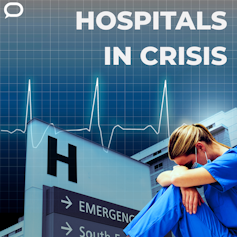
A composite of a health worker looking stressed
When it comes to public hospitals, everyone seems to be waiting – waiting for emergency care, waiting for elective surgery, waiting to get onto a ward. Private hospitals are also struggling. In this five-part series, experts explain what’s going wrong, how patients are impacted, and the potential solutions. Why do patients wait so long? And what does ‘bed block’ actually mean? Nearly one-third of ED patients are admitted to hospital; for those aged 65 and over, it’s more than half. Some public hospital patients stay long after they’re medically ready for discharge because they’re waiting for aged care or disability support placements. When wards are full, new patients can’t be admitted: a problem known as bed block. This can create a chain reaction: EDs back up, ambulances with patients queue outside (“ramping”), and staff have less capacity to treat new arrivals. But bed pressures don’t just come from EDs. Rising chronic disease and potentially preventable hospitalisations add to hospital demand. Meanwhile, with elective surgery backlogs, hospitals under bed pressure may become more likely to delay procedures. In short: bed block and ambulance ramping reflect system-wide mismatches between hospital demand (acute, chronic and elective care) and supply (beds, community care and discharge capacity). Consequences may be felt in EDs, elective surgery waitlists, and ultimately patient care and outcomes. What could help? There’s no single fix for long public hospital waits. The challenge spans demand, supply and system design. On the demand side, Australia lags behind other high-income countries in per capita spending on prevention, leaving many risk factors and chronic conditions mismanaged until they turn into preventable hospitalisations. Research finds older Australians living alone or with subtle cognitive impairment may miss GP appointments, diagnostic care or allied health support, which may mean small problems become emergencies. Urgent care clinics may help divert some less urgent cases away from EDs but the final evaluation is still pending. Innovative care programs, such as remote monitoring for patients with heart failure also show how technology can keep people well at home. On the supply side, freeing capacity is as important as building it. In some states, 8-10% of public hospital bed days are occupied by patients waiting for aged care or disability supports. Investment in step-down, transitional care, and faster aged-care placement would “unblock” discharge pathways by using other capacity in the system. Hospital workforce shortages and burnout remain major barriers. While recent funding boosts will help, sustained staffing and training pipelines are essential to lasting gains. At the hospital level, efficiency matters. Transparent resource prioritisation, consistent clinical scoring, and protected elective surgery streams may reduce bottlenecks. Ultimately, clearing the queues means preventing what’s preventable, unblocking what’s stuck, and efficiently and transparently managing what’s left. Read more from the Hospitals in Crisis series here.

Authors: Anam Bilgrami, Senior Research Fellow, Macquarie University Centre for the Health Economy, Macquarie University


Read more https://theconversation.com/just-2-in-3-patients-are-treated-on-time-in-emergency-departments-check-how-your-public-hospital-performs-270683

Restaurants Risk Compliance Issues Amid Commercial Plumber Shortage

As demand for housing, roads and facilities increases, so does the demand for trade workers. According to Infrastructure Australia, the construction i...

The Importance Of A Professional Medical Fitout Melbourne For Modern Healthcare Facilities

Healthcare environments must operate with precision, efficiency, and a strong focus on patient comfort. A well-planned medical fitout Melbourne hel...

Top Safety and Comfort Features to Consider in Family Off Road Caravans

Exploring Australia’s coastline, bush tracks or outback locations is far more enjoyable when travelling in a caravan designed for both comfort and...

“Logistical Nightmare” – Rural and Remote Communities Supply Chain Nightmares

Australia’s road logistics need major reform to counteract the supply chain issues that are hitting rural and regional communities hard. With 80% of...

The Importance Of Quality Bait Boards For Boats To Enhance Fishing Efficiency And Comfort

Fishing enthusiasts understand that having the right equipment on board makes every trip smoother and more enjoyable. One essential accessory for an...

The Essential Safety Gear Every Tradesman Needs

Across industries like construction, electrical work, plumbing, carpentry, and welding, workers face hazards every single day. For tradesmen, having...

Best POS System Features That Boost Customer Experience

Source: Unsplash Starting and scaling a retail business is unlikely possible without an effective Point of Sale (POS) system. It is the tech heartbe...

Understanding SMSF Setup Online and Why More Australians Are Choosing Digital Fund Establishment

liManaging your own superannuation gives you greater control over investments, retirement planning, and long-term financial decision-making. As inte...

Double Carport: Complete Guide to Design, Cost, and Installation

A double carport provides practical, cost-effective protection for two vehicles whilst adding value and functionality to your property. Whether you're...

How External Blinds and Awnings Improve Comfort, Privacy, and Energy Efficiency

Outdoor comfort and protection are essential for homes and commercial properties, especially in regions with strong sunlight, high UV exposure, and ...

Worksite Comfort Upgrades That Boost Team Productivity

Jobsite productivity doesn’t depend solely on tools, training, or scheduling. It also hinges on something often overlooked: worker comfort. When e...

NDIS Occupational Therapy: Your Complete Guide to Accessing Support and Services

Occupational therapy plays a crucial role in helping NDIS participants achieve their goals and improve their daily living skills. For people with disa...

How to Start Trading Futures in Australia: Markets, Margin and Regulation

Futures trading has become increasingly popular among Australian traders seeking opportunities across global commodities, indices, currencies and ener...

The Importance Of Residential Scaffolding For Safe And Efficient Home Projects

Home construction and renovation projects require reliable access systems that prioritise both worker safety and structural stability. Whether the p...

Understanding All on 4 Dental Implants and Their Benefits for Full Mouth Restoration

Tooth loss can affect daily life in many ways, including chewing difficulties, speech problems, facial changes, and reduced confidence. Modern denti...

Why Removalists Are Essential for a Smooth, Safe, and Hassle-Free Moving Experience

Moving homes or offices can be overwhelming, especially when you’re trying to balance packing, organising, heavy lifting, and time-sensitive deadl...

Understanding Domestic Violence Orders in Queensland

Domestic violence is an issue that affects many households. This article will break down the key aspects of Domestic Violence Orders (DVOs) in Queen...

Why A Smart Lock Is Becoming An Essential Upgrade For Modern Home Security

Homeowners today are placing greater importance on security, convenience and technology in their living spaces. One of the most significant advancem...















